
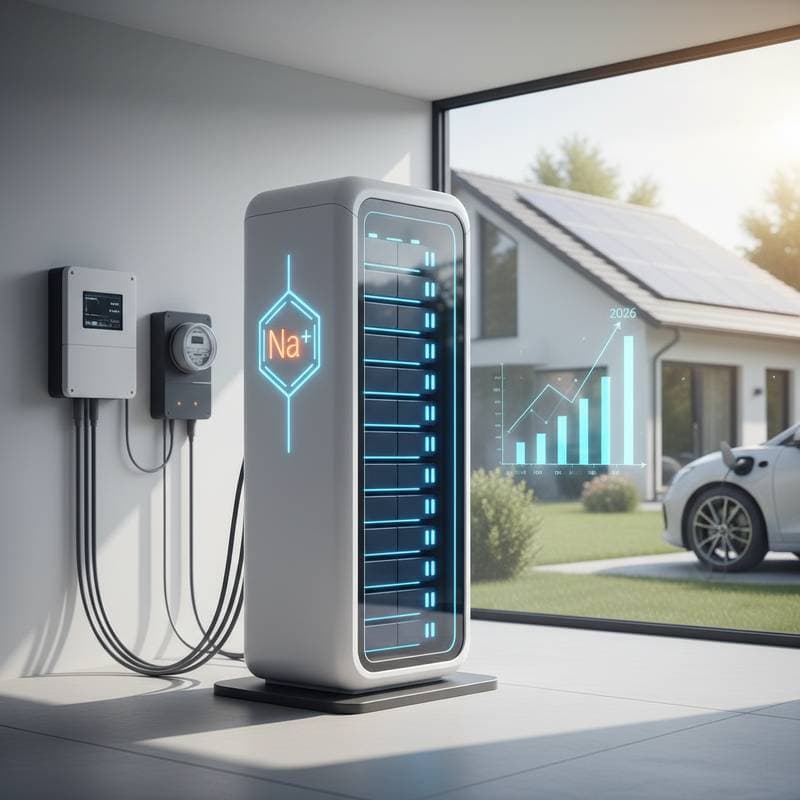
How Sodium-Ion Batteries Will Reduce Energy Storage Costs by 2026
Homeowners increasingly seek options beyond lithium for energy storage. With the rise of electric vehicles, solar installations, and residential batteries, the need for economical solutions intensifies. Lithium-ion batteries have supported this expansion, yet supply constraints persist. Sodium-ion batteries present a compelling alternative, promising lower costs, improved safety, and streamlined production.
This transition relies on practical factors such as resource availability, economic demands, and chemical innovations. Ongoing research and initial manufacturing efforts position sodium-ion technology to lower prices and broaden clean energy access within a few development phases.
Reasons to Choose Sodium Over Lithium
Lithium offers high energy density as a lightweight metal, but scarcity and regional concentration pose challenges. Sodium, however, abounds globally and costs far less. Extraction occurs from common sources like salt or soda ash.
Sodium-ion batteries substitute sodium for lithium in cathodes and electrolytes, while retaining compatibility with established production lines. Factories require minimal modifications, yielding reduced costs per kilowatt-hour and diminished supply vulnerabilities. Lithium carbonate prices often exceed sodium carbonate equivalents by multiples per ton. Post-processing, sodium materials lower raw input expenses by over 50 percent, enabling battery packs at reduced rates for residential and automotive uses.
The Mechanics of Sodium-Ion Batteries
Batteries function by shuttling ions between electrodes via an electrolyte to store and release energy. During charging, ions travel from cathode to anode. Discharging reverses the flow to generate electricity.
Sodium-ion variants employ sodium ions in place of lithium. Anodes typically feature hard carbon, which accommodates sodium's larger atomic size more effectively than graphite. Cathodes incorporate layered oxides or polyanionic structures designed for durability over numerous cycles.
Although sodium-ion batteries deliver marginally lower energy per kilogram compared to lithium-ion counterparts, they excel in safety and thermal stability across temperature extremes. These traits suit stationary applications like home systems, where weight concerns matter less than in portable devices.
Projections for Cost and Performance
Prototype sodium-ion batteries currently range from 120 to 160 watt-hours per kilogram. Home lithium-ion units achieve 180 to 250 watt-hours per kilogram. Advancements in electrode materials and electrolyte formulations continue to close this gap.
At full-scale production, sodium-ion systems may dip below 80 dollars per kilowatt-hour. Installed lithium-ion equivalents often hover between 130 and 150 dollars per kilowatt-hour. Such savings accelerate return on investment for solar-plus-storage setups.
Consider a 10-kilowatt-hour residential sodium-ion installation at 80 dollars per kilowatt-hour, totaling 800 dollars for cells. Including ancillary components, the complete system might cost around 4,000 dollars, versus 7,000 dollars for a comparable lithium configuration. Over a decade, this setup yields significant savings alongside dependable power during disruptions.
Advantages for the Environment and Supply Chains
Sodium-ion batteries sidestep cobalt and nickel, materials linked to contentious mining practices. They also ease demands on lithium sources that strain local water resources. Reliance on ubiquitous elements decentralizes manufacturing, curbing transportation-related emissions.
These batteries employ aluminum for current collectors in both electrodes, forgoing copper. Aluminum proves more economical and recyclable, amplifying cost efficiencies and sustainability.
Compatibility with Solar and Residential Energy Systems
For solar-equipped homes, sodium-ion batteries fulfill roles identical to lithium-ion ones. They capture excess daytime generation for nighttime consumption, ensure continuity amid blackouts, and maximize on-site energy utilization.
Sodium-ion cells maintain efficacy in diverse climates, from frigid winters to scorching summers, ideal for indoor or sheltered placements. Their inherent stability minimizes thermal runaway risks, bolstering safety and potentially easing insurance requirements for installations.
In shared initiatives like community solar arrays or microgrids, sodium-ion storage supports cost-effective collective capacity. Affordable cells allow greater scale within budgets, enhancing overall grid reliability and adaptability.
Challenges and Key Considerations
Scaling production remains the primary hurdle, with most facilities in nascent phases and limited output. Energy density requires further refinement, particularly for vehicle integration. Stationary uses tolerate these limitations more readily.
As deployment increases, standardized warranties, regulatory approvals, and recycling protocols will emerge. Prospective buyers benefit from scrutinizing independent test results. Vigilant monitoring post-installation upholds performance standards for emerging technologies.
Guidance for Homeowners Considering Upgrades
Stay abreast of developments if contemplating solar or battery additions. Inquire with providers about forthcoming sodium-ion offerings. Analyze your utility billing structure to gauge storage's potential for bill optimization.
Compile a year's worth of consumption records to determine appropriate system sizing. Assess rooftop suitability for panels, then weigh battery benefits for outage resilience or peak-rate avoidance. Monitor available rebates, as they may extend to sodium-ion products upon market entry.
Each step toward renewable integration advances broader accessibility. Sodium-ion batteries position sustainable energy within reach for more households.
FAQ
1. Are sodium-ion batteries ready for residential use?
Pilot and initial production stages dominate, though multiple producers anticipate residential products in the near term.
2. What is the expected lifespan of sodium-ion batteries?
They support 3,000 to 5,000 cycles, akin to standard lithium systems, influenced by discharge depth and operating temperatures.
3. Do sodium-ion batteries integrate with current solar inverters?
Compatibility exists with conventional hybrid inverters, provided voltage and current align.
4. Is indoor installation safe for sodium-ion batteries?
They present lower overheating risks than lithium-ion, yet proper ventilation remains advisable.