
The Rise of Sodium-Ion Batteries in Energy Storage
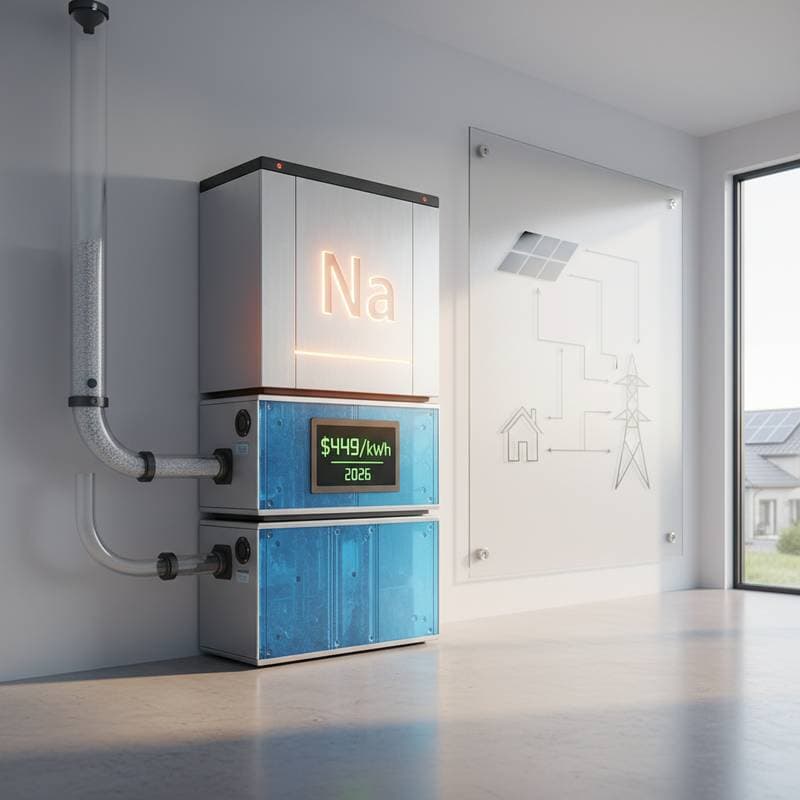
Sodium-ion batteries emerge as a promising alternative to lithium-ion technology, particularly for solar energy storage. Projections indicate that production costs will drop below $450 per kilowatt-hour by 2026. This development stems from advancements in manufacturing and the use of readily available materials, positioning sodium-ion batteries to transform residential and utility-scale solar systems.
The shift toward sodium-ion options addresses key challenges in the energy sector. Lithium supplies face volatility due to geopolitical factors and mining limitations. In contrast, sodium derives from abundant sources like seawater and salt deposits, ensuring a stable and scalable supply chain.
Understanding Sodium-Ion Technology
Sodium-ion batteries operate on principles similar to lithium-ion cells but substitute sodium for lithium in the electrolyte and electrodes. During charging, sodium ions move from the cathode to the anode, storing energy. Upon discharge, the ions flow back, releasing power to connected devices or grids.
This chemistry relies on hard carbon anodes and layered oxide cathodes, materials that are less expensive and easier to source than the cobalt or nickel often used in lithium batteries. While energy density reaches about 150-200 watt-hours per kilogram, compared to 250 for lithium-ion, the trade-off favors cost and safety over maximum capacity in many applications.
Researchers have refined these batteries to improve cycle life, now exceeding 3,000 charge-discharge cycles with minimal degradation. Such durability suits long-term solar storage, where batteries endure daily cycles over years.
Key Advantages Over Lithium-Ion Batteries
Abundant raw materials drive down costs for sodium-ion production. Sodium constitutes 2.6 percent of the Earth's crust, far more prevalent than lithium's 0.006 percent. This availability reduces dependency on rare earth mining and mitigates price fluctuations.
Supply chains simplify as well. Sodium-ion manufacturing avoids complex processing steps required for lithium refinement. Factories can repurpose existing lithium-ion production lines with minor adjustments, accelerating market entry.
Safety profiles enhance appeal for solar installations. Sodium-ion batteries exhibit lower thermal runaway risks, operating stably at higher temperatures without specialized cooling systems. This feature lowers installation and maintenance expenses for homeowners and utilities.
Environmental benefits include reduced ecological impact. Extraction of sodium involves less water and land disruption than lithium mining. Production emits fewer greenhouse gases, aligning with sustainability goals in renewable energy adoption.
Applications in Solar Energy Storage
Solar storage demands reliable, affordable batteries to capture daytime generation for evening use. Sodium-ion batteries fit this role by providing sufficient density for most household needs, typically 5-20 kilowatt-hours per system. Their lower cost enables larger installations without proportional expense increases.
Homeowners benefit from faster return on investment. At under $450 per kilowatt-hour, a 10-kilowatt-hour system costs around $4,500, compared to current lithium prices exceeding $600 per kilowatt-hour. Payback periods shorten to 5-7 years through utility bill savings and potential incentives.
Utilities leverage sodium-ion for grid-scale projects. Large arrays store excess solar power, balancing supply during peak demand. The technology supports microgrids in remote areas, enhancing energy resilience against outages.
Integration with solar panels requires standard inverters and monitoring systems. Early adopters can pilot small-scale setups to test performance, ensuring compatibility before full deployment.
Performance Metrics for Solar Use
- Capacity Retention: Maintains 80 percent capacity after 5,000 cycles, ideal for daily solar charging.
- Charge Speed: Accepts full charge in 2-4 hours, matching solar peak output.
- Temperature Range: Functions from -20°C to 60°C, suitable for diverse climates.
- Efficiency: Achieves 90-95 percent round-trip efficiency, minimizing energy loss.
These metrics position sodium-ion batteries as practical for off-grid and hybrid solar configurations.
Projections and Market Timeline
Industry forecasts predict widespread availability by 2026. Chinese manufacturers lead development, with pilot plants scaling to gigawatt-hour output. Costs decline through economies of scale and material optimizations.
By 2026, sodium-ion batteries will compete directly with lithium in stationary storage. Initial applications focus on low-speed electric vehicles and grid support, expanding to residential solar as prices fall.
Challenges remain, such as improving energy density for compact designs. Ongoing research targets hybrid chemistries to bridge gaps, ensuring competitiveness across sectors.
Steps to Prepare for Sodium-Ion Adoption
Evaluate current solar setups for battery integration. Consult certified installers to assess capacity needs based on usage patterns. Budget for upgrades, factoring in projected cost savings.
Monitor industry announcements from reliable sources. Participate in rebate programs that incentivize advanced storage technologies. Early investment secures lower rates before mainstream pricing stabilizes.
For utilities, conduct feasibility studies on sodium-ion pilots. Collaborate with suppliers to secure long-term contracts, locking in favorable terms.
Unlocking Energy Independence with Affordable Storage
Sodium-ion batteries promise to democratize solar storage, making clean energy accessible to more users. Reduced costs accelerate the transition from fossil fuels, fostering sustainable communities. Homeowners gain control over power bills, while utilities build resilient networks. As 2026 approaches, this technology heralds a new era of efficient, eco-conscious energy solutions.