
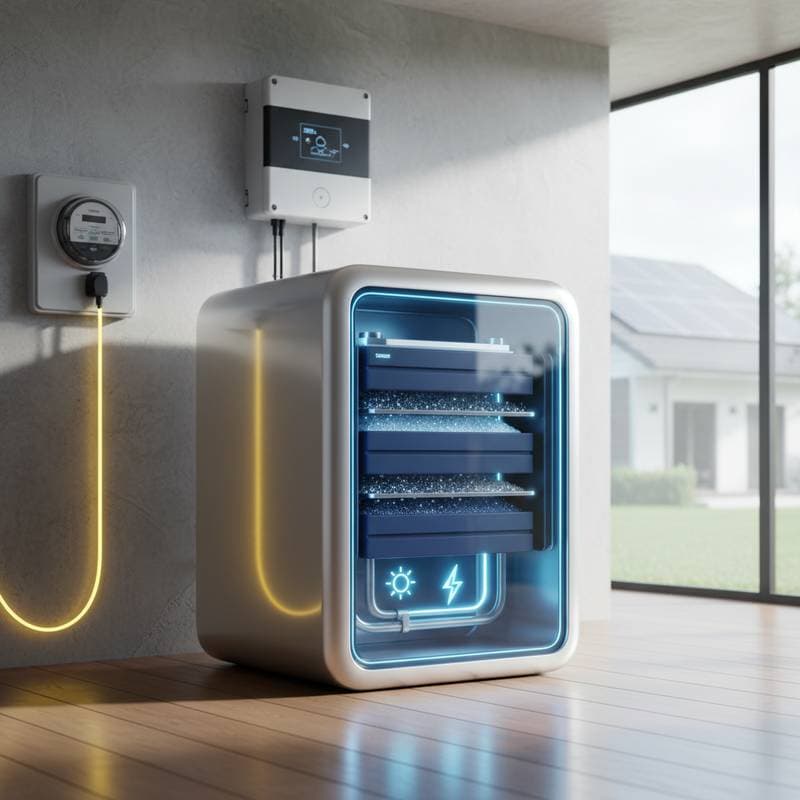
Sodium-Ion Batteries: 2026's Affordable Power Shift
Solar research often feels overwhelming, particularly as new storage technologies emerge more quickly than most homeowners can follow. Lithium-ion batteries receive widespread attention, yet sodium-ion batteries present a compelling alternative for residential energy storage. Their advantages include affordability, enhanced safety, and reliance on readily available materials. With solar adoption on the rise, sodium-ion technology holds potential to transform how households capture and utilize clean energy.
Why Sodium-Ion Batteries Matter
Lithium-ion batteries lead the market for rooftop solar storage, but they rely on costly metals like lithium, cobalt, and nickel. These resources concentrate in limited geographic areas, leading to supply vulnerabilities and price volatility. Sodium, however, derives from everyday salt and supports local sourcing, which reduces expenses and minimizes reliance on international imports.
Homeowners seeking dependable storage without the premium price of lithium systems benefit from this shift. Sodium-ion batteries provide energy reliability at a reduced initial investment, alongside a lighter environmental footprint. They also enable expanded community-level storage projects, where cost accessibility drives broader implementation.
How Sodium-Ion Batteries Work
Sodium-ion batteries operate on principles similar to those of lithium-ion technology. During the charging process, sodium ions shift from the cathode, or positive electrode, to the anode, or negative electrode. Upon discharge, the ions return through the electrolyte, generating electrical power.
The primary distinction involves the chemical composition. Sodium atoms exceed lithium atoms in size, so developers create specialized electrode materials to accommodate this. Cathodes often incorporate layered oxides or iron-based compounds, while anodes utilize hard carbon. These configurations sacrifice minor energy density for substantial reductions in production costs and improved thermal stability.
In practical terms, sodium-ion batteries hold slightly less energy per unit of weight, but they cost less to manufacture and pose fewer safety risks. They resist overheating more effectively, which eases installation and eliminates the necessity for sophisticated cooling mechanisms.
Real-World Output and Performance
A standard residential solar setup might pair with a 10-kilowatt-hour lithium-ion battery to manage evening energy demands. An equivalent sodium-ion unit in the same housing delivers approximately 8 to 9 kilowatt-hours. For typical households, this variance proves negligible when weighed against the financial benefits.
Suppose a sodium-ion battery offers 30 percent lower cost per kilowatt-hour of capacity. A system priced at 10,000 dollars with lithium technology might fall to around 7,000 dollars. Over a decade with 300 cycles annually, the battery supplies about 24,000 kilowatt-hours of stored energy. At an electricity rate of 18 cents per kilowatt-hour, this translates to roughly 4,300 dollars in savings on utility bills, excluding incentives or peak-demand avoidance.
Cost, Supply, and Sustainability
Reduced material expenses render sodium-ion systems more stable amid global supply fluctuations. The ubiquity of sodium facilitates scalable production without escalating prices. Most designs eschew cobalt and nickel, thereby lessening mining-related environmental damage and ethical issues.
Production often employs aluminum in place of copper for the anode current collector, which trims both cost and weight. The chemistry withstands broader temperature variations, allowing reliable operation in diverse climates without costly protective casings.
Integration with Solar and Storage Incentives
Sodium-ion batteries integrate seamlessly into established solar-plus-storage configurations. They recharge from rooftop panels during daylight and release power in the evenings when grid rates peak. Numerous utilities provide time-of-use pricing that incentivizes such patterns.
Consider a 7-kilowatt solar array generating about 9,000 kilowatt-hours yearly. It can direct a share of midday production to an 8-kilowatt-hour sodium-ion battery. With daily charging, this yields approximately 2,900 cycles over ten years. The overall setup reduces grid reliance by 60 to 70 percent, based on usage patterns and tariff details.
What to Watch Before Buying
Sodium-ion batteries enter the residential sector gradually, so evaluate key factors prior to purchase:
- Warranty and cycle life. Select options guaranteeing at least 3,000 full cycles with over 80 percent capacity retention.
- Inverter compatibility. Verify alignment with your solar inverter or hybrid controller.
- Temperature rating. Opt for units certified for your regional climate conditions.
- Local incentives. Investigate state rebates that encompass sodium-ion under energy storage categories.
- End-of-life recycling. Note that sodium cells simplify recycling, though program availability differs by location.
Preparing for Sodium-Ion Adoption
For those with existing solar installations, plan a storage addition using sodium-ion once certified models arrive at suppliers. Solicit fresh estimates from installers experienced in both lithium and sodium options. Assess not only cost per kilowatt-hour but also projected lifetime output and upkeep needs.
Monitor your current system to gauge daily excess generation. This information guides appropriate battery sizing. Upon installation, arrange a comprehensive review of wiring, breaker ratings, and inverter software to ensure seamless operation.
Sodium-ion batteries strike an optimal balance of cost, safety, and eco-friendliness. They position many households for greater solar self-sufficiency.
FAQ
What makes sodium-ion batteries cheaper than lithium-ion?
They incorporate sodium from commonplace salt, an inexpensive and plentiful resource, rather than lithium and cobalt that demand intensive extraction processes.
Are sodium-ion batteries safe for home use?
Yes. They exhibit lower susceptibility to thermal runaway, enhancing safety during exposure to heat or overcharging.