
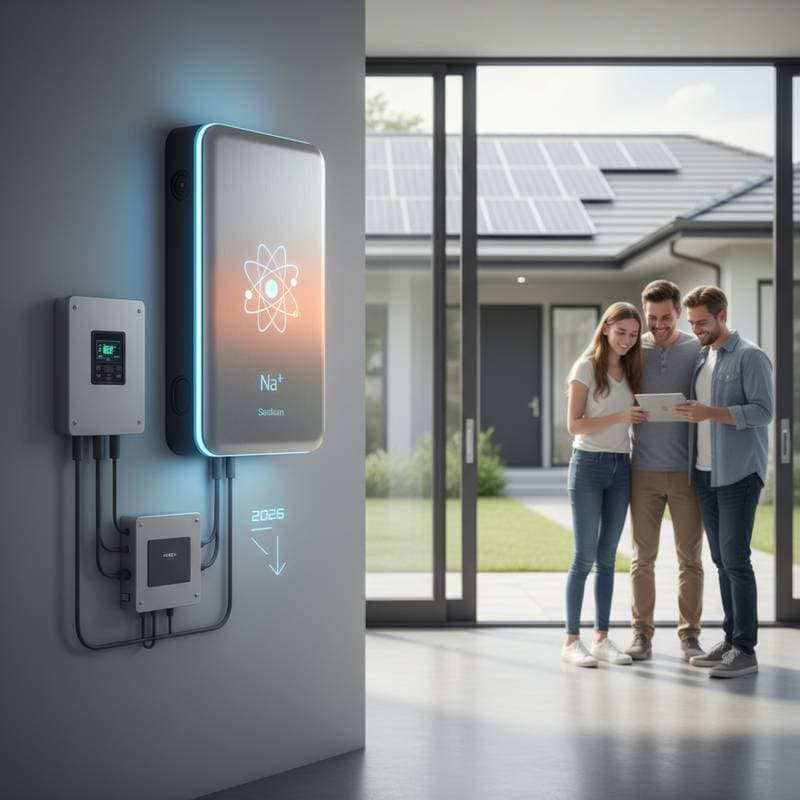
Sodium-Ion Batteries: The Cheapest Option by 2026
Homeowners observe declining prices for energy storage and anticipate developments beyond lithium-ion technology. Solar panels generate power consistently, yet without cost-effective storage, excess energy returns to the grid at minimal credit rates. Sodium-ion batteries emerge as a promising alternative due to their low cost, enhanced safety, and abundant resources. These batteries position themselves as the most economical choice for storage in the near future.
Why Sodium-Ion Batteries Matter
Sodium-ion batteries employ sodium as the primary charge carrier in place of lithium. Sodium exists in abundance, costs less, and distributes evenly worldwide. This abundance alleviates the supply chain pressures associated with lithium extraction. For residential users, reduced material expenses translate to more affordable storage solutions and shorter investment recovery periods.
When integrated with rooftop solar installations, sodium-ion batteries enable comprehensive home energy management for a wider audience. They capture solar energy produced during the day for use in the evening, decrease dependence on utility grids, and mitigate expenses from peak pricing structures.
How Sodium-Ion Batteries Function
Sodium-ion cells transport sodium ions between a cathode and an anode via a liquid or solid electrolyte. During the charging process, sodium ions depart from the cathode and migrate to the anode. Upon discharge, the ions return, producing electrical current.
This mechanism parallels that of lithium-ion batteries, although sodium ions possess larger dimensions. Consequently, energy density proves marginally lower, but the materials exhibit greater safety and stability at elevated temperatures. Such properties reduce the likelihood of thermal runaway and extend operational longevity under standard conditions.
A standard sodium-ion battery achieves 120 to 160 watt-hours per kilogram. In comparison, a lithium-iron-phosphate battery delivers 180 to 200 watt-hours per kilogram. Despite the reduced energy density, sodium-ion batteries vie effectively on the basis of cost per kilowatt-hour of usable storage.
Cost and Performance Projections
Industry analysts project sodium-ion battery packs to attain prices of 50 to 70 dollars per kilowatt-hour of capacity. This level represents a potential reduction of up to 30 percent compared to lithium-ion equivalents. For a 10-kilowatt-hour residential battery, the savings on hardware alone could range from 1,000 to 2,000 dollars.
Current installations for a 10-kilowatt-hour lithium system approximate 9,000 dollars. Should sodium-ion systems approach 7,000 dollars, the payback period for a solar-plus-storage setup may decrease from 10 years to approximately 7 years. These timelines vary based on local utility credits and consumption habits.
Sodium-ion batteries endure greater numbers of charge and discharge cycles. While a lithium battery sustains 6,000 cycles, a sodium-ion counterpart may exceed 8,000 cycles. This durability yields more total energy throughput relative to the upfront investment.
Availability and Production Trends
Sodium derives readily from seawater and prevalent minerals. Cathode components frequently incorporate iron, manganese, or nickel, materials that cost less and offer superior stability over cobalt. These attributes facilitate domestic production and diminish geopolitical vulnerabilities in supply chains.
Multiple manufacturers expand production facilities for sodium-ion batteries tailored to stationary applications and low-range electric vehicles. As output volumes increase, economies of scale will drive costs downward further.
Key Advantages for Residential Users
Lower Initial Expenses
Sodium-ion batteries rely on inexpensive raw materials and straightforward cell designs.
Superior Safety Profile
These batteries resist overheating more effectively, allowing installation in indoor spaces or garages without extensive cooling infrastructure.
Extended Service Life
Cycle counts surpass those of numerous lithium variants, minimizing long-term replacement expenses over decades.
Wide Operating Temperature Tolerance
Sodium-ion batteries perform reliably in subzero conditions, benefiting residences in cooler climates.
Simplified Recycling Processes
Without scarce or hazardous metals, disassembly and material recovery proceed with reduced environmental impact.
Limitations and Advancements in Development
Energy density constitutes the primary constraint. Sodium-ion batteries require additional volume to match the capacity of lithium counterparts. In space-constrained homes, this factor influences installation locations. Researchers advance anode technologies, including hard carbon and layered oxides, to elevate storage capabilities.
Round-trip efficiency measures 85 to 90 percent, trailing leading lithium systems at 93 percent. This gap results in minor energy losses per cycle, which remain negligible for typical household applications.
Compatibility with Solar Installations
Solar system owners integrate sodium-ion batteries via hybrid inverters compatible with lithium designs. A representative configuration features a 7-kilowatt solar array paired with a 10-kilowatt-hour battery. Such a system generates approximately 9,100 kilowatt-hours annually; with half consumed onsite through storage, the battery offsets 1,000 to 1,200 dollars in grid purchases each year.
At a 7,000-dollar installation cost, this offset yields a 6- to 8-year payback, excluding incentives. Beyond recovery, the setup continues to generate savings for extended periods.
Upkeep and Operational Guidelines
Sodium-ion systems demand minimal ongoing maintenance. Users monitor charge states and ensure adequate airflow. Integrated applications provide performance tracking and notifications for potential issues.
Manufacturers release firmware updates periodically to optimize efficiency and prolong cycle life. For indoor placements, consistent ambient temperatures safeguard the electrolyte and components.
Practical Actions for Interested Homeowners
-
Schedule a professional site evaluation to assess space availability and electrical infrastructure.
-
Collect 12 months of utility statements to analyze energy consumption patterns.
-
Obtain multiple bids specifying uniform system capacities and warranty durations.
-
Investigate regional rebates for energy storage or advantages from time-based pricing.
-
Prepare for performance oversight to monitor financial benefits and system condition.
Sodium-ion batteries demonstrate that reliable, economical storage lies within reach. Adoption in solar-plus-storage configurations eases grid burdens and bolsters community energy security.
Frequently Asked Questions
Are sodium-ion batteries suitable for residential applications?
Yes, they offer enhanced safety over many lithium options through reduced thermal risks and broader temperature compatibility.
What is the expected lifespan of sodium-ion batteries?
Designs typically endure 8,000 cycles or beyond, equivalent to 20 years of daily cycling.
Do sodium-ion batteries support home backup during power interruptions?
Yes, in conjunction with hybrid inverters, they deliver power to essential circuits.