
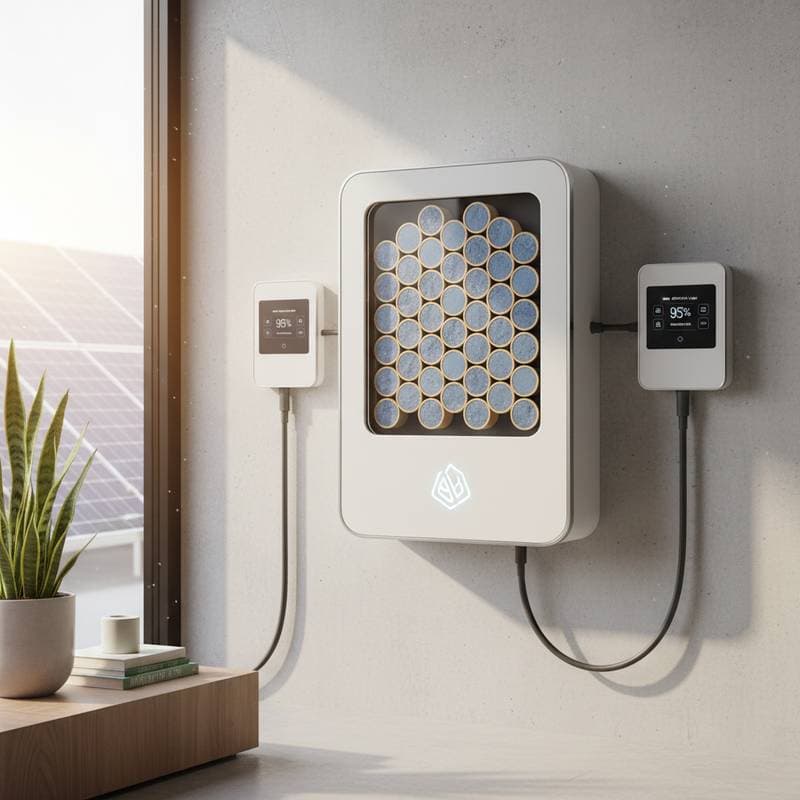
Sodium-Ion Batteries: Reducing Costs in Solar Energy Storage
Sodium-ion batteries represent a promising advancement in energy storage technology, particularly for solar power systems. These batteries utilize sodium, an element far more abundant than lithium, to create a more affordable option for homeowners and businesses. As solar adoption grows, the need for efficient, cost-effective storage solutions becomes critical, and sodium-ion batteries address this demand effectively.
Understanding Sodium-Ion Batteries
Sodium-ion batteries function similarly to their lithium-ion counterparts but rely on sodium ions to transfer energy. The core materials include sodium salts, which are derived from common sources like seawater and rock salt. This abundance ensures a stable supply chain without the geopolitical risks associated with lithium mining.
The technology builds on established battery chemistry, with cathodes often made from layered oxides or phosphates. Anodes typically use hard carbon, which provides reliable performance. Researchers have refined these components over the past decade, achieving energy densities that approach those of lithium-ion batteries while maintaining structural integrity over numerous charge cycles.
Key Advantages Over Lithium-Ion Batteries
One primary benefit lies in cost reduction. Sodium-ion batteries can lower production expenses by up to 30 percent compared to lithium-ion options, primarily due to inexpensive raw materials. For solar storage, this translates to systems that store excess daytime energy at a fraction of the previous price point.
Safety improvements stand out as well. Sodium-ion batteries exhibit lower thermal runaway risks, making them less prone to fires or explosions under stress. This characteristic proves especially valuable in residential settings, where solar batteries often integrate directly with home electrical systems.
Efficiency remains competitive, with round-trip efficiencies around 90 percent. Recycling processes for sodium-ion batteries prove simpler, as the materials dissolve more readily in standard solutions. Environmental impact decreases further, since production avoids rare earth elements and reduces water usage in manufacturing.
- Cost Savings: Initial investment drops significantly, enabling quicker returns on solar installations.
- Sustainability: Abundant sodium sources minimize ecological footprints from extraction.
- Durability: Batteries withstand thousands of cycles with minimal degradation, ideal for daily solar use.
Applications in Solar Energy Systems
In solar setups, sodium-ion batteries store surplus energy generated during peak sunlight hours for use at night or during cloudy periods. Homeowners benefit from consistent power supply, reducing reliance on grid electricity and associated utility bills.
Commercial applications extend to off-grid installations, such as remote solar farms or community microgrids. For instance, pilot projects in Europe demonstrate how these batteries integrate with photovoltaic panels to provide stable output. The technology supports scalability, allowing systems to expand as energy needs grow.
Performance data from recent tests shows sodium-ion batteries maintaining 80 percent capacity after 5,000 cycles. This longevity exceeds many lithium-ion models in high-temperature environments, common in solar-exposed installations.
Comparing Performance Metrics
| Feature | Sodium-Ion | Lithium-Ion |
|---|---|---|
| Cost per kWh | $50–$100 | $150–$300 |
| Energy Density (Wh/kg) | 100–150 | 150–250 |
| Cycle Life | 3,000–5,000 | 2,000–4,000 |
| Operating Temperature Range | -20°C to 60°C | 0°C to 45°C |
| Safety Rating | High (low flammability) | Moderate (fire risk) |
These metrics highlight why sodium-ion batteries suit solar storage, balancing cost with practical performance.
Steps to Integrate Sodium-Ion Batteries into Your Solar Setup
Begin by evaluating your current solar system capacity. Determine daily energy production and consumption to size the battery appropriately, typically 5–20 kWh for residential use.
- Consult a certified solar installer to assess compatibility with existing inverters and panels.
- Select a sodium-ion battery model certified for grid-tied or off-grid operation.
- Plan for installation, which involves secure mounting and electrical connections.
- Monitor system performance through integrated software to optimize energy use.
Professional guidance ensures compliance with local regulations and maximizes efficiency. Many providers now offer warranties covering 10 years or more, providing peace of mind.
Achieving Greater Energy Independence with Sodium-Ion Technology
Adopting sodium-ion batteries empowers homeowners to harness solar energy more fully. Lower costs make renewable storage accessible, while enhanced safety and sustainability align with long-term environmental goals. As production scales, expect even broader availability and further price drops.
This shift not only cuts expenses but also builds resilience against energy price fluctuations. Families gain control over their power needs, fostering a sustainable lifestyle backed by reliable technology.