
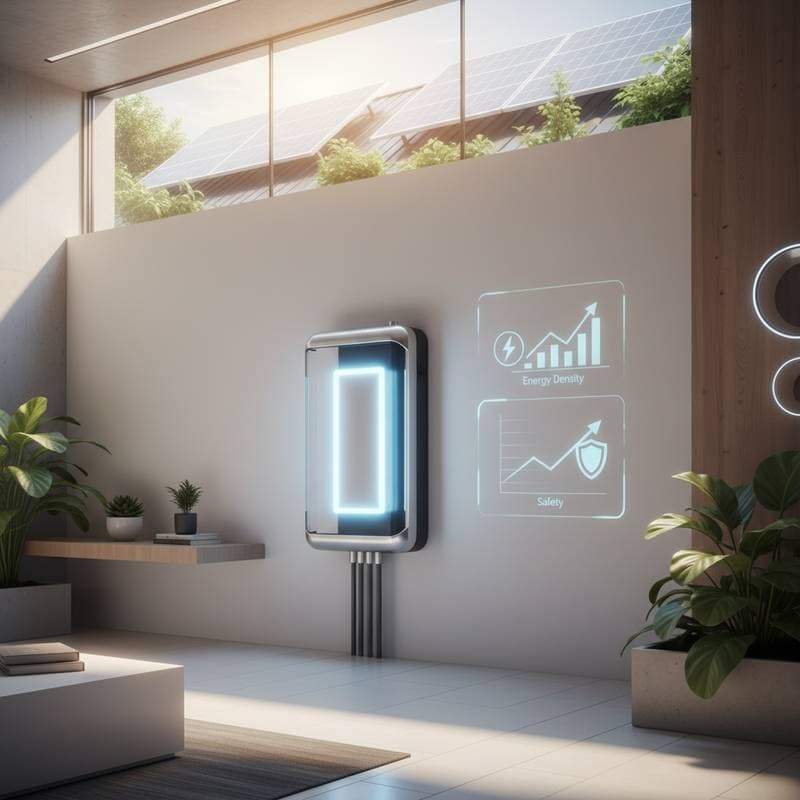
The Shift to Solid-State Batteries: Replacing Lithium-Ion by 2026
Conventional lithium-ion batteries reveal their limitations in modern applications. Safety concerns, extended charging times, and reliance on limited resources drive the need for innovation. Solid-state batteries emerge as a viable alternative, transitioning from research phases to practical deployment. This technology substitutes the liquid electrolyte in lithium cells with a solid counterpart, yielding batteries that deliver increased energy density, enhanced safety, and extended durability.
For individuals considering solar installations and energy storage, this evolution carries significant implications for long-term investments. Solid-state batteries represent a realistic upgrade over traditional lithium systems. Their superior performance proves particularly valuable in renewable energy setups, where reliability and efficiency determine overall success.
Understanding Solid-State Battery Design
Solid-state batteries employ a solid electrolyte in place of the liquid or gel versions common in lithium-ion batteries. Materials such as ceramics, sulfides, or polymers form this solid layer. By eliminating the flammable liquid component, the design substantially lowers the risk of fires associated with lithium battery incidents.
The solid electrolyte enables the incorporation of a pure lithium metal anode, which packs more energy into a smaller volume. This configuration results in greater capacity per cell and accelerated charging rates. Consequently, the batteries achieve a compact form factor, heightened safety, and prolonged service life, making them suitable for electric vehicles as well as fixed energy storage installations.
Limitations of Lithium-Ion Technology
Lithium-ion batteries have served portable electronics and solar storage for many years. However, their drawbacks grow more pronounced with expanding use.
Key challenges encompass:
- Risk of thermal runaway leading to fires when batteries overheat or suffer damage
- Progressive decline in capacity following numerous charge-discharge cycles
- Narrow temperature tolerance that impairs function in extreme cold or heat
- Dependence on costly and ecologically taxing materials like cobalt and nickel
Solid-state batteries resolve these issues effectively. The technology dispenses with flammable liquids, functions across broader temperature ranges, and incorporates more accessible, less hazardous materials.
Benefits for Solar Energy Storage
In solar panel systems for homes, the battery serves as the central component. Effective storage dictates the extent to which generated power supports nighttime needs or backup during power disruptions. Solid-state batteries provide targeted advantages for integrating with residential solar arrays.
- Elevated energy density. Greater storage capacity within identical space requirements permits more compact units and simplifies placement indoors.
- Enhanced safety profile. Without liquid electrolytes, fire risks diminish considerably. Such features support secure placement in areas like basements or garages.
- Extended operational life. These cells withstand thousands of cycles while retaining most of their initial capacity. Homeowners benefit from reduced replacement frequency and decreased costs over time.
- Rapid recharge capability. The solid electrolyte facilitates stronger current flows, shortening the duration needed to replenish from solar generation or grid sources.
These qualities render solid-state batteries optimal for advanced solar storage in homes and modest commercial operations. For example, a typical household system could store enough evening power for essential appliances without oversized equipment.
Overcoming Production and Market Hurdles
The benefits of solid-state batteries appear compelling, yet the path to widespread adoption involves obstacles. Fabricating these batteries demands novel materials and specialized machinery. Current production expenses stay elevated, and scaling assembly processes requires further optimization.
Industry forecasts indicate that as manufacturing techniques advance, prices will decrease rapidly. Dr. Elena Ruiz, a materials engineer at the National Renewable Energy Laboratory, observes, "Solid-state batteries will become the safest and most energy-dense option for both vehicles and stationary storage once scaling challenges are solved."
Initial demonstration initiatives demonstrate promising outcomes. Various automotive and energy firms document cycle lives surpassing ten years in typical conditions. These findings confirm the technology's readiness for commercial rollout beyond experimental stages.
To illustrate progress, companies like QuantumScape and Solid Power have achieved prototypes with energy densities 50 percent higher than current lithium-ion standards. Such developments accelerate the timeline toward market availability by 2026.
Environmental and Resource Advantages
Solid-state batteries lessen dependence on rare metals and enhance recyclability. Numerous configurations require minimal cobalt or exclude it altogether. This shift mitigates environmental damage from mining and stabilizes global supply chains.
The prolonged lifespan of solid-state units means fewer batteries enter waste streams over a solar system's duration. Homeowners contribute to sustainability by adopting storage that aligns with circular economy principles. Recycling processes for solid electrolytes prove simpler, further reducing ecological footprints.
Strategies for System Preparation
Individuals planning solar setups now must inquire about battery adaptability with installers. Numerous inverters and controllers accommodate both lithium and forthcoming solid-state variants.
When assessing storage solutions, prioritize:
- Certifications from UL or IEC for safety assurance
- Verified data from manufacturers on cycle endurance and heat management
- Warranties extending to at least ten years
- Seamless integration with current solar hardware and regional grid regulations
Adherence to building codes proves crucial. Authorities in the area often mandate approved, certified equipment to safeguard against hazards. Engage certified electricians for all installations or modifications. Faulty connections or unauthorized alterations risk electrical shocks, fires, or system malfunctions.
Actionable Steps for Solar Users
Solid-state batteries stand poised to supplant lithium-ion systems in the near future. Homeowners benefit most by remaining updated and designing systems with adaptability.
Begin with these measures:
- Evaluate your existing solar setup's storage volume and available space.
- Consult your installer regarding pathways for integrating solid-state batteries upon their broader release.
- Schedule a professional review to confirm compatibility for retrofits.
A qualified electrician or solar specialist can determine if your configuration supports future enhancements. As manufacturing expands and expenses drop, solid-state batteries will establish themselves as the benchmark for secure, effective, and environmentally sound home energy solutions.