
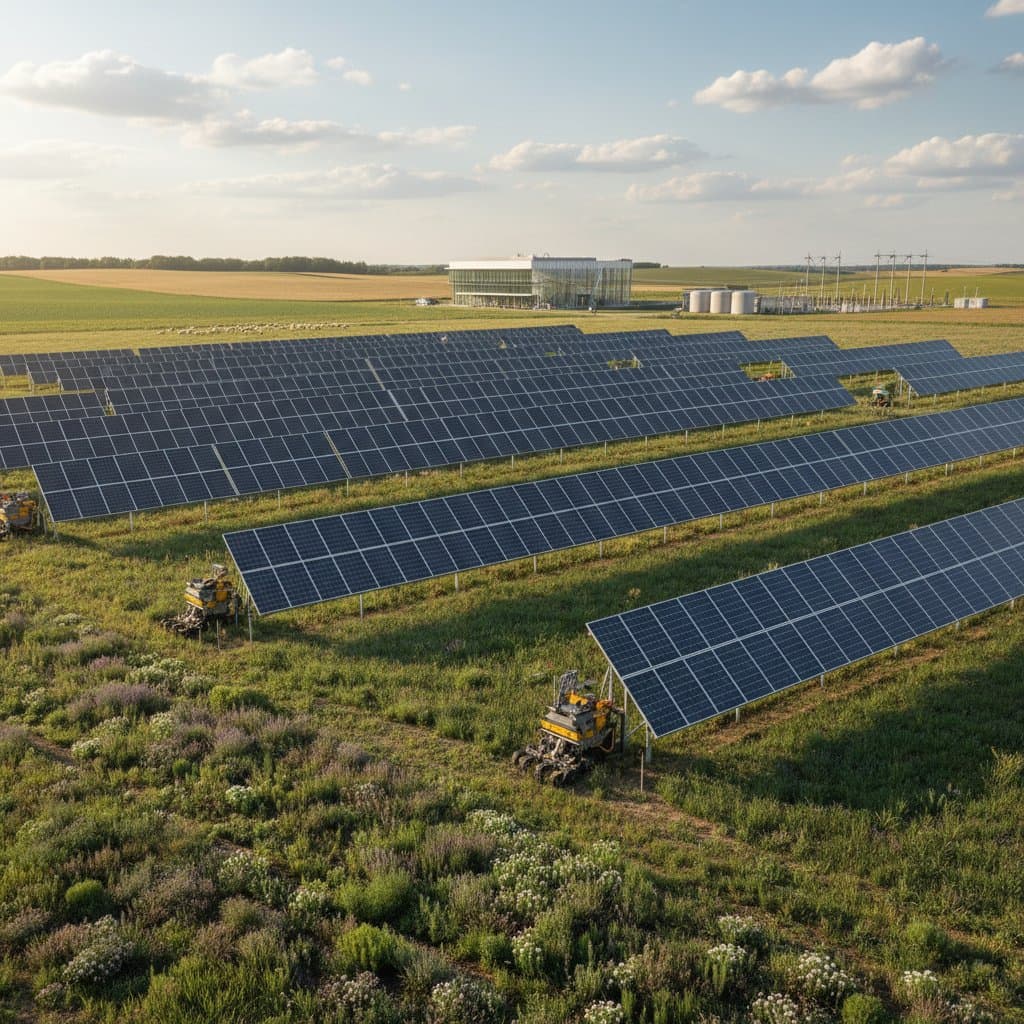
The Financial and Environmental Advantages of Agrivoltaics by 2026
Farmers face increasing pressures from rising energy costs, unpredictable weather, and escalating input expenses. Solar technology has advanced in affordability and efficiency, opening doors to innovative land use strategies. Agrivoltaics, also referred to as dual-use solar farming, integrates solar panels with crop production or livestock grazing, allowing land to yield both agricultural products and renewable energy.
This method moves beyond theoretical concepts and demonstrates real-world viability. Farms achieve profitability, resilience, and sustainability simultaneously. Projections indicate that by 2026, as funding initiatives reach maturity, agrivoltaics will emerge as a leading choice for landowners seeking financial security and environmental stewardship.
Revenue Opportunities in Agrivoltaics
Advancements in solar technology provide robust financial returns, which agrivoltaics amplifies through diversified income sources. Key revenue components include the following:
-
Electricity Savings or Sales. A 1-megawatt agrivoltaic system generates approximately 1.3 million kilowatt-hours annually in favorable solar conditions. At a retail rate of 15 cents per kilowatt-hour, this translates to roughly $195,000 in yearly energy value, prior to deductions for maintenance and grid connection.
-
Agricultural Output. Partial shading from panels supports many crops effectively. Research indicates that leafy greens, peppers, and certain grains maintain up to 80 percent of their typical yields. Livestock grazing benefits from reduced water needs due to cooler soil temperatures, preserving traditional farm earnings.
-
Government Incentives and Credits. Various regions provide grants for renewable energy, low-interest loans, and tax incentives. Combining these with agricultural support programs can reduce payback periods to less than ten years for qualifying installations.
-
Preservation of Land Value. Retaining agricultural activity helps sustain farmland designations and associated tax advantages. This approach also safeguards soil integrity, facilitating smoother adaptations in the future.
The synergy of energy savings and crop revenues often surpasses the performance of standalone systems.
Installation Costs and Return on Investment
Examine a 500-kilowatt agrivoltaic setup spanning five acres. This configuration produces about 650,000 kilowatt-hours per year, offsetting electricity costs at 15 cents per kilowatt-hour for an annual value of $97,500. With total installation expenses of $1 million offset by a 30 percent rebate, the effective investment drops to $700,000. The resulting payback period exceeds seven years when considering energy benefits alone.
Incorporating $20,000 in annual revenue from vegetables or grazing accelerates the payback to approximately six years. Beyond this point, the system generates ongoing income for 20 years or longer, supported by routine maintenance.
Ecological and Community Benefits
Agrivoltaics extends value beyond economics by fostering resilient ecosystems. Shade from panels minimizes water evaporation, proving advantageous during droughts. Ground cover beneath structures curbs erosion and creates habitats for pollinators. Field trials reveal potential irrigation reductions of up to 20 percent.
The approach significantly lowers greenhouse gas emissions. A 1-megawatt installation avoids about 900 tons of carbon dioxide emissions annually relative to conventional grid electricity. When powering farm essentials such as irrigation or refrigeration, it further displaces fossil fuel consumption, amplifying carbon reductions.
Communities experience job creation in installation and upkeep roles. This model aligns farming with renewable energy objectives while upholding food production capacity.
Practical Implementation and Upkeep Strategies
Begin assessment by gathering 12 months of utility statements to analyze kilowatt-hour usage and seasonal variations. Commission a professional solar resource study to verify site suitability. Obtain quotes from at least three providers, ensuring consistency in system specifications, orientation, and output estimates. Verify available incentives and utility interconnection requirements.
Post-installation, conduct quarterly inspections for accumulations of dust or debris, particularly in high-pollen periods. Maintain vegetation to control growth while promoting soil stability. Monitor energy production via system software, addressing any declines exceeding 5 percent promptly. Simple cleaning or equipment resets typically suffice. Arrange expert evaluations every few years to examine electrical components, structural integrity, and safety features.
Consistent practices enable even modest operations to thrive. The integration of energy production, cost efficiencies, and environmental enhancements builds lasting worth for landholders and surrounding areas.
Frequently Asked Questions
What crops thrive beneath solar panels?
Leafy greens, peppers, berries, and forage grasses tolerate partial shade effectively. The moderated light and enhanced moisture levels frequently enhance overall plant health.
Does shading impact overall farm productivity?
Per-acre output typically increases through combined energy and crop generation. Although individual crop yields may dip modestly, the supplementary energy income offsets any reductions comprehensively.