
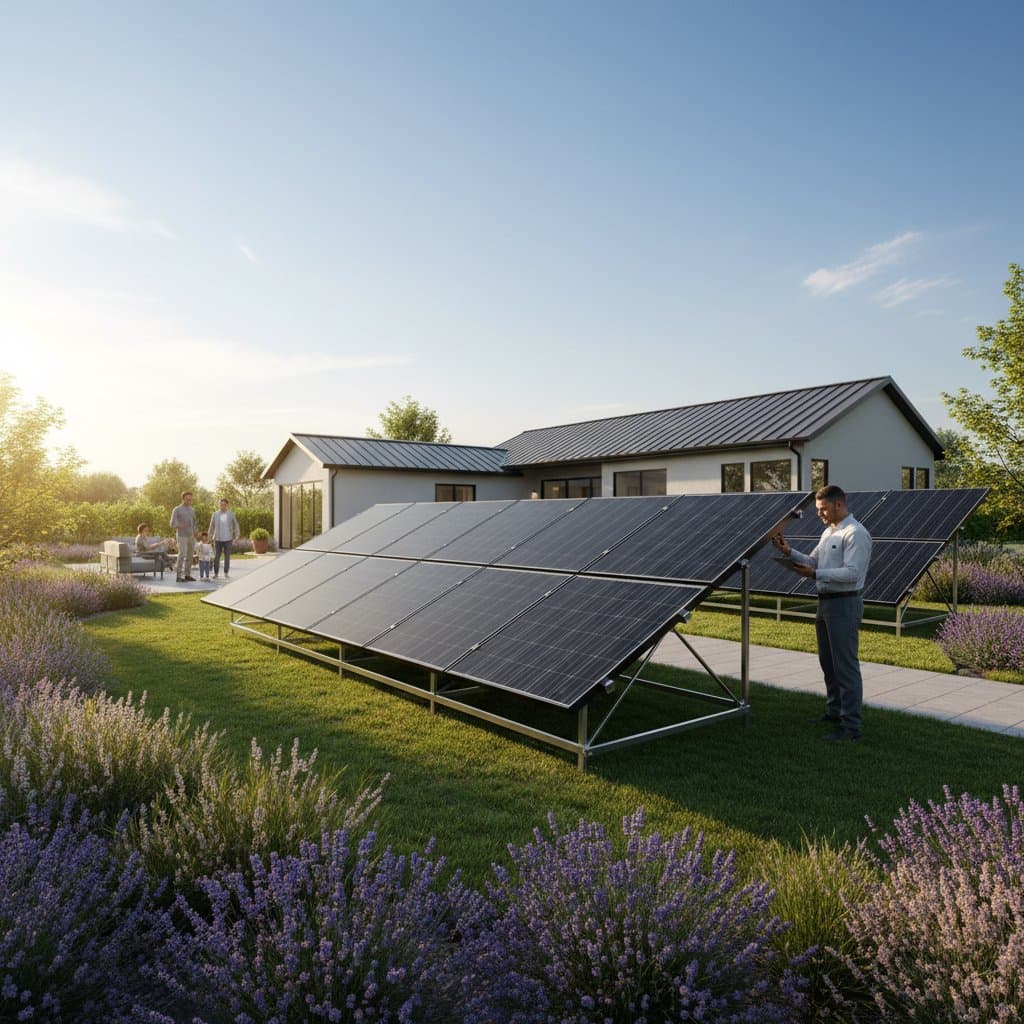
Why Homeowners Are Turning to Ground-Mount Solar in 2025
Rooftop solar installations led residential adoption for years, yet ground-mount systems now capture significant interest. These setups position solar panels on sturdy frames anchored into the ground, typically in backyards or open areas. The transition stems from advantages in placement options, energy output, and ongoing care.
This evolution highlights concerns over roof durability and preferences for secure, regulation-compliant solutions. Ground-mount solar provides greater oversight, reachability, and scalability. For numerous families, it represents the optimal route to self-sufficient power.
How Ground-Mount Solar Works
Ground-mount solar arrays employ steel or aluminum frameworks fixed into concrete bases or ground-driven posts. Panels mount to these structures at a predetermined angle to optimize sunlight absorption.
Two primary configurations exist:
- Fixed-tilt arrays maintain a constant orientation across seasons.
- Adjustable or tracking arrays alter positions daily to track solar movement.
Tracking mechanisms can elevate output by up to 25 percent relative to fixed designs by ensuring peak alignment with the sun.
Connections to the home electrical system run via underground conduits, buried to prescribed depths and shielded against wear. A certified electrician confirms proper grounding, insulation quality, and surge safeguards prior to activation.
Key Advantages of Ground-Mount Systems
1. Enhanced Performance
Ground arrays allow precise orientation and inclination for maximum solar gain. Panels remain cooler through unrestricted airflow, which sustains higher conversion rates compared to roof-bound units that trap heat.
Designers often accommodate expansive layouts, as land availability exceeds typical roof constraints, enabling greater overall capacity.
2. Simplified Access and Maintenance
Ground-level arrays eliminate the need for elevated access during cleaning or repairs. Technicians handle all components, including cables, connections, and converters, without height-related hazards.
Such proximity minimizes injury risks and streamlines routine evaluations.
3. Extended Durability and Roof Protection
Independent from building elements, ground-mount systems prevent roof drilling that invites moisture intrusion. Existing roofing materials endure longer, sparing expenses tied to removal and replacement beneath panels.
4. Scalable Expansion Options
Ground setups adapt readily to rising demands. Integrating additional panels or upgrades proves less disruptive than altering saturated rooftop configurations.
5. Superior Ventilation and Debris Management
Proximity to earth promotes natural cooling and facilitates snow clearance in winter climates. A simple sweep or water pass restores full functionality without access challenges.
Comparing Costs and Returns
Initial expenses for ground-mount projects may exceed rooftop equivalents due to foundation work and site preparation. However, elevated production, reduced upkeep, and prolonged reliability frequently balance the difference.
Prospective owners benefit from requesting these specifics from providers:
- Installed price per watt
- Projected yearly kWh generation
- Warranties on modules, converters, and labor
- Details on upkeep agreements
Credible firms furnish itemized breakdowns covering excavation, piping, supports, and wiring efforts. Such clarity averts unforeseen charges.
Stronger yields and minimal servicing often recoup any upfront difference within three to five years.
Professional Installation and Inspection Steps
- Site Evaluation
Professionals gauge sunlight patterns, ground stability, and service proximity. - Planning and Approvals
Engineers validate designs and electrical schematics against local standards. - Base Preparation
Anchors embed in concrete or drive to specified depths. - Framework Assembly
Supports level precisely for uniform angles. - Module and Cabling Integration
Panels secure with approved fasteners; wires route through protective channels. - Power Linkage
Electricians integrate with the main panel and affirm safety measures. - Review and Activation
Authorities examine earthing, markings, and circuits prior to grid tie-in.
Adherence to equipment guidelines and certified parts ensures warranty validity and hazard prevention.
Future Trends and Community Adoption
Rising familiarity with ground-mount versatility spurs collective projects in communal areas or green spaces. These pooled systems supply several residences via metering protocols.
Ground arrays integrate seamlessly with storage solutions or minor wind elements. Their spacious design accommodates additions absent building restrictions.
Renewable energy evaluators note that ground-mount configurations pass audits more readily than legacy roof setups. Obvious pathways and accessible bonds reduce compliance issues.
Next Steps for Homeowners
Begin solar exploration with a comprehensive site review. Document open areas with images, assess shade impacts, and compile utility statements.
Consult certified solar specialists experienced in diverse mounting methods. Request documented proposals outlining expenses, yields, and accessibility features.
Confirm provider credentials, including active licenses and coverage, to secure a dependable installation.