
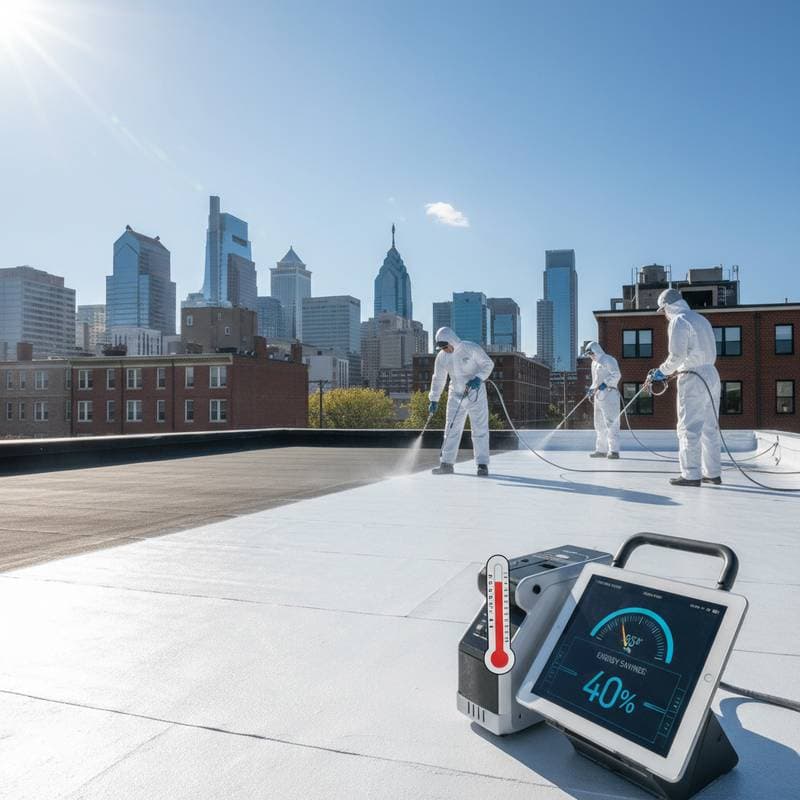
Reflective Coatings Reduce Air Conditioning Costs by Up to 40 Percent
Maintaining a comfortable home during intense summer heat demands significant energy and financial resources. In Philadelphia, dark-colored roofs absorb substantial sunlight, which transfers heat into attics and living areas, thereby increasing reliance on air conditioning systems. Cool roof coatings incorporate advanced reflective properties to deflect solar radiation from building surfaces, resulting in cooler attics and diminished cooling requirements. Research conducted by the U.S. Department of Energy indicates potential energy savings of up to 40 percent with appropriate application and ongoing maintenance of these coatings.
The Impact of Roof Surface Temperatures
Dark roofs frequently exceed surface temperatures of 150 degrees Fahrenheit on sunny days. This accumulated heat conducts downward, compelling air conditioning units to operate extended periods to regulate indoor climates. Cool roof coatings counteract this effect by reflecting a majority of incoming sunlight and facilitating rapid dissipation of any absorbed heat. Consequently, interiors remain cooler, utility expenses decrease, and heating, ventilation, and air conditioning systems experience reduced operational stress.
These coatings typically feature specialized pigments designed to disperse ultraviolet and infrared wavelengths effectively. Formulations often rely on acrylic or silicone bases that adhere securely to substrates such as asphalt shingles, metal panels, or membrane systems. Upon application, the coating creates a seamless barrier resistant to moisture infiltration and accumulation of debris, while preserving its reflective capabilities over time.
Essential Safety Measures and Preparation Steps
Roof-related tasks present inherent hazards, including the risk of falls, encounters with electrical hazards, and exposure to compromised structural elements. To mitigate these dangers prior to commencing work:
- Conduct a thorough inspection from ground level to identify signs of sagging, visible cracks, or softened areas.
- Select a sturdy ladder equipped with a locking spreader bar for secure positioning.
- Choose footwear featuring robust, non-slip soles; employ a safety harness for roofs with pronounced slopes.
- Maintain a safe distance from overhead electrical lines; avoid applying coatings in proximity to service wires.
Should the roof exhibit structural damage or if electrical service mast connections appear vulnerable, halt all activities immediately and engage a licensed roofing or electrical professional for assessment and remediation.
Detailed Application Procedure
-
Prepare the roof surface through cleaning. Sweep away loose granules, leaves, or other debris using a stiff broom or leaf blower. Employ a pressure washer with a mild detergent solution to remove embedded dirt and algae; allow the surface to dry fully under clear conditions.
-
Address any existing leaks or fissures. Apply a compatible roof patching compound to seal cracks, gaps, or deteriorated seams, ensuring compatibility with the underlying roofing material.
-
Apply primer as specified. Certain coatings require a preparatory primer layer to promote strong adhesion; consult the product specifications to determine necessity and select an appropriate formula.
-
Distribute the reflective coating evenly. Utilize a paint roller for broad areas, a brush for edges and seams, or a sprayer for efficiency on larger surfaces. Proceed in multiple thin coats to achieve uniform thickness, avoiding excessive buildup that could lead to uneven drying.
-
Evaluate the application post-curing. Examine the surface for incomplete coverage or insufficient thickness; schedule an additional coat where necessary to meet manufacturer standards.
Adhere strictly to the product's guidelines regarding optimal environmental conditions, such as temperatures between 50 and 90 degrees Fahrenheit, moderate humidity levels, adequate ventilation, and at least 24 hours without impending precipitation.
Evaluating Options Among Cool Roof Coatings
Homeowners encounter several viable coating types, each tailored to specific performance needs and roof configurations.
-
Acrylic-based coatings offer cost-effectiveness and user-friendly, water-based formulations ideal for application on flat or low-slope roofs, providing solid initial reflectivity with straightforward maintenance.
-
Silicone-based coatings excel in water resistance, preventing ponding and demonstrating superior endurance against prolonged ultraviolet radiation, which extends service life in harsh weather.
-
Polyurethane-based coatings deliver exceptional toughness and flexibility, making them suitable for roofs subject to occasional foot traffic or mechanical equipment, though they may require specialized application techniques.
Factors such as expected coverage per gallon, recommended tools, and long-term upkeep schedules vary by product; reviewing technical data sheets aids in selecting the best match for individual properties.
Aligning Cool Roofs with Broader Energy Efficiency Initiatives
By minimizing solar heat absorption, these coatings lessen the thermal load on buildings, enabling air conditioning systems to function with reduced capacity or frequency. This efficiency translates to lower overall energy consumption and corresponding decreases in carbon emissions, supporting Philadelphia's commitments to sustainable energy practices. Local utility providers and municipal programs frequently provide financial rebates or incentives for installing reflective roof systems on both residential and commercial structures, potentially recovering initial investments within two to three summer seasons.
To maximize these benefits, consider integrating cool roof upgrades with other efficiency measures, such as attic insulation enhancements or programmable thermostat installations, for compounded savings.
Ongoing Maintenance and Professional Guidance
Annual inspections of coated roofs help detect accumulations of dirt, algae, or areas where the coating has thinned. Perform gentle cleaning using a soft brush and diluted mild soap solution, followed by thorough rinsing to restore reflectivity without abrasive damage.
Recoating becomes necessary when visual assessments or reflectivity measurements indicate degradation, typically every five to ten years depending on environmental exposure. Verify ongoing compatibility with the original roof substrate through manufacturer resources.
While basic cleaning and spot repairs fall within the scope of homeowner tasks, entrust complex interventions—such as addressing structural issues, sealing electrical penetrations, or conducting full recoats—to certified professionals. These experts ensure proper adhesion, evaluate flashing integrity, and confirm adherence to regulations set by the Philadelphia Department of Licenses and Inspections.
Implementing and maintaining a cool roof system with reflective coatings sustains lower indoor temperatures, prolongs roofing material lifespan, and achieves air conditioning cost reductions of up to 40 percent, fostering long-term energy independence and environmental stewardship.