
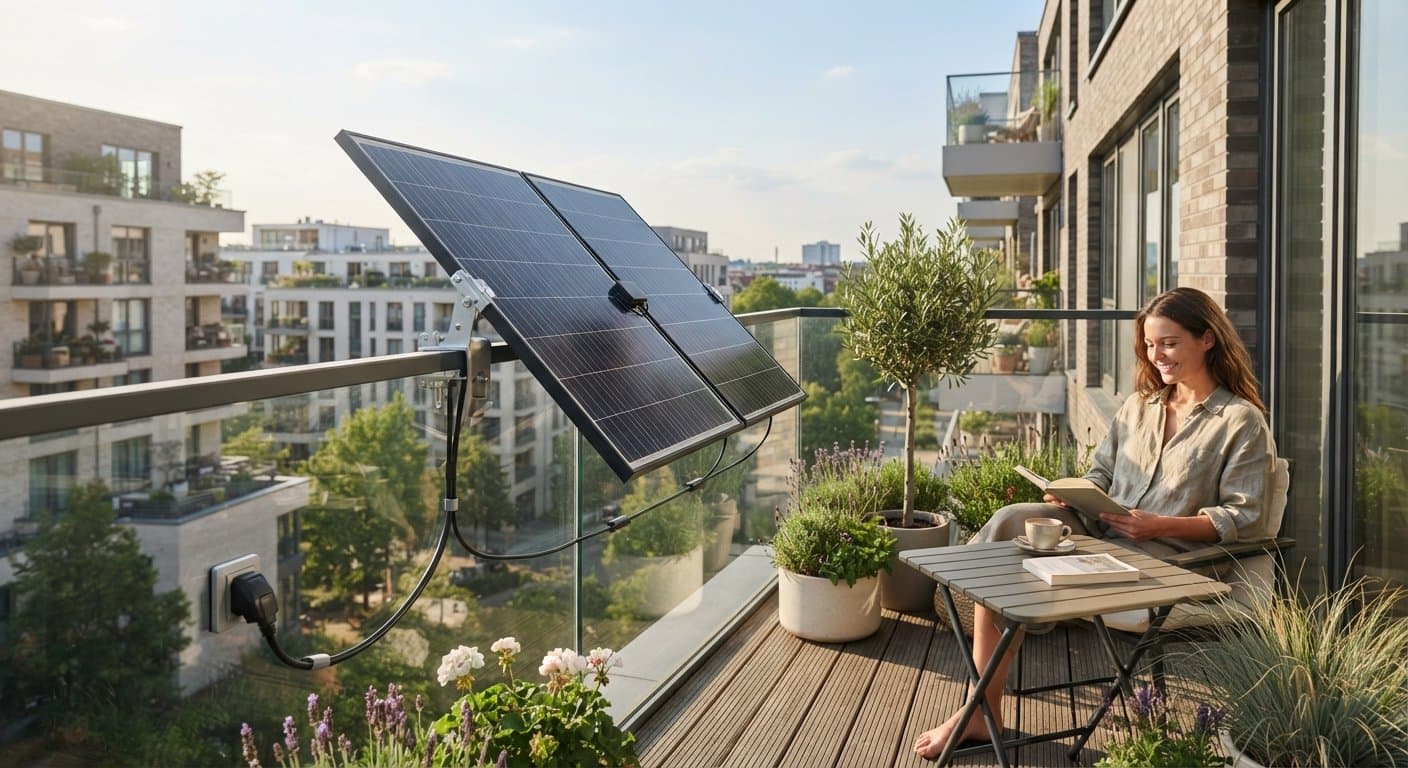
Balcony Solar Kits Offer Renters a Practical Path to Solar Power
Many renters and apartment owners want to reduce their electric bills but cannot install rooftop solar. Balcony solar kits provide another option. These compact systems attach to a balcony railing or rest on a small outdoor area, then connect to a home circuit through a plug. Their growing availability in the United States could make solar easier to try, especially for households that lack a suitable roof.
Interest is growing, but practical details matter. Product availability, utility rules, building policies, and electrical safety all affect whether a kit works for a specific home. A plug-in panel can reduce some daytime electricity use, yet it will not power an entire apartment or guarantee a lower bill. Understanding the equipment and local requirements helps households make a confident choice.
How a Balcony Solar Kit Works
A typical balcony solar kit includes one or more photovoltaic panels, a microinverter, mounting hardware, cables, and monitoring software. Sunlight reaches silicon cells in a panel and moves electrons through an electrical circuit. The microinverter changes the panels' direct current into alternating current, the type used by household appliances.
When the system connects to an approved household circuit, solar electricity can serve devices that are running at that moment. A refrigerator, router, or computer may draw some of its power from the panels. If the apartment needs more electricity than the system produces, the utility supplies the rest. If the panels produce more than the home uses, the extra energy may flow to the grid, depending on the equipment and utility rules.
Unlike a rooftop system, a small balcony setup usually does not include a battery. It generally stops producing power during a grid outage unless it has a specifically designed backup feature. A standard grid-connected inverter shuts down for safety, so it does not send electricity onto lines that utility crews may be repairing.
Why Clear Rules Matter for US Adoption
Plug-in solar systems have gained attention in other countries, where some kits connect through standard outlets under defined safety rules. In the United States, approval can depend on electrical codes, utility interconnection requirements, product certification, and local enforcement. A plug that physically fits an outlet does not, by itself, mean a system is approved for use.
Utah has drawn attention for legislation intended to establish a path for small plug-in solar systems. That development may encourage other states to review their policies, but it does not create one nationwide standard. Requirements can differ by state, utility, building, and product. Before buying, check with the utility and local electrical authority. Ask what equipment is accepted, whether an inspection or interconnection application is required, and whether export credits apply.
Apartment residents also need written permission from a landlord or building association. Balcony railings may not support panel loads, and rules may restrict exterior changes. Wind, falling-object risks, fire access, and shared wiring deserve careful attention. A qualified installer or electrician can assess questions that a product listing cannot answer.
Estimating Energy Production and Bill Impact
Balcony kits are small compared with rooftop systems. A one kilowatt system might produce roughly 900 to 1,300 kilowatt-hours per year in a sunny location, with lower output in shaded or cloudy conditions. The actual result depends on local sunlight, panel direction, tilt, shading from nearby buildings, and the system's equipment.
Consider a 600 watt kit in a location that yields 1,100 kilowatt-hours per installed kilowatt each year. The estimate is:
- 0.6 kilowatts multiplied by 1,100 kilowatt-hours equals about 660 kilowatt-hours per year.
- At an electricity rate of 20 cents per kilowatt-hour, that energy is worth about 132 dollars per year if the home uses it as it is produced.
This is a rough estimate, not a savings promise. Fixed utility fees usually remain. If the apartment uses little power while the sun is shining, some production may not reduce the bill. Exported electricity may receive little or no credit. Battery storage could capture some excess energy, but it adds cost, equipment, and complexity.
For an illustrative kit price of 800 dollars, simple payback would be about six years at 132 dollars in annual savings. If shading or poor timing cuts useful savings in half, payback could stretch to roughly twelve years. That calculation excludes financing, repairs, incentives, and any installation costs. Compare the purchase price with expected self-consumption, not a best-case production estimate.
Practical Benefits and Tradeoffs
A balcony system can lower grid use during sunny hours without a roof project. It may also help residents learn how household energy use changes through the day. Monitoring apps can show production and use, encouraging simple shifts such as running a dishwasher when solar output is strong.
The main benefits are modest but useful:
- Lower daytime energy purchases, especially for appliances that run throughout the day.
- A small step toward cleaner electricity, with the exact emissions benefit shaped by the local grid.
- More energy awareness, which can help households identify waste.
- Access for some renters, if the building and local rules allow safe installation.
There are limits. Small systems cannot replace central heating, air conditioning, or a full household supply. Shaded balconies may perform poorly. Renters may move before recovering the upfront cost, and building approval can take time. A kit also does not provide outage protection unless it includes a compatible, approved backup design.
Choosing a Safe, Suitable Setup
Start with the balcony, not the shopping cart. Check how many hours of direct sun reach the space, and note shadows from trees, neighboring buildings, and overhangs. South-facing exposure often receives strong sunlight in the United States, but east or west orientations can still produce useful power. A secure mounting angle and local conditions matter more than a simple compass direction.
Before buying, verify these points:
- Approval: Ask the utility and local authority about interconnection, permits, inspections, and accepted product certifications.
- Building permission: Get written approval from the landlord or association, and ask about railing, facade, and fire-access rules.
- Electrical safety: Confirm that the system uses listed equipment and follows its installation instructions. Do not modify wiring or use improvised adapters.
- Mounting strength: Make sure the support can handle the panel weight and wind forces. Panels must not create a falling-object hazard.
- Bill structure: Check your electricity rate, time-of-use periods, and export policy. Savings depend on when the home uses power.
- Warranty and service: Review coverage for panels, inverter, mounting hardware, and monitoring, along with repair and recycling options.
A balcony kit should not overload a circuit or share an unsuitable outlet with high-demand appliances. Follow the manufacturer's instructions and use a licensed electrician when required. If a seller cannot explain product certification, grid protection, or utility approval, pause before purchasing.
Making the Investment Fit Your Home
Compare at least two or three offers using the same assumptions. Ask for estimated annual production, expected self-consumption, total installed cost, and any fees. Request the assumptions for shade, orientation, utility rates, and exported electricity. Do not treat a panel's maximum output rating as its expected daily production.
If solar is not practical yet, smaller upgrades can still reduce bills. Replace frequently used bulbs with LEDs, seal air leaks around doors, wash clothes in cold water, and use an advanced power strip for electronics. A smart thermostat, efficient window coverings, or better insulation can make a larger difference in comfort and energy use. Residents who control their own heating and cooling may also explore a heat pump when replacement is due.
These measures can complement balcony solar. Lowering demand means a small system can cover a larger share of the electricity used during its productive hours.
Next Steps for Interested Residents
Gather a year of utility bills and identify appliances that run during daylight. Photograph the balcony and track shade at several points in the day. Then contact the utility, building manager, and local electrical authority before comparing products. Ask each seller for realistic production estimates and written confirmation of safety certifications.
After installation, check the mounting hardware and cables as directed by the manufacturer. Keep panels clear of heavy dirt, leaves, and snow when it is safe to do so. Review monitoring data for sudden production drops, and contact the installer about faults rather than opening electrical equipment yourself.
Balcony solar will not fit every apartment, but it may offer a manageable entry point for homes without roof access. Clear rules and careful planning can make that option safer and more useful. A small system, paired with practical efficiency steps, can help households take action at a scale that suits their space and budget.
Frequently Asked Questions
Can plug-in solar panels power an entire apartment?
Usually not. Compact kits can offset part of daytime use, but they are too small to supply all appliances, heating, or cooling in most homes.
Do balcony panels need much maintenance?
Maintenance is minimal. Occasional cleaning and periodic checks of mounting hardware and connections are usually sufficient. Follow the manufacturer's guidance for specific intervals and procedures.