
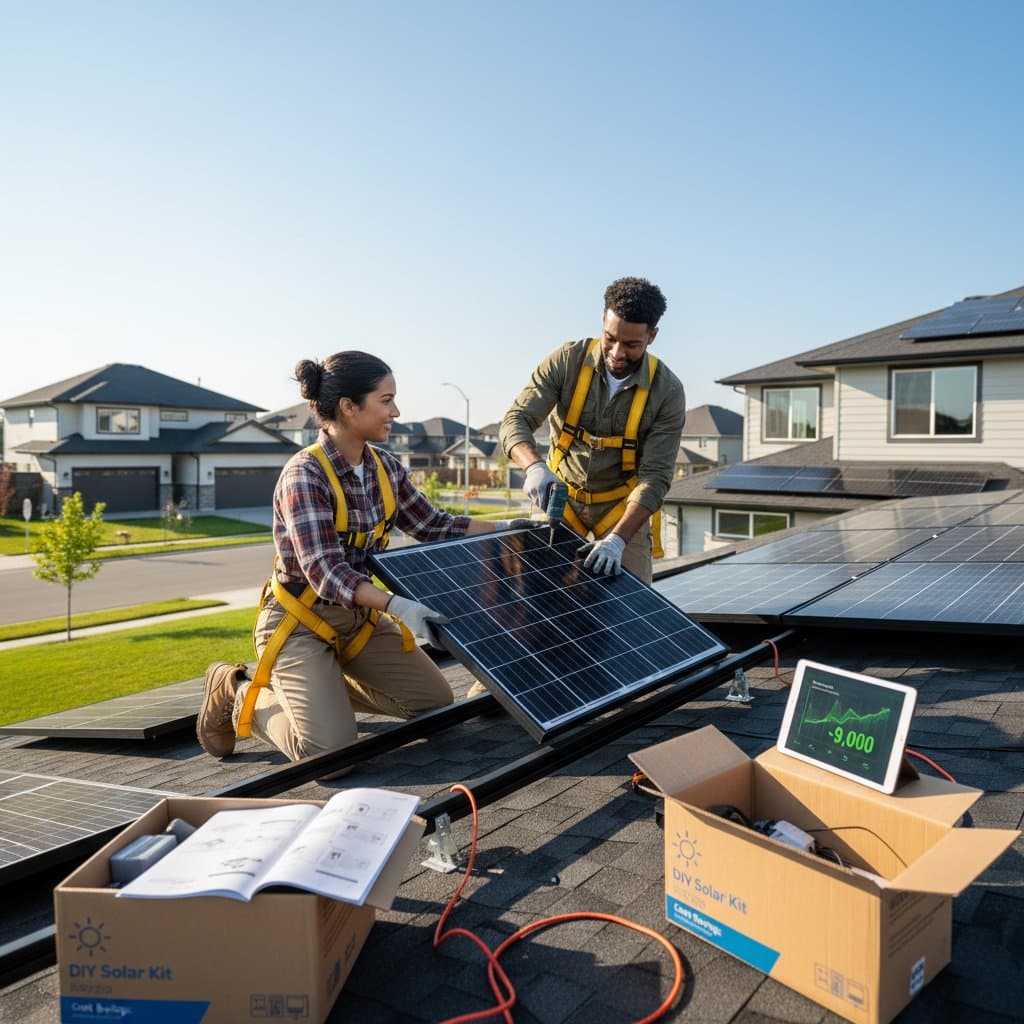
DIY Solar Kits Gain Momentum: Achieve Home Energy Independence in 2025
Solar energy adoption often begins with daunting considerations such as system sizing, electrical wiring, permitting requirements, and incentive applications. However, do-it-yourself solar kits simplify this journey for homeowners. These comprehensive packages integrate photovoltaic panels, inverters, mounting systems, and monitoring tools into user-friendly assemblies designed for straightforward installation. The result is accessible energy independence without the complexities of traditional setups.
Nationwide, demand for self-installed solar solutions rises steadily. Declining equipment prices, streamlined technologies, and extensive online tutorials contribute to this trend. For numerous households, these kits offer a practical route to generating renewable power without relying on professional contractors.
Understanding DIY Solar Kit Operations
Photovoltaic panels form the foundation of any solar kit, capturing sunlight to produce direct current electricity. Photons from the sun excite electrons within silicon cells, creating an electric field that generates usable current. An inverter converts this direct current into alternating current compatible with household appliances.
Standard kits typically contain:
- Solar panels with power ratings from 350 to 450 watts per unit
- Microinverters or string inverters to handle energy conversion
- Mounting hardware suitable for roof or ground configurations
- Wiring harnesses and connectors ensuring secure electrical connections
- Monitoring devices for tracking real-time energy output
Sunlight energizes the panels, prompting current to pass through the inverter and integrate with the home electrical panel. Surplus energy returns to the utility grid, earning credits via net metering arrangements that reduce electricity expenses.
Advantages Extending Past Financial Savings
Homeowners maintain full oversight of the installation timeline and methods, eliminating delays from contractor availability.
Hands-on assembly fosters familiarity with system components, easing future maintenance and warranty processes.
Kits support modular expansion; initial setups can grow by incorporating additional panels on the existing inverter framework.
Self-installation strengthens personal ties to environmental objectives, promoting a proactive stance on renewable energy.
Beyond these practical gains, generating personal electricity instills resilience against escalating utility rates.
Available Incentives and Financial Supports
Self-installed systems access the federal solar investment tax credit, provided the homeowner owns the equipment and deploys it on a primary or secondary residence. State programs and utility providers frequently extend rebates or performance incentives.
Consider a $9,000 system qualifying for a 30 percent federal credit, lowering the net cost to approximately $6,300. Certain utilities provide additional payments of 1 to 3 cents per kilowatt-hour generated, accelerating return on investment by up to one year.
Verify program specifics prior to committing. While some incentives mandate professional involvement, others accept documented inspections and grid interconnections.
Key Equipment Selections Impacting System Efficiency
Strategic choices significantly shape performance outcomes.
- Panel efficiency levels. Advanced models achieve 21 percent or greater conversion rates, maximizing output in limited areas, whereas economical options hover around 18 percent.
- Inverter configurations. Microinverters enhance individual panel performance amid shading, offering superior adaptability over cost-effective string inverters.
- Mounting options. Low-profile roof mounts fit sloped surfaces ideally; tilt-adjustable ground arrays facilitate routine cleaning and optimal angle adjustments.
- Monitoring solutions. Digital interfaces display energy metrics, identify issues promptly, and archive production data essential for warranties.
Essential Maintenance Practices
These systems demand minimal intervention yet benefit from periodic care. Accumulated debris like dust or pollen may reduce efficiency by 3 to 5 percent. Clean panels with fresh water one or two times annually.
Examine wiring and protective conduits for wear, including potential damage from wildlife or environmental factors.
Inverters generally endure 10 to 15 years of service, complemented by 25-year panel warranties guaranteeing output stability. Annual degradation averages 0.5 percent. Upon reaching end-of-life, manufacturers offer recycling services for panels.
Integrated software simplifies oversight, sending notifications for efficiency lapses or equipment anomalies to preserve financial benefits.
Educational Value of Self-Installation
The process of assembling a solar system imparts lasting insights into electrical principles, voltage management, and storage integration. Numerous installers subsequently incorporate batteries for excess energy retention or align systems with electric vehicle charging stations.
Such expertise enhances property appeal. Documented installations, backed by permits and inspections, contribute to resale valuations. Professional presentation, including clear labeling, reassures prospective buyers.
Practical Steps to Launch Your Project
- Assess roof integrity. Address any deteriorated shingles prior to panel placement.
- Analyze solar potential. Employ digital solar calculators or mobile applications to estimate yearly insolation.
- Evaluate kit providers. Select bundles featuring certified UL components and comprehensive manuals.
- Navigate regulations. Consult local utilities and authorities regarding permits and grid ties.
- Prepare safety measures. Secure ladders, harnesses, and insulated gloves for all work.
- Arrange professional review. Engage a certified electrician to inspect electrical integrations before grid activation.
Systematic planning guarantees adherence to standards and sustained reliability. Post-installation, monitor generation metrics and observe reductions in utility statements.
Frequently Asked Questions
Can individuals without experience complete a DIY solar installation?
Basic mechanical skills suffice for assembly with provided guidance. Engage a licensed electrician for panel connections to ensure safety and regulatory compliance.
What savings arise from choosing DIY over professional services?
Cost reductions typically span 25 to 50 percent, influenced by regional labor expenses. A 6-kilowatt professional setup at $18,000 might equate to a $9,000 kit purchase.
Do self-installed systems receive tax incentives?
Affirmative, provided the owner acquires and deploys the system on qualifying property. Retain purchase records and inspection reports for tax submissions.
Which tools support the installation process?
Essential items encompass drills, torque wrenches, ladders, measuring tapes, and electrical implements. Prioritize safety attire including harnesses and protective headgear.
How much time does setup require?
Compact roof systems demand two to three days for dedicated efforts. Ground-based arrays extend timelines due to excavation and foundation tasks.
Is future battery integration feasible?
Contemporary inverters accommodate expansions through DC-coupled or hybrid designs, streamlining additions.
How does performance hold during overcast conditions?
Generation decreases proportionally, with grid power filling gaps. Net metering reconciles overall production across periods.
Does DIY installation influence insurance policies?
Providers generally insure approved systems following inspections. Inform your insurer to adjust coverage accordingly.
Embracing Renewable Energy Through Personal Effort
DIY solar kits reshape residential renewable adoption by democratizing access to clean power. Reduced expenses, user-centric engineering, and robust support resources enable homeowners to secure sustainable electricity independently.