
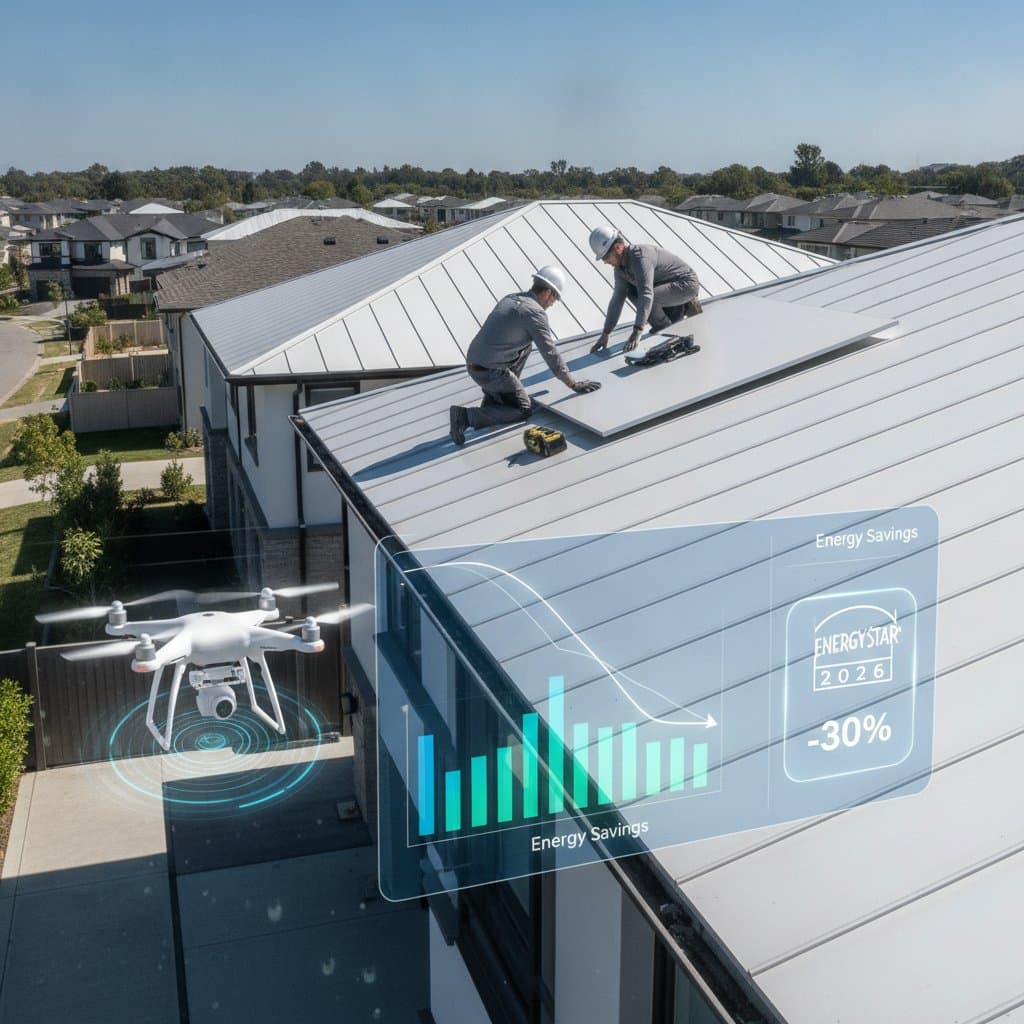
Cool Roof Credits Reduce Energy Costs by Up to 30 Percent in 2026
Many homeowners seek practical methods to reduce energy expenses while maintaining indoor comfort. Increasing utility rates and extended periods of high temperatures heighten the challenge of cooling homes, particularly in urban areas with extensive roof coverage and minimal natural shade. Cool roofs provide an effective solution. These roofs reflect sunlight to lower surface temperatures, decrease indoor heat absorption, and now qualify for new financial incentives that improve affordability.
A properly installed cool roof can reduce cooling energy consumption by as much as 30 percent. Factors such as roof design, existing insulation, and regional climate influence the exact savings. Expanded state and federal programs shorten the time required to recover installation costs, while comfort improvements begin immediately after completion.
How Cool Roofs Function
Cool roof systems incorporate materials designed to reflect solar radiation and emit absorbed heat efficiently. Performance depends primarily on two properties: solar reflectance and thermal emittance.
- Solar reflectance indicates the portion of sunlight reflected by the surface. Bright white membranes typically reflect between 70 and 80 percent of incoming sunlight. In contrast, conventional dark asphalt shingles reflect only 5 to 15 percent.
- Thermal emittance describes the rate at which a surface releases stored heat. Materials with high emittance values cool more rapidly once sunlight diminishes.
Options include reflective coatings, white membranes, light-colored shingles, and metal panels finished with reflective layers. Recent advancements allow certain darker pigments to reflect infrared wavelengths, offering additional color choices without sacrificing performance.
Available Incentives and Qualification Requirements
Current energy efficiency initiatives provide targeted credits for cool roof projects on both homes and commercial buildings. Eligible installations must use certified reflective products that satisfy Energy Star or comparable performance criteria.
Rebates often come from utility companies, state agencies, and local governments. Credits commonly cover 10 to 30 percent of material and labor expenses, with amounts varying by roof type and measured performance. Certain programs base payments on verified energy reductions documented through follow-up evaluations.
Qualification typically requires selection of products from approved lists, retention of all receipts, and submission of reflectance documentation. Working with experienced contractors familiar with compliance procedures simplifies the process.
In Philadelphia, utility initiatives focused on reducing peak demand frequently connect cool roof projects with insulation upgrades. Combining these measures increases overall savings and may qualify for additional incentives.
Maintenance Practices for Sustained Performance
Cool roofs require limited upkeep, yet periodic checks preserve their effectiveness. Accumulated dust, pollen, and debris gradually lower reflectance. Annual or biennial cleaning with low-pressure water and a mild detergent restores most of the original reflective capacity.
Examine seams and flashing areas for cracks or separation. Address minor issues quickly to avoid moisture intrusion. Apply new coatings when reflectance falls below target thresholds, which occurs roughly every 10 to 15 years depending on the product.
Homeowners can verify benefits by monitoring attic temperatures. Many report reduced operation of attic ventilation fans and more consistent indoor conditions following installation.
Broader Environmental and Health Advantages
Widespread adoption of cool roofs lowers peak electricity demand. Utilities can then reduce reliance on older, less efficient generating units during afternoon hours. This shift decreases emissions and enhances regional air quality. Reduced levels of smog and particulates create better conditions outdoors, especially for vulnerable populations.
Within the home, lower roof temperatures limit heat accumulation that contributes to excess humidity. Decreased moisture levels inhibit mold development and protect interior finishes.
Each household that reduces air conditioning use lowers annual carbon emissions by several hundred kilograms. Scaled across neighborhoods, these individual actions produce meaningful cumulative effects.
Addressing Common Concerns
Homeowners sometimes express hesitation regarding glare, visual appearance, or upfront expense. Contemporary reflective products offer matte finishes in multiple colors that minimize glare. Production efficiencies have lowered material costs over time. Available incentives offset remaining expenses, and accumulated energy savings justify the investment.
Locating suitable contractors presents another consideration. Requesting several detailed proposals helps compare options. Verify that each contractor possesses experience with reflective roofing systems and can supply references along with warranty information. Manufacturer certification programs for installers provide additional assurance of proper application.
Initial Steps Toward Installation
Homeowners ready to proceed can follow these steps to prepare.
- Review utility statements from the previous year to establish baseline cooling expenses.
- Arrange a professional roof assessment to evaluate whether coating or full replacement represents the better option.
- Obtain comparable quotes that specify roof dimensions, selected materials, and reflectance ratings.
- Consult local incentive databases to identify applicable rebates and tax credits.
- Verify that all recommended products carry Energy Star certification or equivalent ratings.
- Schedule work during moderate weather to support proper material curing.
After completion, continue to record summer utility usage to quantify actual savings. Benefits remain noticeable even in partially shaded or dense urban settings.
Long-Term Value and Upkeep Considerations
A cool roof represents a durable improvement that enhances both comfort and building resilience. Maintain records that include cleaning dates, inspection observations, and dated photographs. Schedule recoating when measurements show significant reflectance decline or visible surface deterioration. Align roof maintenance with inspections of attic insulation and ventilation to address any deficiencies.
Future modifications such as new vents, skylights, or mounting hardware should occur before any recoating project to avoid repeated disruption.
Cool roofs deliver straightforward reductions in operating costs, lower emissions, and improved livability during warmer months. Each reflective installation contributes to cooler urban environments and shared energy savings.