
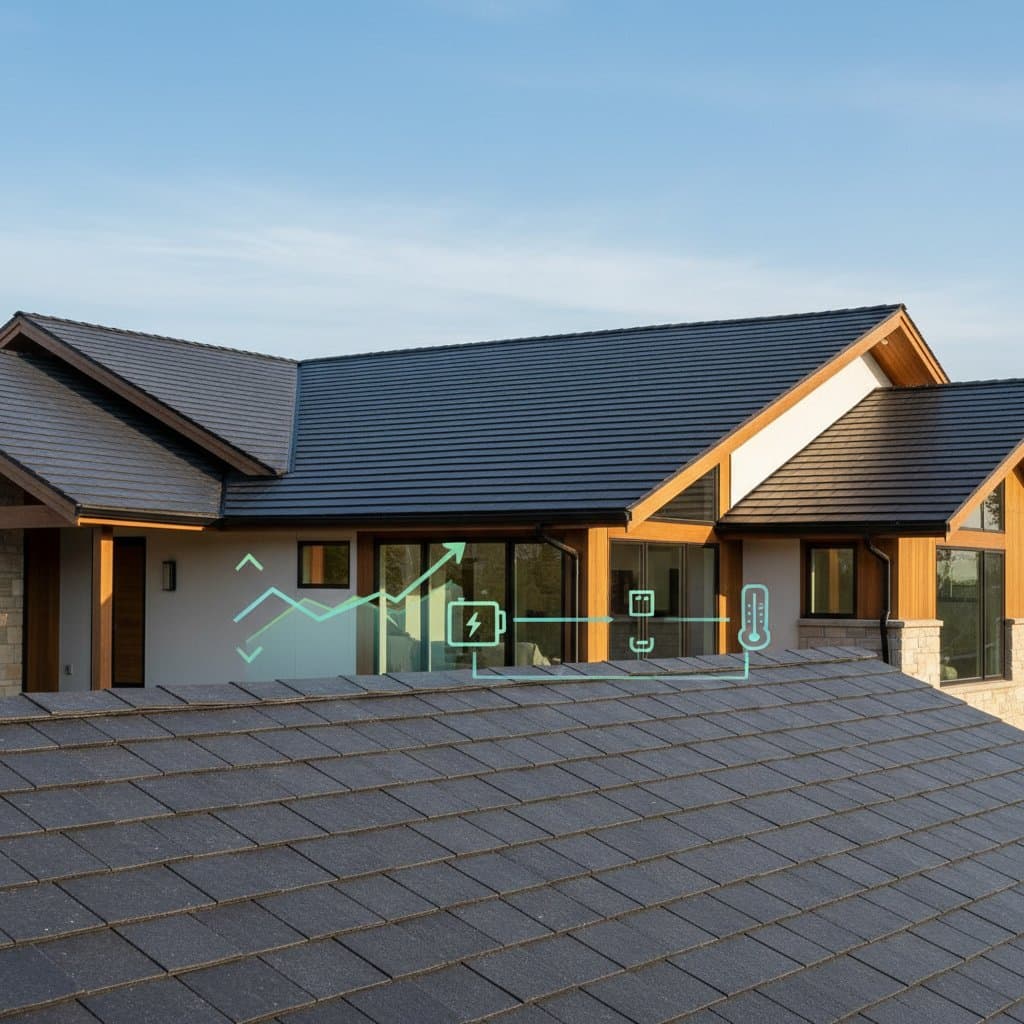
Why Solar Shingles Offer Substantial Savings in 2026
Homeowners often delay solar adoption due to the appearance of traditional panels or the prospect of a roof replacement shortly after installation. Solar shingles address these concerns through a single, efficient upgrade. They function as both protective roofing and electricity-generating components. The outcome is a durable roof that safeguards the home and supplies renewable energy. As incentives expand and designs advance, solar shingles emerge as a strategic home improvement for the near future.
Understanding Solar Shingles and Their Operation
Solar shingles, known also as building-integrated photovoltaics, incorporate thin photovoltaic cells within resilient tiles designed to withstand weather. Each shingle links via discreet wiring to an inverter, which transforms direct current into alternating current suitable for home appliances. These shingles substitute for conventional asphalt or composite varieties, eliminating the need for additional mounting hardware and avoiding extra weight from rack systems.
The core technology mirrors that of standard solar modules. Sunlight photons impact the semiconductor material, releasing electrons that travel through conductive pathways. When interconnected, numerous shingles create a comprehensive solar array. This setup generates power while preserving the visual uniformity of a traditional roof.
An individual solar shingle typically outputs 13 to 20 watts. For a medium-sized roof, 350 to 400 shingles may fit, based on configuration, shading, and regulatory spacing. This arrangement yields approximately 6 kilowatts of capacity, sufficient to cover the majority of a typical household's yearly electricity needs.
Key Attractions for Homeowners
The primary draw lies in their aesthetic harmony. The roof maintains a sleek, consistent profile free from prominent frames. In areas governed by stringent architectural guidelines or preservation districts, this subtlety often secures project approval where visible panels might not.
Cost efficiency represents another significant benefit. By serving as the roofing surface, solar shingles eliminate duplicate expenses for separate solar and roofing projects. When a roof approaches the end of its service life, installing solar shingles frequently proves more economical than undertaking each upgrade individually.
Analyzing Costs and Potential Savings
Consider a scenario involving a home requiring a new roof alongside a desire for sustainable energy.
Key Assumptions:
- Standard asphalt shingle roof replacement: approximately 7 dollars per square foot.
- Roof surface area: 2,000 square feet.
- Roof-only expense: around 14,000 dollars.
- Equivalent solar shingle installation: about 25 dollars per square foot.
- Total initial cost: approximately 50,000 dollars prior to incentives.
- Federal solar investment tax credit: 30 percent.
- Additional state or utility rebate: 2,000 dollars.
Following incentive applications, the net cost for the solar shingle roof drops to about 33,000 dollars. Deducting the 14,000 dollars saved on a separate roof replacement leaves a net solar investment of roughly 19,000 dollars.
To gauge savings, examine energy production. In the Philadelphia area, a 6-kilowatt system generates around 1,200 kilowatt-hours per kilowatt annually, totaling 7,200 kilowatt-hours. At an average utility rate of 18 cents per kilowatt-hour, this translates to 1,296 dollars in annual bill savings.
The payback period emerges by dividing the 19,000-dollar outlay by the 1,296 dollars in yearly savings, resulting in approximately 15 years. With 25-year performance warranties common, the subsequent 10 years deliver nearly 13,000 dollars in additional value through cost-free electricity. Rising utility rates would accelerate this return.
The Installation Process and System Integration
Installation parallels that of conventional roofing. Trained professionals apply starter strips, then secure interlocking tiles to establish a waterproof barrier. Concealed wiring routes connect beneath the roof surface, rendering components unseen. The inverter and monitoring devices attach adjacent to the main electrical panel.
As the system fulfills dual roles, collaboration between roofing and electrical specialists proves essential. Numerous regional providers now equip unified teams for both aspects, which streamlines timelines and minimizes coordination issues.
The underlying roof structure requires sturdy decking and appropriate underlayment. Optimal pitches span 15 to 60 degrees, oriented southward or westward with limited obstructions. For suboptimal conditions, detailed energy simulations guide the addition of supplementary shingles to achieve desired output.
Durability Features and Upkeep Requirements
Solar shingle systems include 20- to 30-year warranties for both roofing integrity and power generation. A hardened glass overlay defends against hail and impacts. Absent exposed mounting racks, vulnerability to wind damage decreases substantially.
Upkeep demands remain low. Natural rainfall cleans the surface in typical weather patterns. An annual visual assessment and app-based performance review suffice to verify functionality. Should an individual shingle falter, its modular design allows isolated replacement without disturbing extensive roof areas.
Available Incentives and Financing Options
The federal tax credit covers the full solar components, encompassing shingles, wiring, and inverters. Various states provide layered rebates or exemptions from property taxes. Certain utilities implement net billing, compensating exported power at rates close to retail, which further compresses payback periods.
Financing avenues such as home improvement loans, dedicated solar programs, or equity lines distribute expenses across 10 to 20 years. Resulting monthly obligations frequently align with or fall below prior electricity costs, yielding immediate financial equilibrium.
Environmental Impact and Boost to Property Value
One kilowatt of solar capacity averts about 1 metric ton of carbon dioxide emissions yearly relative to fossil fuel-based grid power. A 6-kilowatt installation thus reduces emissions by 6 tons per year. Across its lifespan, this equates to offsetting emissions from over 130,000 miles of vehicle travel.
Research indicates that properties equipped with solar enhancements command quicker sales and premium prices. Prospective buyers appreciate reduced utility expenses and updated roofing. The inconspicuous design of solar shingles broadens appeal compared to overt panel arrays.
Project Timeline and Expectations
- Initial Assessment. Installers evaluate roof dimensions, angle, and shade using digital tools and physical surveys.
- Planning and Proposal. Specialists simulate production, factor in incentives, and outline return projections.
- Regulatory Clearance. Authorities and utilities examine submissions for compliance.
- On-Site Work. Demolition of old roofing, preparation, tile application, and electrical integration span one to two weeks, weather permitting.
- Commissioning. Post-inspection, grid connection activates, and monitoring commences.
Ensuring Longevity and Future Planning
Maintain clear ventilation around the inverter and remove any accumulated debris. Monitor output metrics quarterly. Promptly engage professionals if yields decline. Use gentle water rinsing for any persistent dust, steering clear of harsh cleaners or tools.
When undertaking additional renovations, align electrical modifications with the existing solar setup to avoid circuit complications. For property sales, retain records of installation details, warranties, and tax benefits. Such documentation aids valuations and reassures purchasers.
Homeowners facing imminent roof replacements benefit from early solar shingle consultations to capture current incentives and curb escalating energy demands. This fusion of structural defense and clean power generation transforms routine maintenance into a forward-thinking, rewarding endeavor.
Frequently Asked Questions
How long do solar shingles endure?
They generally span 25 to 30 years, aligning with conventional roof durations while retaining at least 80 percent of initial efficiency.
Are solar shingles suitable for every roof configuration?
They perform optimally on asphalt, composite, or metal bases with moderate inclines. Flat surfaces or heavy shading may limit viable energy production.