
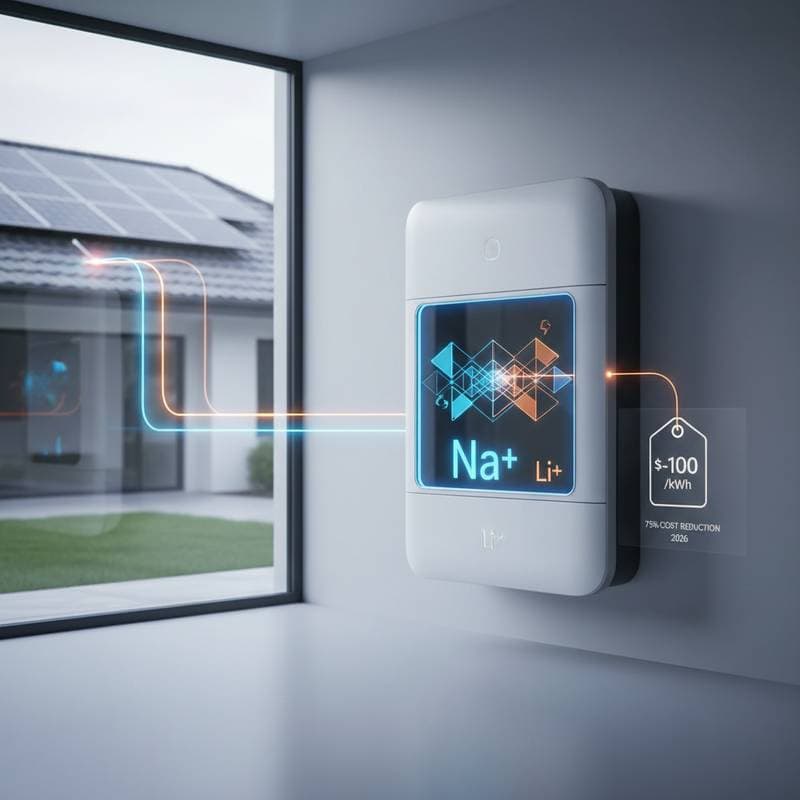
Introduction to Sodium-Ion Batteries
Homeowners increasingly seek reliable energy storage to maximize solar panel benefits. Lithium-ion batteries have dominated this space for years, yet emerging technologies challenge their position. Sodium-ion batteries stand out as a promising contender, offering potential cost reductions and sustainability advantages.
These batteries utilize sodium, an element far more abundant than lithium. This abundance translates to lower production costs and reduced environmental impact from mining. By 2026, experts anticipate sodium-ion options will undercut lithium prices significantly, making solar storage accessible to more households.
How Sodium-Ion Batteries Work
Sodium-ion batteries operate on principles similar to lithium-ion counterparts. Ions move between a positive cathode and negative anode through an electrolyte during charge and discharge cycles. The key difference lies in the materials: sodium replaces lithium, paired with cost-effective components like hard carbon anodes.
This design yields several benefits. Sodium-ion systems exhibit greater thermal stability, minimizing fire risks. They also perform well in extreme temperatures, from cold winters to hot summers, which suits diverse climates. Performance continues to improve, with recent prototypes achieving energy densities close to established lithium options.
Advantages Over Lithium-Ion Batteries
Cost represents the primary appeal of sodium-ion technology. Projections indicate prices could drop below $100 per kilowatt-hour by 2026, compared to current lithium averages exceeding $130. This shift may lower total solar system costs by up to 25 percent, accelerating return on investment for homeowners.
Sustainability further enhances their value. Sodium sources abound in seawater and salt deposits, avoiding the ecological strain of lithium extraction. At end-of-life, these batteries prove easier to recycle, supporting circular economy principles. Safety profiles also excel, as sodium-ion chemistries resist thermal runaway.
Performance metrics evolve rapidly. Early models offer cycle lives exceeding 3,000 charges, with capacity retention above 80 percent after years of use. Integration with solar inverters proceeds smoothly in many cases, ensuring seamless energy management.
Considerations for Purchasing Sodium-Ion Batteries
Adopting this technology requires careful evaluation. Availability remains a factor, as commercial options expand gradually. Retail markets feature limited selections, so consult certified solar installers for sourcing dependable products from reputable manufacturers.
Key Buying Checklist
- Availability: Sodium-ion batteries remain limited in retail markets. Confirm that certified installers can source reliable products from established suppliers.
- Warranty Terms: Seek coverage spanning at least eight years, with guarantees for over 70 percent capacity retention at end-of-life. Review fine print for prorated replacements and performance benchmarks.
- Integration Compatibility: Verify that your existing or planned inverter and monitoring software accommodate sodium-ion chemistry. This ensures precise state-of-charge readings, optimal charging rates, and full system efficiency.
- Capacity and Scalability: Assess options for 5 to 20 kilowatt-hour units, matching your household energy needs. Modular designs allow future expansions without full system overhauls.
- Certifications: Prioritize batteries meeting UL 9540 and IEEE 1547 standards for safety and grid compatibility.
Professional installation proves essential. Installers assess site conditions, electrical loads, and rebate eligibility to optimize setup.
Installation and Integration Tips
Once selected, installation mirrors lithium-ion processes. Technicians mount the battery near the inverter, connect cabling, and configure software. Expect the process to take one to two days, depending on system complexity.
Compatibility checks prevent issues. Modern inverters from brands like SolarEdge or Enphase often support multiple chemistries via firmware updates. Test the system post-installation to confirm seamless operation with solar panels and home loads.
Maintenance and Long-Term Use
Next Steps for Maintenance and Use
Once installed, sodium-ion batteries require similar care to lithium systems. Keep the unit clean, dry, and within the recommended temperature range of 32 to 113 degrees Fahrenheit. Check the monitoring app for state of charge and cycle count each month to track performance.
Avoid deep discharges below 10 percent whenever possible to extend life expectancy. Schedule an annual inspection with your solar installer to confirm connections remain tight and firmware updates are applied. These steps preserve efficiency and warranty validity.
If you already have a lithium setup, consider sodium-ion as an option for future expansion. When your current battery nears the end of its warranty, compare replacement quotes from multiple providers. You may find that sodium offers a lower-cost path to maintain your storage capacity without compromising reliability.
Future Outlook for Sodium-Ion in Solar Storage
By 2026, sodium-ion batteries could transform residential solar adoption. Declining costs and improving efficiencies position them as a viable mainstream choice. Homeowners benefit from affordable, green storage that enhances energy independence.
As production scales, expect wider availability and refined performance. Pairing these batteries with solar panels creates resilient systems, reducing reliance on grid power and utility bills. This evolution supports broader renewable energy goals.
FAQ
Are sodium-ion batteries safe for indoor use?
Yes. They are nonflammable and stable across a wide temperature range, reducing risks associated with overheating or fire.
How do sodium-ion batteries compare to lithium-ion in cycle life?
Sodium-ion options typically deliver 3,000 to 5,000 cycles with 80 percent capacity retention, comparable to mid-range lithium batteries while costing less over time.
Can sodium-ion batteries work with existing solar systems?
Many can, provided the inverter supports the chemistry. Consult your installer for compatibility assessments and any necessary upgrades.
What is the expected lifespan of a sodium-ion battery?
Under normal use, these batteries last 10 to 15 years, backed by warranties that align with solar panel durations.