
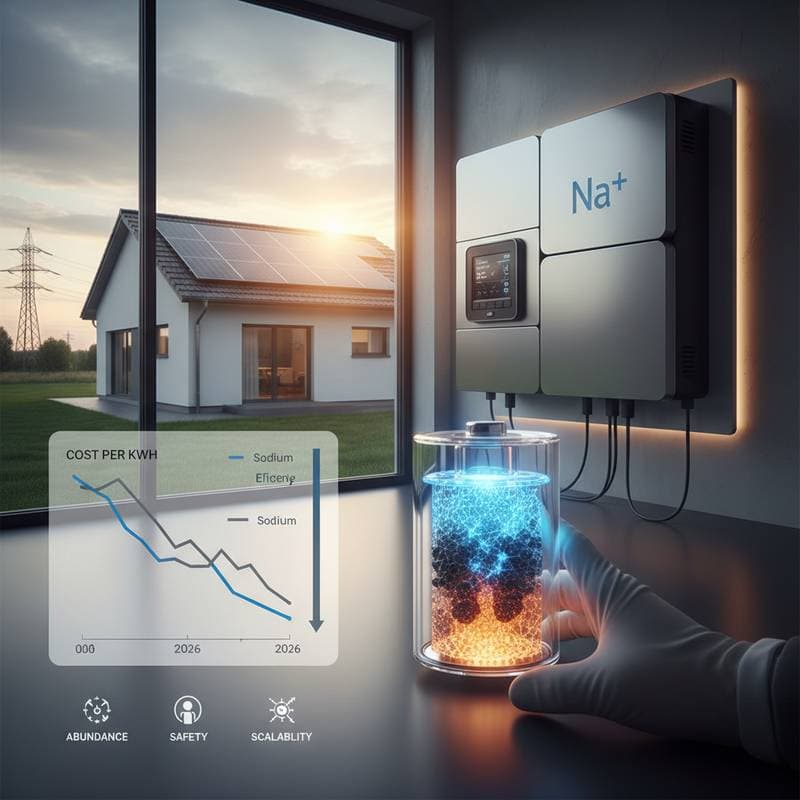
Sodium-Ion Batteries Poised to Undercut Lithium Costs in Solar Storage
Lithium-ion batteries lead the market for solar energy storage at present, yet challenges with pricing and raw material availability hinder broader implementation. Sodium-ion batteries emerge as a promising alternative, transitioning from research stages to full-scale manufacturing. These batteries deliver reduced expenses, superior safety features, and straightforward supply logistics. Industry experts anticipate their integration into both residential and utility-level solar setups within the coming years.
This piece details the mechanics of sodium-ion batteries, examines their potential to lower costs below lithium levels, and outlines key considerations for homeowners and solar experts during technology advancement.
Key Benefits of Sodium-Ion Technology
Sodium-ion batteries substitute sodium for lithium, drawing from the plentiful reserves in everyday table salt. This change diminishes reliance on scarce resources and trims overall material expenses.
Core Chemistry and Design
Sodium-ion cells function similarly to lithium-ion counterparts, shuttling ions between cathode and anode through charging and discharging cycles. Sodium ions possess a larger size than lithium ions, influencing their integration into electrode structures. Initial designs faced constraints in energy density and longevity, yet innovations in layered oxide cathodes and hard carbon anodes address these drawbacks effectively. Recent prototypes demonstrate cycle lives exceeding 3,000 charges with capacities approaching 150 watt-hours per kilogram.
Resource Availability and Environmental Impact
Sodium extraction occurs from vast, accessible deposits, bypassing the intensive mining required for lithium. Production facilities can establish operations in diverse locations, free from the constraints of specialized lithium refineries. The process generates a lighter environmental load, with recycling methods that recover over 90 percent of materials through straightforward aqueous techniques. Such attributes support global clean energy initiatives by fostering resilient, low-impact supply networks.
Projected Cost Reductions
Abundant sodium supplies drive down raw material prices to fractions of lithium costs, enabling sodium-ion packs to achieve equivalence or superiority in affordability. Production employs economical aluminum foils in place of pricier copper, and omits costly elements like cobalt or nickel. As manufacturing volumes increase, battery system prices could drop below 100 dollars per kilowatt-hour by 2026, insulating users from market fluctuations in critical minerals.
Integration with Solar Energy Systems
Sodium-ion batteries align seamlessly with solar applications prioritizing affordability, reliability, and material accessibility over ultra-high density.
Home-Based Solar Storage
In residential settings, sodium-ion batteries lower upfront expenses while upholding robust safety standards. Affordable components allow greater energy capacity within budget limits, extending daily solar utilization. Their resistance to thermal runaway permits simpler, cost-effective housing without advanced cooling systems. Paired with rooftop panels, these batteries ensure consistent evening electricity and emergency power during grid disruptions.
Homeowners verify compliance by selecting systems certified by bodies such as UL or ETL, adhering to National Electrical Code Article 706 guidelines for energy storage. Licensed electricians handle all integrations to prevent hazards like electrical shocks or fires, despite the inherent stability of sodium chemistry.
Utility and Commercial Deployments
For expansive projects, sodium-ion batteries offer competitive pricing per kilowatt-hour, facilitating large-volume deployments. Their inherent thermal tolerance suits modular container setups that manage fluctuating grid loads. Utilities deploy them to capture surplus solar and wind output, dispatching stored energy at peak demand periods. Diminished dependence on imported minerals streamlines financing and reduces exposure to international trade disruptions.
Essential Safety Protocols and Compliance
Sodium-ion batteries exhibit lower volatility than lithium variants, but they demand vigilant handling due to stored energy volumes. Property owners implement standard safeguards to mitigate risks.
Potential Risks to Address:
- Short circuits trigger swift temperature rises or component degradation.
- Inadequate airflow confines heat or off-gases during malfunctions.
- Non-certified units breach local building codes and insurance terms.
- Amateur electrical work invalidates protections and invites ignition sources.
Recommended Installation Steps:
- Select certified sodium-ion systems approved for home environments.
- Position units in temperate, moisture-free zones distant from combustibles.
- Ensure unobstructed pathways for routine checks and repairs.
- Apply precise torque values to terminal connections per guidelines.
- Employ voltage detectors to verify de-energization prior to interventions.
- Retain certified professionals for electrical configurations.
Upon detecting smells, bulges, or abnormal warmth, isolate power via the primary breaker and summon expert assistance. Avoid tampering with sealed enclosures under any circumstances.
Preparing for Sodium-Ion Integration and Ongoing Care
Sodium-ion batteries advance as a viable lithium alternative, leveraging economical sourcing, widespread accessibility, and elevated safety to enhance solar adoption. Expanding production promises further price erosion, broadening access to combined solar-storage configurations for diverse users.
Individuals considering enhancements follow these steps:
- Maintain existing certified lithium installations that operate reliably.
- Monitor emerging sodium-ion products for approvals and performance metrics.
- Arrange yearly evaluations by qualified electricians assessing connections, airflow, and unit condition.
- Document all upkeep activities to satisfy regulatory and insurer expectations.
Sodium-ion batteries evolve gradually alongside lithium options, yet they chart a course to economical, eco-friendly energy solutions. Achievement hinges on ethical production practices, adherence to standards, and expert deployment.