
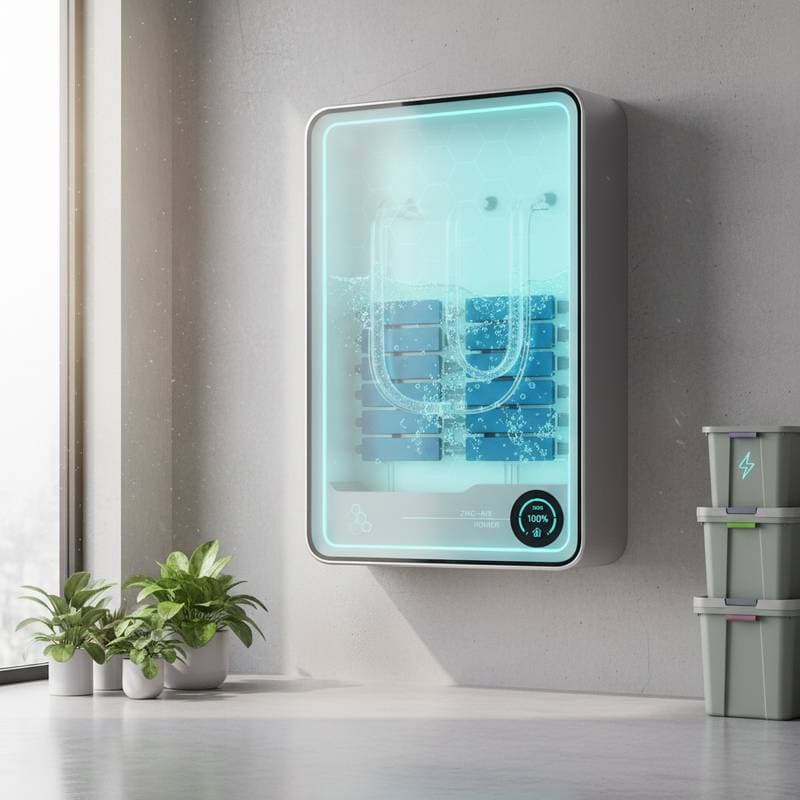
Zinc-Air Batteries: A Cost-Effective Alternative to Lithium by 2026
Homeowners tracking developments in solar and energy storage increasingly encounter discussions of zinc-air batteries. Interest builds around their potential for reduced expenses, enhanced safety profiles, and dependable supply chains. With solar installations on the rise, effective storage represents the critical next phase. A trustworthy, economical battery elevates a solar setup into a comprehensive energy management tool. Zinc-air innovations may soon enable this advancement for a broader range of residences.
The Importance of Energy Storage
Solar panels produce electricity solely during daylight hours. Batteries capture excess generation for use after sunset or amid overcast conditions. Such systems enable reduced reliance on the utility grid, optimized management of peak pricing periods, and sustained power to vital circuits during blackouts. Lithium-ion batteries currently lead the market, valued for their reliability and performance. However, these units depend on high-cost raw materials and international mining networks under intensifying scrutiny.
Zinc-air batteries emerge as a viable contender. They incorporate zinc, a widely available resource with straightforward recycling pathways. This approach sidesteps volatile electrolytes and premium metals such as cobalt and nickel. Consequently, zinc-air options deliver secure storage alongside a reduced environmental burden.
The Mechanics of Zinc-Air Batteries
Zinc-air batteries draw oxygen from the surrounding atmosphere as a key reactant. Within the cell, zinc interacts with oxygen to produce electrical current. During recharging, the reaction inverts, regenerating zinc. The air electrode facilitates oxygen ingress and egress, contributing to a lightweight and space-efficient design.
Electrons flow between zinc and oxygen via an electrolyte medium. Although the output voltage trails that of lithium-ion counterparts, it maintains consistency across numerous cycles. Rechargeability posed a primary obstacle in earlier iterations, which functioned mainly as disposable units. Contemporary progress in catalysts and electrolytes now supports efficient repeated charging. Diverse research teams and emerging companies showcase prototypes capable of enduring thousands of cycles.
Cost and Performance Comparisons
Installed lithium-ion batteries for residential applications typically range from 500 to 700 dollars per kilowatt-hour. Zinc-air innovators target a reduction to approximately half that figure. Zinc costs roughly 3 dollars per kilogram, in contrast to lithium carbonate, which fluctuates at levels up to tenfold higher based on supply dynamics. These disparities yield significant economies when scaled to production.
A 10-kilowatt-hour lithium-ion installation might total 6,000 dollars prior to rebates. An equivalent zinc-air system could approach 3,000 dollars as output volumes increase. Integrated with a standard 7-kilowatt solar array generating around 9,100 kilowatt-hours annually, the return on investment may shorten to under seven years, contingent on regional tariffs and subsidies. At a rate of 24 cents per kilowatt-hour, annual solar production offsets approximately 2,180 dollars. The synergy of diminished storage costs and these offsets enhances financial viability.
Advantages in Safety and Sustainability
Zinc-air batteries employ water-based, non-combustible compositions. They avoid emission of hazardous vapors or susceptibility to thermal instability. These traits render them suitable for indoor and garage placements. Component materials facilitate separation and reclamation. Zinc recovery occurs via proven smelting techniques. Reliance on air minimizes the need for dense elements, thereby lightening the unit and curbing transportation-related emissions.
Environmentally, zinc extraction presents a lesser impact than lithium sourcing. It demands reduced water volumes and provokes minimal land disruption. For those prioritizing holistic clean energy solutions, zinc-air batteries mark a substantive enhancement.
Challenges in Market Entry
Commercialization remains the foremost hurdle. Laboratory prototypes perform admirably, yet large-scale fabrication requires substantial investment and duration. Energy density constitutes another consideration. Zinc-air units hold less power per unit weight than lithium-ion variants, a concern for mobile applications like vehicles but negligible for fixed residential setups with ample space. Round-trip efficiency registers at 60 to 70 percent, versus 90 percent for lithium systems, implying modest losses per cycle.
Despite these compromises, material cost advantages position zinc-air as a contender. For residential users, durability and longevity outweigh portability. A zinc-air battery enduring 15 years with limited capacity fade provides robust value over its service life, notwithstanding tempered efficiency.
Steps to Prepare for Advanced Storage Solutions
Individuals eyeing forward-compatible solar configurations can initiate preparations today. Begin by analyzing household electricity patterns and compiling a full year of billing statements. These data inform precise scaling of solar arrays and storage capacities. An average residence consuming 9,000 to 10,000 kilowatt-hours annually often requires a 7- to 8-kilowatt solar installation paired with 10- to 15-kilowatt-hour battery storage.
During quote evaluations, inquire whether providers track nascent storage technologies. Established firms frequently pilot novel chemistries prior to integration. Certifications may soon pave the way for zinc-air offerings in their portfolios. For existing solar owners, verify inverter compatibility with prospective batteries via universal communication interfaces.
Upkeep and Long-Term Performance
Zinc-air batteries demand minimal upkeep. They dispense with active thermal regulation or intricate monitoring apparatus. Routine firmware enhancements for charging oversight and periodic air filter inspections suffice. Projected operational lifespan aligns with or surpasses lithium-ion equivalents when maintained within optimal temperature bounds. Recycling processes simplify, as zinc and enclosure plastics integrate into established recovery channels.
Incorporating Storage into Daily Routines
Energy storage complements energy-conscious practices seamlessly. Scheduling high-draw appliances for peak solar production eases battery demands. Devices like programmable thermostats, energy-efficient illumination, and improved insulation diminish overall consumption, extending smaller battery capacities. In grid failures, essential functions including food preservation, illumination, and connectivity persist without auxiliary generators. A compact, enclosed zinc-air unit ensures tranquility, free from operational sounds or exhaust.
Practical Measures for Energy Optimization
- Conduct an energy assessment to pinpoint efficiency gains.
- Install LED lighting and address drafts to curb usage.
- Consult installers on panels prepped for solar integration.
- Incorporate conduit for anticipated battery additions, even if deferred.
- Monitor available rebates from states or utilities to offset initial expenditures.
These incremental efforts foster durability and economy. Zinc-air batteries may render storage accessible to additional households imminently. United with solar power, they enable residences with lessened grid interaction and curtailed carbon outputs.
Frequently Asked Questions
What distinguishes zinc-air batteries from lithium-ion?
They rely on zinc and ambient oxygen rather than lithium compounds, yielding lower costs and superior safety.
Do zinc-air batteries support recharging?
Advanced configurations enable recharging through refined catalysts and electrolytes, accommodating thousands of cycles.
What efficiency levels do they achieve?
Prototypes exhibit 60 to 70 percent round-trip efficiency, adequate for residential applications despite trailing lithium-ion benchmarks.
What is the anticipated lifespan of a zinc-air battery?
Durations span 10 to 15 years, varying by environmental factors and operational habits.