
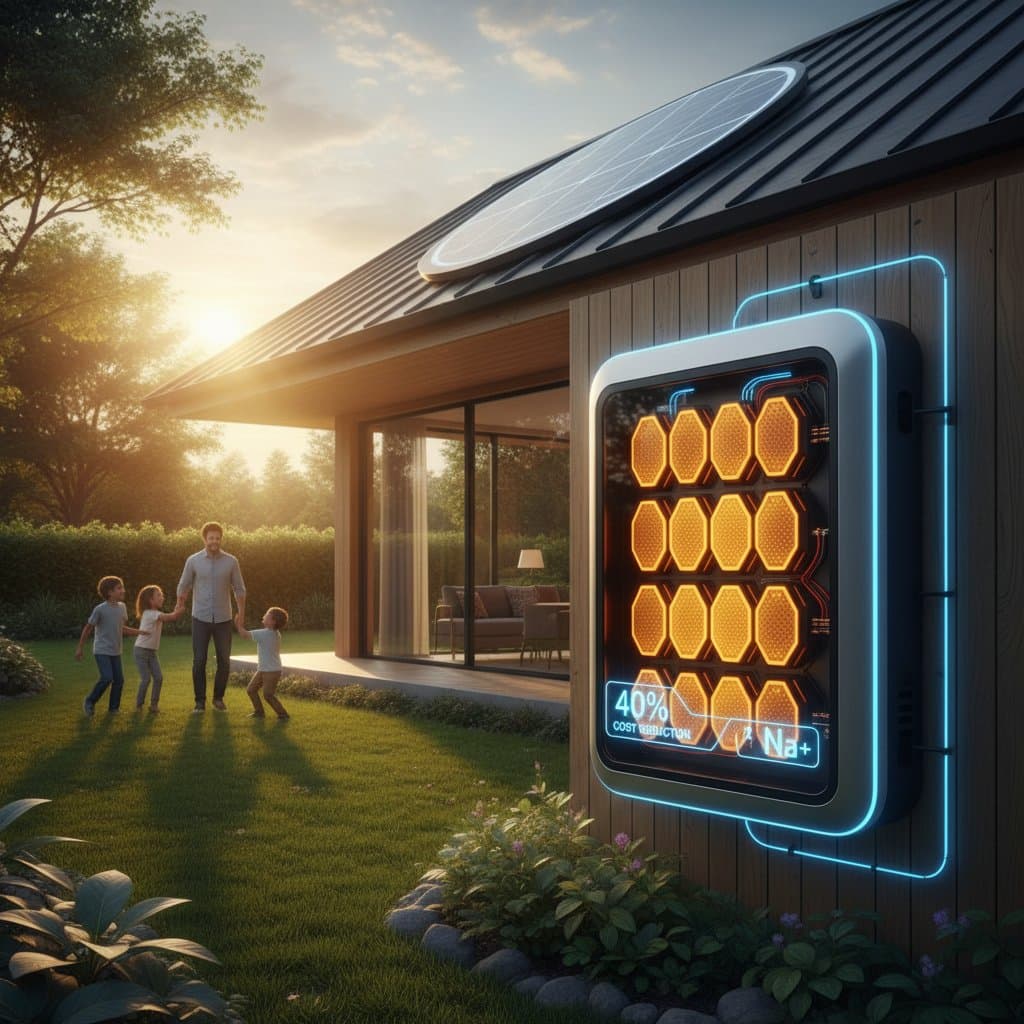
Sodium-Ion Batteries: Cheaper Solar Power by 2026
Homeowners often embrace solar energy concepts yet pause at the expense of full systems. Batteries transform solar arrays from daytime producers into reliable, all-hours resources. Lithium-ion batteries lead the market, with prices declining over time, yet they account for a substantial portion of overall costs. Sodium-ion batteries emerge as a promising alternative, leveraging plentiful materials to enhance affordability in the coming years.
Understanding the appeal of this technology requires no engineering expertise. The transition to sodium delivers reduced expenses, improved safety profiles, and simplified recycling processes. These advantages enable more families to integrate solar storage without financial strain.
Why Sodium Matters
Sodium abounds in everyday sources such as table salt, seawater, and the earth's crust. Lithium, however, concentrates in specific geographic areas, demanding expensive extraction and processing. Rising global battery demand intensifies lithium supply challenges, elevating prices and introducing volatility for producers. Sodium substitution alleviates these issues.
For residential users, this change could lower storage expenses by 20 to 40 percent relative to prevailing lithium-ion models. A standard 10-kilowatt-hour home battery currently costs approximately 9,000 dollars. Scaled sodium-ion production might reduce that figure to around 6,000 dollars. Paired with a 7-kilowatt solar setup yielding about 9,100 kilowatt-hours annually, the investment recovery timeline shortens from 10 years to approximately 7 years. These estimates vary by electricity rates, available incentives, and consumption patterns, yet the trend toward quicker returns remains evident.
How Sodium-Ion Batteries Work
Sodium-ion batteries operate on principles akin to those of lithium-ion counterparts. Energy storage occurs through ion movement between positive and negative electrodes via an electrolyte. During charging, sodium ions shift from the positive to the negative electrode for storage. Discharge reverses this flow, generating electricity.
Materials distinguish the technologies. Sodium-ion designs employ affordable sodium salts alongside layered oxide or phosphate electrode structures. These components prove less costly and simpler to obtain. Although sodium-ion energy density trails slightly at 140 to 160 watt-hours per kilogram versus 180 to 250 for lithium-ion, stationary home applications tolerate this for minimal added volume.
In a garage or basement installation, the size variance equates to mere inches, posing no significant challenge.
Safety and Environmental Gains
Sodium-ion batteries function at reduced voltages, diminishing risks of thermal runaway that plague lithium-ion units. This characteristic enhances suitability for home environments, particularly in confined areas.
These batteries dispense with cobalt and nickel, elements associated with substantial ecological and ethical concerns. Processing sodium materials generates fewer harmful byproducts, while recycling benefits from stable, nonflammable compounds. Producers recover and repurpose metals with greater ease, curtailing waste and emissions across the product lifecycle.
Cost Drivers and Market Readiness
Production scaling presents the primary obstacle to sodium-ion proliferation. Facilities currently optimize for lithium-ion manufacturing. Investments in new or retooled lines prove essential, though material economies will soon offset these expenditures.
Analysts anticipate sodium-ion viability against lithium in utility-scale and introductory residential storage soon. Initial commercial offerings will focus on grid and backup uses, progressing to home markets as reliability solidifies.
Comparing Costs and Lifetime
Installed lithium-ion batteries average 900 dollars per kilowatt-hour presently. Sodium-ion prototypes project 600 dollars per kilowatt-hour at volume. For a 10-kilowatt-hour setup, savings reach 3,000 dollars. Sodium-ion cycle life spans 3,000 to 5,000 full cycles, equating to 10 to 12 years of daily operation. Lithium-ion warranties extend to 10 to 15 years, rendering sodium competitive when economics enter the equation.
Round-trip efficiency for sodium-ion hovers at 90 percent, near lithium-ion's 92 to 94 percent. This gap minimally impacts savings. In a system generating 9,100 kilowatt-hours yearly, the disparity amounts to 180 kilowatt-hours lost, or about 43 dollars at 24 cents per kilowatt-hour.
Incentives and Utility Compatibility
Sodium-ion installations access identical federal and state incentives as lithium-ion, based on capacity and renewable contributions rather than chemistry. Tax credits for solar-plus-storage offset up to 30 percent of expenses. Utilities frequently provide time-of-use rates rewarding peak-to-off-peak shifts. Sodium-ion batteries handle these dynamics effectively, charging via solar input and discharging during premium periods.
Steps to Evaluate Options
To assess sodium-ion storage suitability, begin with these actions:
- Review solar production. Analyze 12 months of utility bills to gauge daily and seasonal demands.
- Consult installers on integration. Verify inverter and monitoring compatibility with varied battery types.
- Solicit detailed bids. Ensure quotes align on capacity, warranties, and labor expenses.
- Validate rebates. Confirm coverage from utilities and localities for selected technologies.
- Consider scalability. Opt for modular designs permitting future additions.
Maintenance and Longevity
Sodium-ion batteries demand minimal routine care. Built-in management balances cells and tracks temperatures. Maintain the site as clean, dry, and temperate. Access performance data through apps or portals. Schedule yearly installer inspections to verify optimal function.
At end-of-life, recycling proceeds efficiently due to non-hazardous composition. Manufacturers anticipate take-back initiatives for material reclamation.
Broader Impact on Solar Affordability
Accessible storage influences wider systems. Increased household adoption eases peak grid loads, bolstering infrastructure and rate stability. It fosters employment in installations and domestic supply networks. For communities pursuing emission reductions, sodium-ion solutions accelerate progress from goals to reality.
Preparing for Sodium Integration
Anticipate market entry by enhancing home efficiency now. Install LED fixtures, address drafts, and deploy smart thermostats for load management. These measures diminish required battery sizes, amplifying cost benefits upon sodium availability.
Monitoring Developments
Existing solar owners should query installers on multi-chemistry inverter support. Track announcements and trials closely. Prioritize warranties specifying cycle or duration minimums. Allocate for software enhancements aligning with evolving utility policies.
Build energy setups incrementally: prioritize efficiency, incorporate generation, then add storage at optimal pricing. Sodium-ion batteries represent an imminent, viable route to economical, secure, sustainable solar energy.
FAQ
What makes sodium-ion batteries cheaper than lithium-ion?
They incorporate plentiful sodium salts in place of rare lithium and eliminate expensive cobalt and nickel.
How soon can homeowners expect to buy sodium-ion systems?
Pilot initiatives operate now, with residential products anticipated in the next few development phases.