
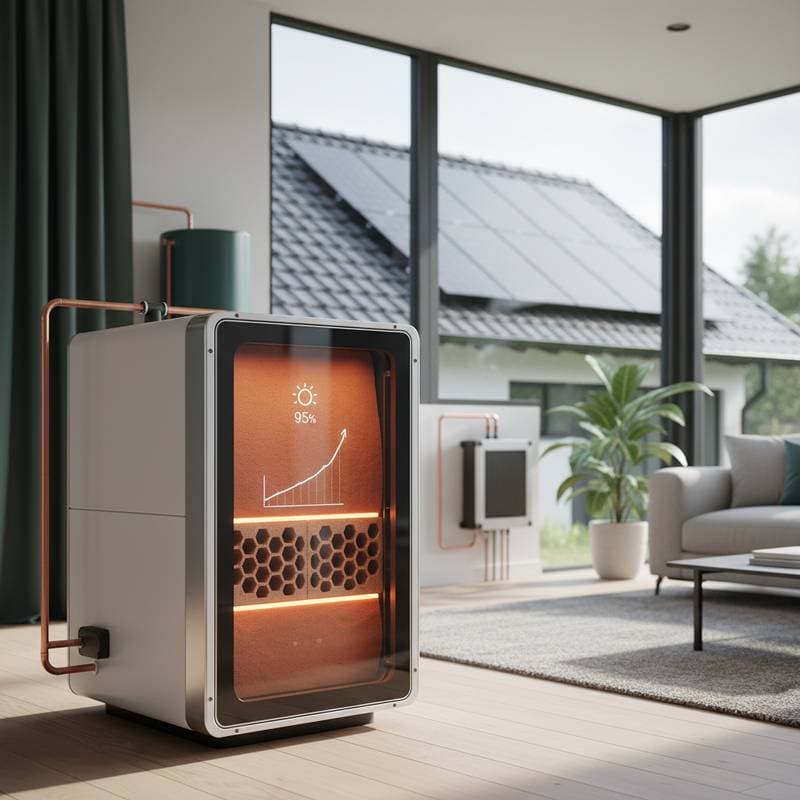
Why Thermal Batteries Outperform Lithium in Cost for 2025
Homeowners often express enthusiasm for energy storage solutions yet hesitate due to the high price of lithium batteries. Upfront expenses, safety issues, and questions about longevity create barriers. Thermal batteries, also known as sand batteries, present a compelling alternative that promises lower costs and extended durability for residential and community applications.
The principle behind thermal batteries requires no engineering expertise to grasp. These systems store energy in the form of heat rather than through chemical reactions. This approach fundamentally alters aspects of expense, reliability, and environmental footprint.
Cost Comparison with Lithium Batteries
Experts anticipate that thermal batteries will surpass lithium systems primarily due to affordability. A typical lithium battery installation for home use ranges from 800 to 900 dollars per kilowatt-hour, encompassing the inverter, enclosure, and supporting components. Even after applying incentives, achieving payback may require a decade or more for systems that cycle daily.
Thermal batteries, constructed from abundant sand and steel, achieve costs below 50 dollars per kilowatt-hour of thermal capacity. Converting stored heat back to electricity involves a heat engine or thermoelectric generator, which incurs additional costs. However, direct applications for heating water or spaces yield high efficiency and minimal expense.
For instance, a household consuming 30 kilowatt-hours daily for heating and hot water might install a 200 kilowatt-hour thermal battery to cover multiple days of low solar production. At 50 dollars per kilowatt-hour, the total installed cost approximates 10,000 dollars. An equivalent lithium setup would exceed 160,000 dollars. Accounting for conversion inefficiencies, thermal batteries still provide superior value per unit of delivered energy.
Environmental and Safety Advantages
Thermal batteries avoid rare metals, solvents, and organic electrolytes entirely. Core components consist of sand, steel, and insulation materials that prove abundant and fully recyclable. Such composition minimizes ecological harm associated with extraction and production processes.
These systems eliminate risks of fire or explosion, regardless of damage or overload. Families prioritizing sustainability and security find these attributes particularly appealing.
Production often utilizes locally sourced sand, which lowers transportation-related emissions. Steel tanks and insulation integrate seamlessly into regional fabrication facilities. This strategy fosters employment opportunities and mitigates supply chain disruptions common in lithium manufacturing.
Incentives and Policy Developments
Policymakers increasingly value diverse storage technologies for enhancing grid reliability and reducing carbon emissions. Programs originally designed for chemical batteries now extend to thermal options. Property owners qualify for tax credits or rebates when pairing thermal storage with renewables.
Utility providers introduce off-peak pricing that favors heat storage investments. Larger-scale sand batteries support community initiatives, storing excess solar or wind energy as heat for district heating. The technology scales effortlessly from individual homes to serve neighborhoods, educational institutions, or industrial sites.
Integrating into Daily Routines
Thermal batteries enable adaptable energy management. Users schedule charging during periods of low rates or peak solar output. Stored heat delivers domestic hot water, underfloor warming, or preconditioned ventilation.
Integration with intelligent thermostats allows automatic adjustments for optimal comfort and savings. Simple adjustments, such as installing low-flow showerheads, sealing air ducts, and enhancing insulation, extend heat retention. Pairing these practices with solar panels and thermal storage promotes greater self-sufficiency and outage preparedness.
Steps to Implement a Thermal Battery System
Consider these actions if evaluating a thermal battery for your property:
- Gather utility records. Analyze 12 months of consumption data to pinpoint heating and hot water needs.
- Arrange professional evaluations. Request assessments from installers that compare lithium and thermal systems under uniform conditions.
- Verify available rebates. Consult local or state energy agencies for programs covering thermal storage.
- Assess installation space. Allocate area comparable to a substantial water heater or compact outdoor enclosure.
- Select monitoring tools. Opt for controls that monitor temperature, energy transfer, and performance metrics.
Maintenance remains straightforward. Conduct annual checks on insulation integrity, sensor functionality, and airflow paths. Recalibrate thermostats and confirm heating component limits every few years. These routines ensure decades of dependable operation.
Frequently Asked Questions
What defines a thermal or sand battery?
This technology captures energy as heat within a solid material such as sand or stone. The retained heat subsequently heats water or air for residential purposes.
How does it differ from a lithium battery?
Lithium batteries rely on chemical processes to hold electrical energy. Thermal batteries preserve heat directly, resulting in greater simplicity, enhanced safety, and reduced costs for heating-focused uses.