
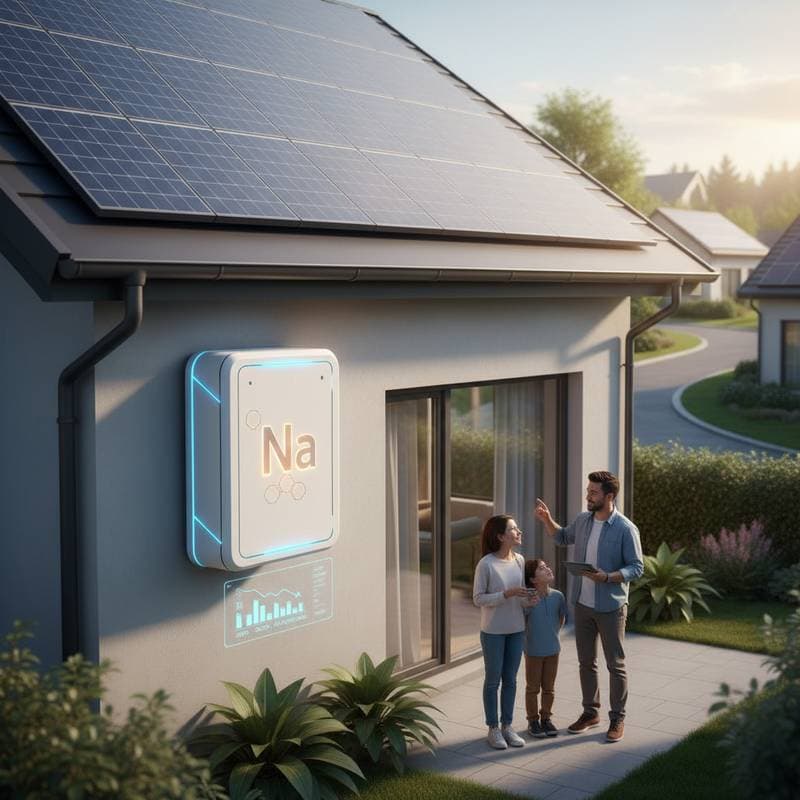
Sodium-Ion Batteries: A Cost-Effective Alternative to Lithium by 2026
Homeowners often desire to capture solar energy yet face barriers due to the high initial expense of lithium-ion batteries. This cost creates a significant obstacle between aspirations for sustainable energy and practical implementation. Emerging sodium-ion batteries address this challenge by delivering affordable, secure, and readily available storage solutions that facilitate broader adoption of residential solar systems.
The Significance of Sodium in Energy Storage
Lithium-ion batteries lead the solar storage sector thanks to their ability to store substantial energy in compact volumes. However, they depend on rare materials that elevate expenses and introduce supply vulnerabilities. Sodium, derived from everyday table salt, offers a stark contrast; it exists in abundance and can be sourced globally with minimal effort.
This plentiful supply eases resource demands and streamlines production logistics. Initial assessments from prototype producers indicate that sodium-ion battery packs may cost 20 to 40 percent less than comparable lithium-ion units. Such reductions could fundamentally alter the financial viability of solar storage for households seeking budget-friendly alternatives.
The Mechanics of Sodium-Ion Batteries
Sodium-ion batteries operate on principles akin to those of lithium-ion batteries, though the ions involved prove larger and denser. Consequently, energy density appears marginally reduced, yet advantages in affordability and safety often compensate for stationary applications such as home energy systems.
Within a sodium-ion cell, sodium ions shuttle between a cathode composed of layered metal oxides and an anode typically formed from hard carbon. During periods of surplus solar generation, excess electricity charges the battery, directing sodium ions to the anode. In the evening or under overcast skies, these ions return to the cathode, discharging the stored power to meet household needs.
This cycle repeats reliably over thousands of charges. Prototype evaluations demonstrate capacity retention exceeding 85 percent following 3,000 cycles, equating to a practical lifespan of ten years or longer in residential settings, contingent on usage patterns.
Projections for Cost and Performance
A standard residential battery system designed for a 7-kilowatt solar array typically holds about 10 kilowatt-hours. Current lithium-ion installations for this capacity average around 9,000 dollars. Should sodium-ion batteries achieve a 30 percent price reduction, the equivalent system might cost approximately 6,300 dollars.
Consider a scenario where the battery offsets 10 kilowatt-hours daily from grid purchases. With electricity rates at 24 cents per kilowatt-hour, daily savings reach 2.40 dollars, or about 875 dollars annually. Payback timelines could shorten from more than ten years to roughly seven, rendering the investment more feasible for average households.
Testing reveals that sodium-ion batteries perform optimally in temperate conditions and support rapid charging without performance loss. Round-trip efficiency ranges from 88 to 92 percent, which trails premium lithium-ion models slightly but suffices for typical home applications.
Benefits for the Environment and Ethics
Sodium-ion technology sidesteps numerous environmental and ethical concerns associated with lithium extraction. It employs abundant, less hazardous elements such as sodium, iron, and manganese. Manufacturing leverages established battery production infrastructure, minimizing the demand for additional plants and curbing ecological impacts.
Furthermore, the inherent chemistry resists thermal runaway, the process that leads to overheating or fires in lithium-ion batteries. This enhanced safety may streamline regulatory approvals and lower insurance premiums for home setups.
Seamless Incorporation into Residential Solar
For those evaluating rooftop solar installations, sodium-ion storage integrates effortlessly into existing architectures originally designed for lithium-ion systems. Inverters employing universal communication standards handle both battery types with minimal modifications.
Combined with solar panels, sodium-ion batteries capture midday excess for nighttime consumption, provide outage protection for essential circuits, and diminish dependence on high-tariff grid power. Advanced software enables predictive charging aligned with weather patterns and usage trends.
Preparing for Sodium-Ion Integration
Commercial sodium-ion batteries anticipate broader market entry in the near term, yet proactive steps benefit homeowners today. Collect a full year of utility bills to analyze consumption habits, including daily averages, seasonal variations, and instances of solar surplus over demand. These insights guide precise sizing of panels and storage.
Inquire with solar installers about forthcoming sodium-ion compatibility. Evaluate warranties, efficiency ratings, and effective capacity. Verify that inverters or hybrid controllers accommodate diverse battery technologies. Monitor updates from trusted energy publications and vendor releases.
Enhancing Home Energy Efficiency in the Interim
Prior to sodium-ion availability, practical measures can reduce overall energy needs and amplify future storage benefits.
Simple, Low-Cost Adjustments
- Switch incandescent lights to LED equivalents.
- Run laundry cycles on cold water settings.
- Apply weatherstripping to windows and doors.
- Employ smart power strips to eliminate phantom loads.
Moderate Investments with Notable Returns
- Insulate attic spaces adequately.
- Deploy programmable thermostats for precise control.
- Inspect and seal HVAC duct joints.
- Provision a dedicated circuit for potential electric vehicle charging.
Substantial Upgrades for Long-Term Gains
- Upgrade to heat pump systems for heating, cooling, and hot water.
- Proceed with solar panel installation once roofing permits.
- Upgrade electrical panels to support battery additions.
These initiatives decrease baseline usage, thereby maximizing the impact of any subsequent battery deployment.
Maintaining Sodium-Ion Battery Longevity
Post-installation care for sodium-ion systems remains uncomplicated. Ensure the installation site stays dust-free and airy. Review performance metrics monthly via the monitoring interface to detect anomalies in charging patterns. Arrange yearly professional reviews for software updates and alignment checks.
Designers engineer these units for low-maintenance operation, though routine examinations for signs of wear, such as corrosion or insecure wiring, extend operational durability.
Frequently Asked Questions
How do sodium-ion batteries differ from lithium-ion batteries?
Sodium-ion batteries substitute sodium for lithium as the charge carrier, which lowers costs and mitigates material shortages while accepting a modest decrease in energy density.
When will sodium-ion batteries become widely available for home use?
Projections point to significant commercial rollout by 2026, with initial products emerging from select manufacturers in the coming years.
Are sodium-ion batteries safe for indoor residential installation?
Yes, their reduced risk of thermal events makes them particularly suitable for home environments, often easing installation requirements.
How do sodium-ion batteries impact solar payback periods?
By cutting storage costs 20-40 percent, they can accelerate return on investment from over a decade to as little as seven years, based on local rates and usage.