
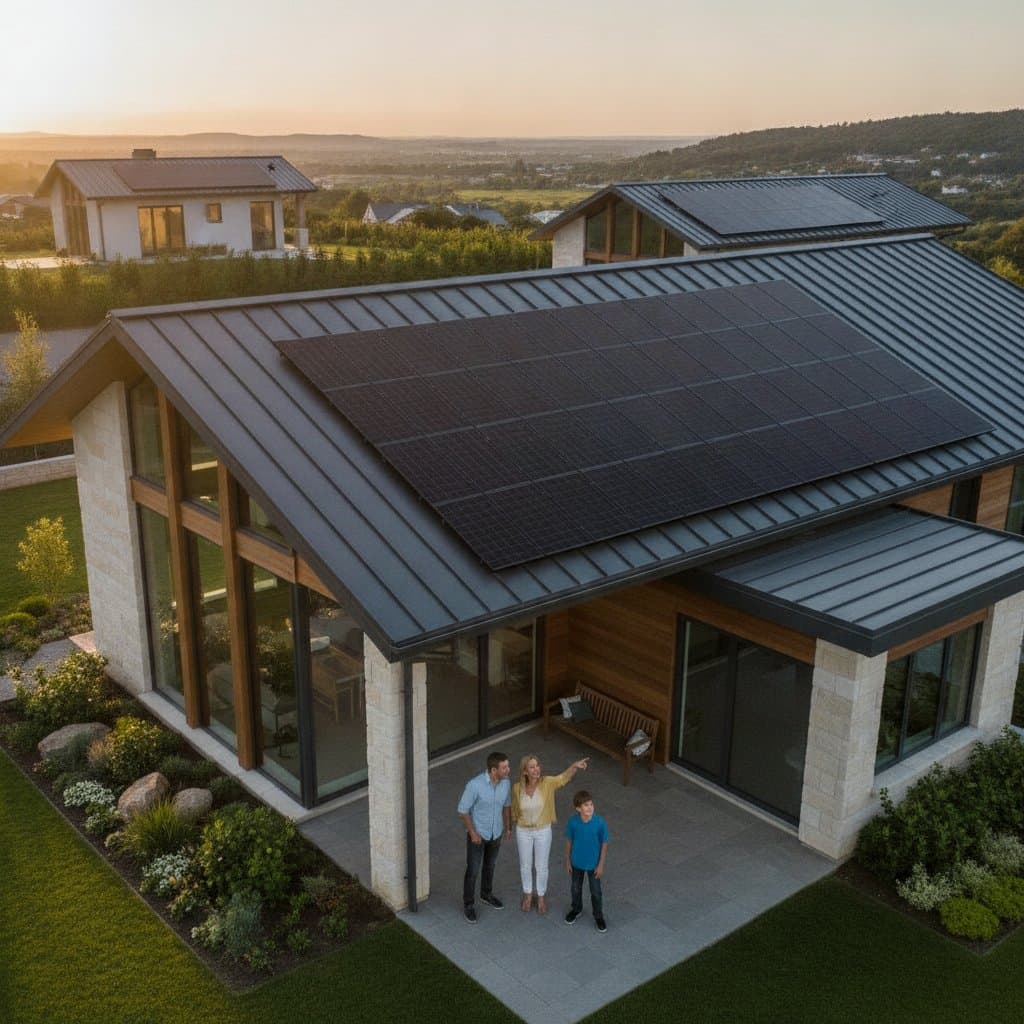
Why Metal Roofs Outlast Solar Panels by 25 Years
Solar decisions involve many variables. Equipment choices, financing terms, and roof conditions often delay action. One approach has emerged as the most reliable path to sustained performance. Pairing a 50-year metal roof with a solar array designed for the same lifespan produces consistent energy output, lower lifetime costs, and fewer service interruptions.
Homeowners in Philadelphia and the surrounding region gain particular advantages. The integrated system removes concerns about future roof replacement, panel removal, and repeated maintenance visits. Two established technologies function together as a single platform that supports decades of operation.
Standing Seam Mounting Process
Standing seam metal roofs accept solar arrays through a non-penetrating method. Installers attach clamps directly to the raised seams. These clamps secure the racking without creating holes in the roof deck.
No sealants or additional flashing are required. The original weatherproofing warranty remains intact. Weight from the panels spreads evenly across the seams, which reduces the chance of localized stress or leaks. Vertical seam orientation allows water and snow to shed quickly, keeping panel surfaces cleaner and supporting steadier output.
The combined assembly behaves as one structural unit. The roof provides both mounting surface and weather protection while the photovoltaic modules generate electricity. Installation time decreases by approximately 25 percent compared with conventional shingle mounting techniques.
Project Costs and Recovery Period
A standing seam metal roof typically costs between 10 and 14 dollars per square foot installed. For a 2,000 square foot roof the total reaches roughly 22,000 dollars. A 7 kW solar array adds approximately 18,900 dollars before incentives.
The federal tax credit reduces the solar portion by 30 percent, bringing net solar cost to about 13,200 dollars. Combined project cost therefore lands near 35,000 dollars. The incremental expense beyond the roof alone equals roughly 13,000 dollars.
Annual electricity savings average 1,547 dollars, producing a payback period of about nine years. After payback, savings continue for the remaining life of the system. Avoiding a future roof replacement that could exceed 10,000 dollars further improves the financial outcome. Property value increases and improved grid independence add additional long-term returns.
Environmental Performance and Visual Integration
Metal roofing materials can be recycled at the end of service life. Many panels contain recycled content, which lowers the overall carbon impact of the installation. Reflective surface coatings reduce attic temperatures by as much as 25 degrees on hot days, decreasing cooling demand.
Solar panels mounted above portions of the roof provide additional shading. The combined effect lowers heat gain and extends the service life of insulation and mechanical equipment. Standing seam profiles align with both contemporary and traditional architectural styles. The vertical lines of the roof match the geometry of the array, producing a unified appearance rather than an added-on element.
Routine Care and Performance Tracking
Maintenance requirements remain minimal. Seasonal visual inspections and occasional cleaning suffice in most cases. Rain removes most debris on roofs with adequate slope.
Inverter monitoring applications alert owners to unexpected drops in production. Such drops usually trace to shading from new vegetation or minor connection issues rather than roof problems. Because the metal surface resists curling, granule loss, and other common failures, annual maintenance budgets stay predictable. Some manufacturers combine roof and solar warranties under a single agreement, simplifying any future service requests.
Selection Criteria
Three primary factors guide system selection.
- Roof material and finish: select aluminum or coated steel with documented long-term paint coverage.
- Mounting hardware fit: confirm that clamps match the exact seam profile of the chosen panels.
- Contractor qualifications: engage a firm experienced in both metal roofing and solar installation.
References from completed projects of similar scope help verify capability. Coordinated planning produces watertight results and supports maximum energy production over time.
Installation Timing and Continued Operation
Homeowners planning a roof replacement should evaluate solar installation at the same time. A single project avoids later disassembly and reassembly costs. Combined quotes often improve pricing and align warranty terms.
After installation, keep gutters clear, review inverter data monthly, and arrange professional inspections every few years. Nearby trees should be trimmed to preserve sunlight access. These steps maintain reliable performance across the full service life of the system.
The completed installation delivers structural durability, reduced energy expenses, and greater independence from utility rate changes. In the Philadelphia region these outcomes provide measurable stability for decades.