
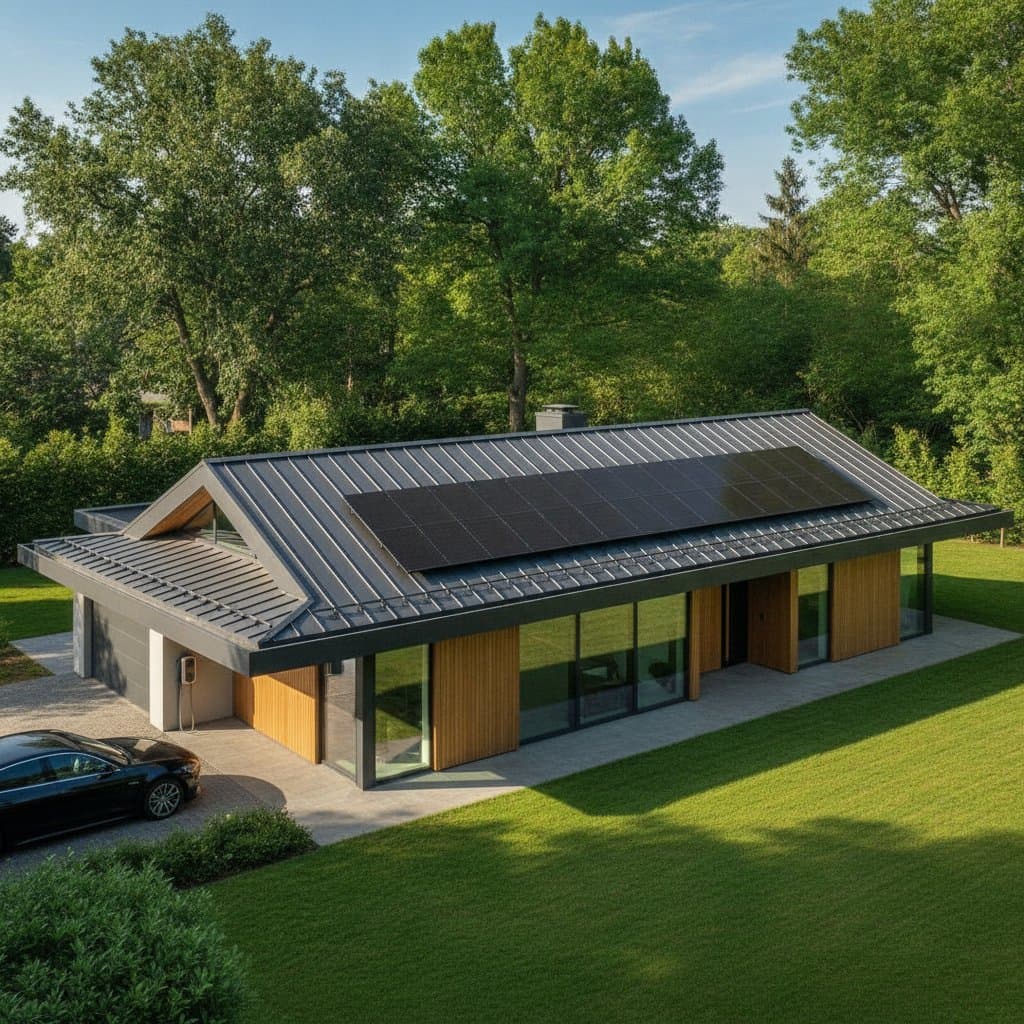
What Metal Roofs with Built-In Solar Cost in 2026
Many homeowners want solar power but hesitate when faced with roof condition or replacement timing. Re-roofing first can feel like paying twice. Integrated metal roofs with solar resolve this by merging roofing and solar into one durable system that produces power while protecting the home. The upfront cost exceeds that of adding panels to an existing roof. Yet the long-term return is often stronger.
How Integrated Solar Metal Roofing Works
Integrated solar metal roofing replaces traditional roof panels with solar-active metal sections. Photovoltaic cells are factory-bonded into the metal surface instead of mounting panels above shingles or standing seams. Each section locks into the next like standard roofing material. Wiring runs beneath the surface and connects to a central inverter or to microinverters behind each section.
Sunlight hits the surface and photons knock electrons loose inside the solar cells. Current then flows through conductive layers. The energy travels through the wiring to power the home or feed the grid. These systems maintain a low profile, resist wind uplift, and create a uniform appearance.
Why Metal Roofs Fit Solar Integration
Metal roofing lasts four to five decades when properly coated and installed. That lifespan matches or exceeds most solar warranties. This combination prevents the common mismatch problem that occurs when a homeowner must remove panels to replace asphalt shingles mid-way through a solar system life.
Standing seam metal roofs already have a structural advantage. They use interlocking vertical panels that shed water efficiently and tolerate heavy snow or debris loads. When these panels carry built-in solar cells, there are no roof penetrations. This lowers the risk of leaks and reduces maintenance needs.
Cost Range for Integrated Solar Metal Roofs
Pricing depends on roof size, complexity, system capacity, and local labor rates. For a typical home with about 2,000 square feet of roof area, an integrated solar metal roof generally costs between $40,000 and $70,000 before incentives. This range includes both the roofing material and the solar generation system.
A standard standing seam metal roof without solar often costs $20,000 to $35,000. A separate rack-mounted 7 kW solar system might add $18,000 to $25,000. Combining those two jobs can easily reach $45,000 or more. Integrated systems merge both scopes into one installation. This can reduce total labor time and simplify permitting.
A Simple Example of Energy Savings
Assume a 7 kW integrated solar roof. Each kilowatt produces about 1,300 kilowatt-hours of electricity per year in a sunny mid-Atlantic climate. That equals 9,100 kilowatt-hours annually. If the local utility rate averages 18 cents per kilowatt-hour, the annual offset is about $1,640.
With net billing or net metering, unused energy credits lower future bills. Over a decade that offset can reach $16,000 in avoided electricity costs, assuming stable rates. If utility prices rise, the savings grow faster. Over twenty-five years, energy production may decline slightly due to panel degradation. Most systems retain about 85 percent of original output by that point.
Incentives and Financing Options
Federal tax credits can return a substantial portion of the investment. Many states and utilities also offer rebates or property tax exemptions. Combining these incentives often reduces the effective cost by 25 to 35 percent. Some installers provide solar loans or power purchase agreements. Integrated roofs are most often financed as home improvement projects.
When evaluating payback, consider both the avoided cost of a separate roof and the energy savings. If a homeowner already needed a new roof, the incremental cost of choosing a solar-integrated metal product might be $15,000 to $25,000 beyond a standard replacement. In that case the payback period could be closer to 8 to 12 years, depending on electricity use and incentive value.
Key Variables That Affect Cost
Several factors influence total price and performance:
- Roof pitch and orientation. Steeper roofs or complex angles require more custom panels and labor. South-facing slopes yield the best energy output.
- Shading. Trees or chimneys that block sunlight reduce efficiency. Shade analysis helps determine feasible system size.
- Local utility rules. Some utilities limit net metering credits or charge fixed connection fees.
- Equipment choice. Premium coatings, color-matched flashings, or high-efficiency solar cells increase cost but add longevity.
- Labor market. Metal roofing specialists command higher rates than standard roofers. Their precision ensures durability.
Comparing Integrated Solar Roofs to Traditional Systems
A rack-mounted solar array is easier to service or upgrade. It may not suit homeowners seeking a clean aesthetic or those already planning a roof replacement. Traditional panels can be removed for roof repair. That means extra labor later.
Integrated roofs simplify maintenance. Each metal section can be replaced individually if damaged. The seamless look enhances resale value because the system appears as part of the architecture instead of an add-on. Buyers often respond positively to lower energy bills combined with a premium roof material.
Maintenance and Longevity
Routine care is minimal. Homeowners should rinse dust or pollen buildup from panels once or twice each year and monitor production through the system app or monitoring portal. Snow generally slides off metal surfaces quickly. This helps winter performance. Keep gutters clear and inspect flashings at least every few years.
Most integrated solar metal systems carry 25-year power warranties and 40-year roof warranties. Fasteners, sealants, and coatings must all meet the same durability standards to ensure consistent weather protection. Choosing a certified installer and verifying both roofing and solar credentials prevents warranty disputes.
Steps to Move Forward
Before committing, homeowners should request a full roof and shade analysis, a detailed cost breakdown, and expected annual output. Compare multiple product lines. Some use flexible thin-film solar while others embed crystalline cells that reach higher efficiency. Ask how service or replacement panels are handled if technology changes later.
A well-designed integrated system creates lasting value. It cuts energy bills, reduces environmental impact, and eliminates the need for separate roofing projects. With proper planning a solar metal roof can deliver decades of clean power under a durable, sleek surface.