
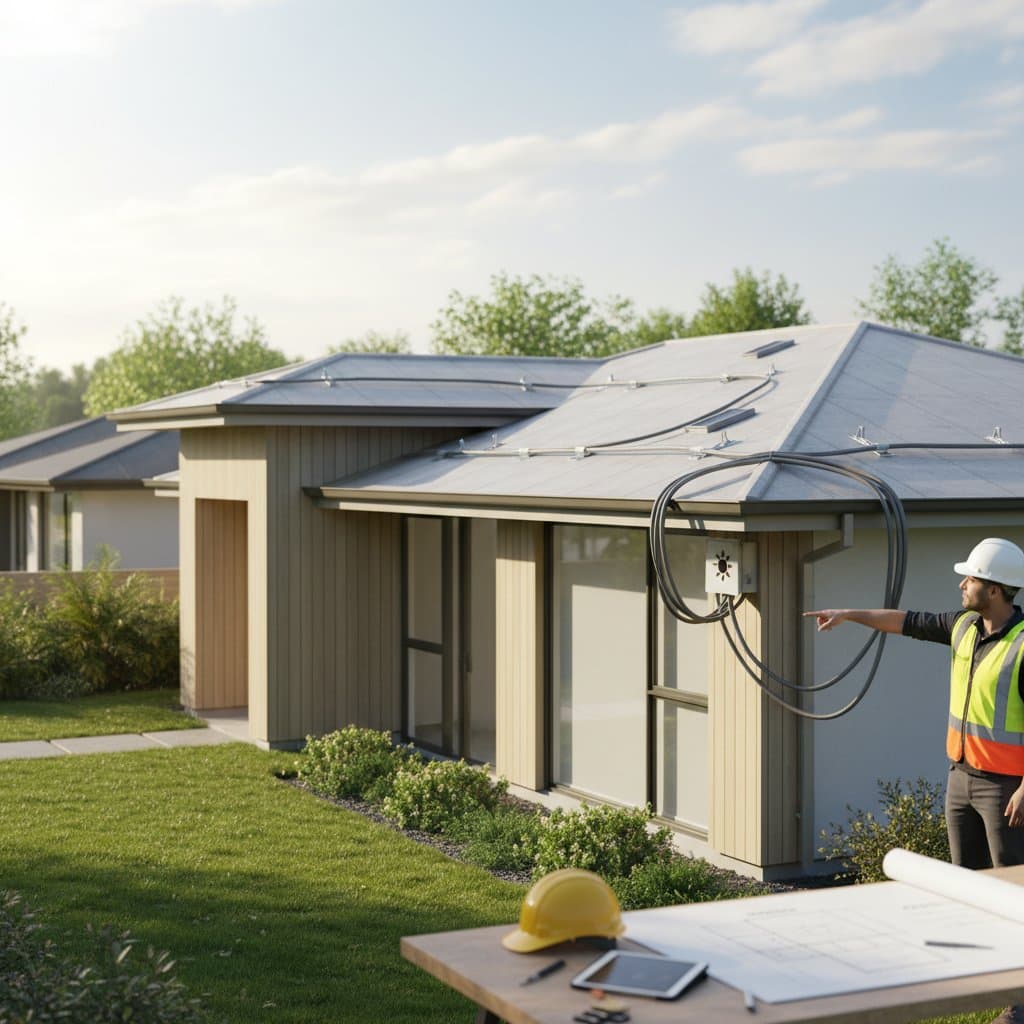
Preparing for Solar-Ready Roofs: The 2026 Mandate
Homeowners often view solar panel installation as a promising yet daunting prospect. Clear advantages exist, yet challenges arise in assessing roof integrity, electrical integration, and spatial efficiency. Evolving building regulations address these concerns by mandating solar-ready features in new constructions starting in 2026. This requirement extends beyond mere rooftop additions; it establishes a foundation for seamless integration of renewable energy in everyday architecture.
The 2026 solar-ready mandate transforms roof construction and assessment practices. It streamlines the journey toward energy self-sufficiency for residents. Grasping the implications for design, expenses, and enduring benefits equips individuals to make informed decisions ahead.
Drivers Behind Evolving Building Codes
Buildings consume a significant portion of regional energy resources. Municipalities and states increasingly rely on updated codes to curb emissions. Mandating solar-ready roofs represents an efficient strategy to foster broader renewable energy uptake.
This policy avoids compelling immediate solar adoption. Rather, it eliminates potential barriers down the line. Construction teams must incorporate provisions for electrical linkages and weight-bearing capacity. Consequently, panel addition evolves into a minor upgrade instead of extensive retrofitting.
Building science professionals highlight the negligible expense premium for solar readiness. The incremental outlay equates to approximately one to two percent of overall roof expenses. This upfront allocation, however, averts substantial future expenditures as solar becomes prevalent and energy prices rise.
Elements of Solar-Ready Roof Design
Solar-ready configurations prioritize orientation and spatial planning. South-facing slopes with reduced obstructions maximize solar capture. Builders strategically position vents, skylights, and vents to preserve expansive panel zones. Such forethought enables optimal panel deployment in subsequent installations.
Structural enhancements follow closely. Each solar panel carries around 40 pounds, with mounting hardware contributing further load. Professionals engineer trusses and framing to accommodate these demands securely. This preparation circumvents the need for costly reinforcements later.
Electrical infrastructure completes the core setup. Technicians embed vacant conduit pathways from the roof to the primary or auxiliary electrical panel. These channels simplify future wiring without invasive alterations to interiors. Panels often include designated slots for solar breakers, minimizing installation efforts.
Documentation finalizes the process. Teams tag conduits, indicate inverter sites, and archive blueprints for owners. Installers thus access precise guidance when proceeding with solar additions.
Analyzing Costs and Returns
Examine a 2,000-square-foot roof on a new residence. Standard installation runs about 10 dollars per square foot, totaling 20,000 dollars. Solar readiness appends 300 to 400 dollars for conduits, annotations, and engineering assessments. This modest escalation trims subsequent solar expenses by 1,000 to 2,000 dollars through reduced modifications.
Suppose solar deployment occurs afterward. A 7-kilowatt array in this area generates roughly 1,300 kilowatt-hours per kilowatt annually, yielding 9,100 kilowatt-hours yearly. At an 18-cent-per-kilowatt-hour rate, annual bill reductions reach 1,640 dollars.
System pricing hovers near 18,000 dollars pre-incentives, dropping to 12,600 dollars after a 30 percent federal credit. With 1,640 dollars in yearly offsets, recovery spans about eight years. Given 25-year warranties on panels, cumulative savings may exceed 25,000 dollars. A solar-ready foundation ensures this timeline remains reliable.
Advantages for Residents, Constructors, and Communities
Residents gain multifaceted value beyond financial relief. Solar-ready roofs safeguard market appeal. Prospective purchasers appreciate hassle-free solar options without structural or wiring concerns. This attribute underscores ecological commitment, resonating with contemporary preferences.
Constructors benefit from competitive edges. Embedding these elements highlights superior craftsmanship and proactive strategy. Early compliance often accelerates approvals and inspections, aligning with advancing energy regulations.
Municipalities and utilities achieve systemic gains. Widespread readiness promotes gradual distributed energy expansion. This approach mitigates peak-demand pressures on infrastructure and diminishes reliance on non-renewable reserves.
Steps for Current Homeowners
When constructing or updating, consult contractors on solar-ready integrations. Request designs allocating unobstructed southern exposures and robust rafter systems for panel loads. Specify conduit extensions to electrical panels and allocate breaker reserves. Select roofing products warrantied for solar compatibility.
For established structures, opportunities persist. During shingle replacements or insulation enhancements, solicit professional solar viability assessments. Incorporating conduits or truss reinforcements at this stage preserves flexibility. These measures secure long-term adaptability, regardless of immediate installation plans.
Ensuring Durability and Performance
Solar-ready roofs demand routine upkeep. Clear debris from surfaces to optimize light access. Examine seals and flashings in standard inspections to uphold integrity. Upon panel addition, verify adherence to guidelines preserving dual warranties for roof and equipment.
If monitoring tools accompany the system, review output metrics regularly. Declines may indicate accumulation or environmental shifts like tree growth. Annual or biannual cleanings restore efficiency. Organized records facilitate efficient servicing ahead.
Common Queries on Solar-Ready Standards
Which Roof Types Meet Solar-Ready Criteria?
Pitched or flat configurations qualify with sufficient area, reinforcement, and access provisions. Key lies in proactive construction planning.
Must Solar Panels Install Right Away on Ready Roofs?
No. Preparations solely enable future additions aligned with financial or sustainability objectives.
What Is the Added Cost for Solar Readiness?
Typically one to two percent of roof totals. Resulting installation efficiencies multiply those savings.
Is Retrofitting Older Homes to Solar-Ready Feasible?
Yes. Reroofing or remodels allow conduit additions, frame strengthening, and space clearing. Outcomes approximate new standards while easing upgrades.
How Does This Impact Property Values?
Positively. Compliance attracts buyers amid rising renewable interest, enhancing desirability.
Do These Designs Accommodate Energy Storage?
Indeed. Thoughtful conduit and panel planning streamlines battery integrations with minimal disruption.