
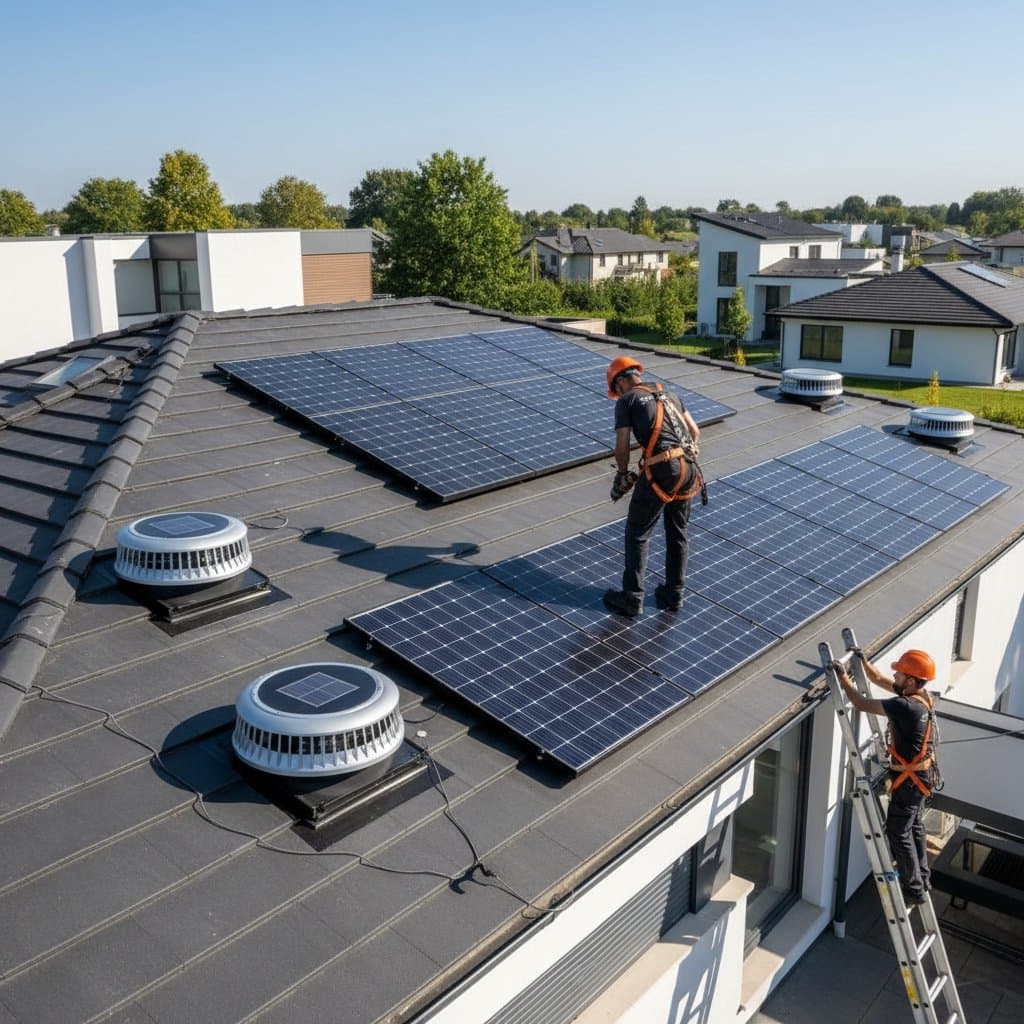
Smart Roofs: Harnessing Solar Ventilation to Reduce Cooling Bills by 40%
Homeowners seek reliable methods to decrease utility expenses while preserving comfort and roof durability. Smart roofing systems that incorporate solar-powered ventilation provide tangible outcomes. These installations enable some residences to lower cooling costs by up to 40 percent. The core mechanism involves maintaining a cooler attic, which enhances overall home efficiency.
Smart roofs extend beyond basic weather protection. They regulate heat, moisture, and airflow using sun-powered technology. This piece details the operation of solar ventilation, its energy efficiency advantages, and the importance of engaging licensed electricians or roofers for installation and maintenance.
How Solar Roof Ventilation Functions
Solar ventilation systems employ compact photovoltaic panels positioned along the roof ridge or embedded in the surface. These panels drive fans that extract hot air from the attic. Powered solely by sunlight, the system activates automatically as attic temperatures increase.
Essential Components
- Solar panel module: Absorbs sunlight and generates direct current electricity.
- Ventilation fan: Circulates air to remove heat and moisture from the attic.
- Thermostat or controller: Advanced models feature sensors that activate the fan only when temperatures surpass a predefined threshold.
- Roof flashing and housing: Shields the unit against water penetration.
- Electrical connections and conduit: Transmits power securely from the solar module to the fan motor.
Proper installation minimizes attic heat accumulation without increasing household electricity consumption. The system maintains airflow even during power outages, proving useful in severe weather events.
Energy Savings and Cost Advantages
Energy reduction represents the chief benefit of solar ventilation. Cooler attics decrease the frequency of air conditioner operation. Research by building performance specialists indicates that solar-ventilated attics can diminish interior cooling demands by up to 40 percent in high-heat periods. Actual savings depend on regional climate, roof color, and insulation levels, yet results remain reliably positive.
Additional Advantages
- Prolonged roof lifespan: Reduced attic heat lessens thermal stress on shingles and underlying materials.
- Enhanced indoor comfort: Spaces below the attic remain cooler, particularly on upper levels.
- Minimized moisture issues: Steady airflow inhibits condensation, averting rot and mold growth.
- Independence from the grid: Solar power ensures fan operation without utility reliance.
Integrating solar ventilation with radiant barriers or insulation rated at high R-values strengthens the building envelope. This approach eases demands on heating, ventilation, and air conditioning systems while stabilizing seasonal energy use.
Evaluating Smart Roof Options
Contemporary smart roofs merge various technologies via sensors and controllers for seamless interaction. Certain configurations unite photovoltaic shingles, solar ventilation, and temperature sensors within a central platform. Such synergy permits dynamic adjustments to fan speed, energy generation, and internal climate control.
Types of Smart Roofs
- Passive designs utilize elements like reflective coatings and ridge vents.
- Active designs leverage solar electricity to manage airflow, and occasionally lighting or heating.
- Hybrid designs blend passive and active features, adjusting based on temperature and humidity data.
Active systems featuring solar ventilation strike an optimal balance of expense, efficiency, and reliability for typical homeowners. Retrofitting proves feasible on existing roofs with minimal structural modifications.
Installation Process
Licensed professionals must oversee all installations, given the blend of roofing and electrical tasks.
Installation Steps
- Site evaluation: Contractors assess attic dimensions, roof slope, and solar exposure.
- Compliance review: Installers verify local codes and secure necessary permits.
- Panel positioning: The solar module mounts to capture maximum sunlight.
- Roof sealing: Penetrations receive durable flashing to block leaks.
- Fan securing: The unit attaches to the attic interior or roof structure per the model.
- Wiring integration: Electricians link components with certified connectors and protective conduit.
- Performance verification: Technicians test airflow, electrical integrity, and control functions.
Torque all connections to manufacturer guidelines. Select UL-listed parts and weatherproof sealants exclusively. Conduct annual inspections to detect debris or corrosion.
Maintenance and Issue Resolution
Solar ventilation units feature minimal mechanical elements, yet regular inspections sustain peak performance.
Indicators of Potential Problems
- Fan inactivity on clear days.
- Abnormal sounds or shaking from the motor area.
- Fractures on the solar panel or unsecured brackets.
- Moisture marks near the vent.
Inspection Protocols
- Deactivate attic power sources prior to access.
- Employ stable ladders with appropriate safety gear.
- Refrain from treading on beams or delicate insulation.
- Consult qualified experts before handling electrical elements.
Clean solar panels biannually using mild soap and water to optimize output. Trim nearby foliage to avoid shading.
Expert Perspectives
Building performance consultant Daniel Ruiz emphasizes that ventilation ranks among the most overlooked energy enhancements. Homeowners frequently prioritize solar panel capacity over attic circulation. "A solar fan delivering 800 cubic feet per minute can lower attic temperatures by 30 degrees," he noted. "This drop transforms the efficiency of the full cooling setup."
Regional roofing experts observe that solar ventilation elevates home energy profiles. Homes with smart roof integrations often earn green certifications or rebates, subject to available programs.
Selecting an Appropriate System
Prioritize specifications when choosing solar ventilation equipment.
Selection Criteria
- Airflow capacity: Measured in cubic feet per minute, scaled to attic size.
- Panel performance: Efficiency ratings, including under shaded conditions.
- Durable construction: Materials like aluminum or UV-stable polymers.
- Warranty details: Coverage for electrical and mechanical aspects.
- Roof adaptability: Suitability for asphalt, metal, or tile surfaces.
Request installer-provided documentation confirming adherence to national electrical and construction codes. Verify listings from accredited testing bodies on all components.
Sustaining Value Over Time
Solar ventilation in smart roofs promotes comfort and environmental responsibility. Returns hinge on local energy rates, attic scale, and insulation effectiveness, with many owners noticing benefits in the initial year.
Arrange yearly professional reviews encompassing airflow tests, electrical diagnostics via clamp meters, and seal integrity checks. For new roofs or replacements, incorporate solar ventilation early to facilitate ideal positioning and wiring.
Combining it with solar shingles or arrays yields a cohesive smart roof that controls heat, generates power, and boosts resale appeal.
Solar roofing has evolved into a proven, standards-compliant approach for curbing energy consumption and safeguarding structures. Solar ventilation operates discreetly to trim cooling expenses by up to 40 percent, shielding homes from thermal and humidity threats.