
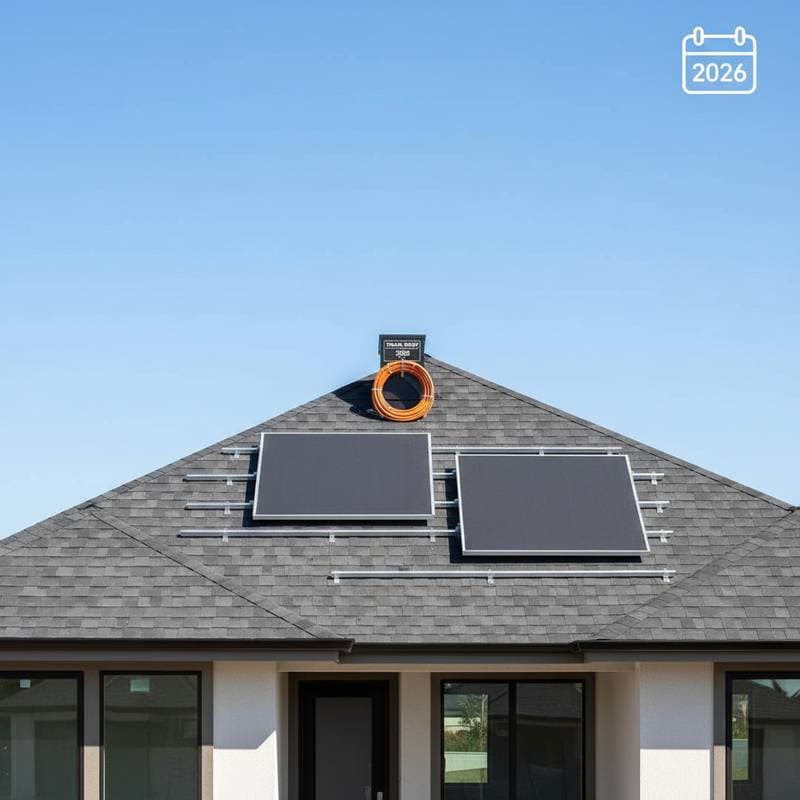
Understanding the 2026 Mandate for Solar-Ready Roofs
Homeowners often encounter the term solar-ready roof without a clear grasp of its implications. These roofs integrate essential features during construction to facilitate future solar panel installations. Starting in 2026, building codes require such preparations for new homes and substantial roof replacements, positioning solar energy as an integral part of standard home design.
This requirement marks a significant evolution in residential construction practices. Builders must now incorporate solar compatibility as a baseline element, rather than an afterthought. Grasping the details of these changes equips homeowners, contractors, and prospective buyers to make informed decisions about design, budgeting, and energy planning.
Key Components of a Solar-Ready Roof
A solar-ready roof goes beyond surface-level modifications. Specific code provisions outline the necessary elements to ensure seamless future integrations:
- Unobstructed Roof Zone. Allocate a clear area, typically on south- or west-facing slopes, sufficient for a standard residential solar array of 4 to 10 kilowatts. This space remains free from obstructions such as vents, chimneys, or skylights.
- Enhanced Structural Support. Reinforce rafters, trusses, and decking to bear the weight of panels, racks, and snow loads, adding approximately 3 to 5 pounds per square foot.
- Pre-Installed Conduit Pathways. Run electrical conduits from the roof penetration to the main service panel, providing a protected route for wiring without later wall disruptions.
- Dedicated Panel Capacity. Reserve space in the electrical panel for at least one 20- to 30-amp breaker dedicated to solar input.
- Detailed Documentation. Supply as-built drawings that map the solar zone, conduit routes, load capacities, and connection points for future reference.
Implementing these elements during initial construction incurs minimal additional expense but yields substantial efficiencies in subsequent solar projects.
Analyzing Costs and Financial Returns
The solar-ready mandate introduces a modest increase to construction budgets. Industry estimates place the added cost at 1 to 3 dollars per square foot of roof surface, translating to 200 to 600 dollars for an average 2,000-square-foot home.
This investment quickly proves its worth through avoided retrofit expenses. Retrofitting an unprepared roof often involves engineering assessments, custom reinforcements, and invasive wiring, potentially adding 2,000 to 5,000 dollars to solar installation quotes.
Consider a practical scenario for a 7-kilowatt solar system in a sunny region:
- Annual output reaches approximately 9,100 kilowatt-hours, based on 1,300 hours per kilowatt.
- At an electricity rate of 18 cents per kilowatt-hour, this offsets 1,638 dollars in annual utility bills.
- Total system cost of 17,000 dollars qualifies for a 30 percent federal tax credit, reducing the net expense to 11,900 dollars.
- Payback period spans about seven years, factoring in potential rate escalations.
With a solar-ready roof, installation savings of 2,000 to 3,000 dollars accelerate payback by up to 18 months, enhancing overall return on investment.
Broader Advantages for Homeowners and Communities
Beyond direct financial gains, the codes advance environmental and economic objectives. Widespread solar readiness expands renewable energy production, easing grid demands and lowering collective carbon emissions without extensive infrastructure overhauls.
Homeowners reap several practical perks:
- Elevated Market Value. Properties with solar-ready features attract buyers seeking energy-efficient homes, often commanding a 1 to 3 percent premium in resale prices.
- Streamlined Loan Options. Financial institutions increasingly appraise solar preparations as value-adding improvements, facilitating easier access to green mortgages or home equity loans.
- Minimized Installation Hassle. Pre-existing infrastructure eliminates the need for roof drilling, attic rerouting, or temporary power shutdowns during solar setup.
These elements position solar-ready homes as forward-looking assets in a shifting energy landscape.
Preparing Existing Properties for Solar Readiness
While the codes primarily target new builds and full roof overhauls, current homeowners can adopt similar upgrades. During a roof replacement, direct your contractor to bolster framing for added loads and install conduits linking the roof to the electrical panel.
Even partial modifications deliver comparable benefits without full code compliance. Engage a certified solar professional early in the planning phase to assess optimal panel placement. They can specify truss reinforcements, conduit sizing, and zone markings, allowing roofers to integrate these seamlessly.
Such proactive steps preserve flexibility for future energy transitions while maintaining structural integrity.
Sustaining Solar Readiness Over Time
To maximize the value of a solar-ready design, safeguard all related records from the outset. Store builder schematics, conduit diagrams, and engineering specs in a secure, accessible location for installer reference.
When scheduling future roof maintenance or re-roofing, prioritize preserving the designated solar zone. Avoid placing new vents, solar tubes, or fixtures within this area to uphold clear access.
Regularly check attic and panel areas for obstructions. Verify that reserved breaker slots remain available and labeled. Monitor evolving incentive landscapes, including federal credits, state rebates, and utility programs, to time solar adoption advantageously.
Common Questions About Solar-Ready Roofs
What defines the primary goal of a solar-ready roof?
The core aim is to embed provisions for straightforward, cost-effective solar panel additions, encompassing spatial, structural, and electrical preparations built in from the start.
Do solar-ready roofs come equipped with panels?
No, they focus solely on foundational readiness. Homeowners add panels, inverters, and monitoring systems at a later chosen time.
What is the typical added cost for solar-ready features?
Builders generally note an increment of 200 to 600 dollars to the overall project, scaled to roof dimensions and complexity.
Is it possible to retrofit older homes for solar readiness?
Yes, integrate reinforcements, conduits, and clear zones during roof or electrical renovations to achieve similar readiness.
Will a solar-ready roof alter the home's exterior appearance?
Externally, it remains indistinguishable from standard roofing. Internal enhancements, like wiring paths and space reservations, drive the differences.
How can one verify compliance with the 2026 codes?
Review approved construction plans or contact the local building authority. These documents detail the solar-ready provisions and notations.