
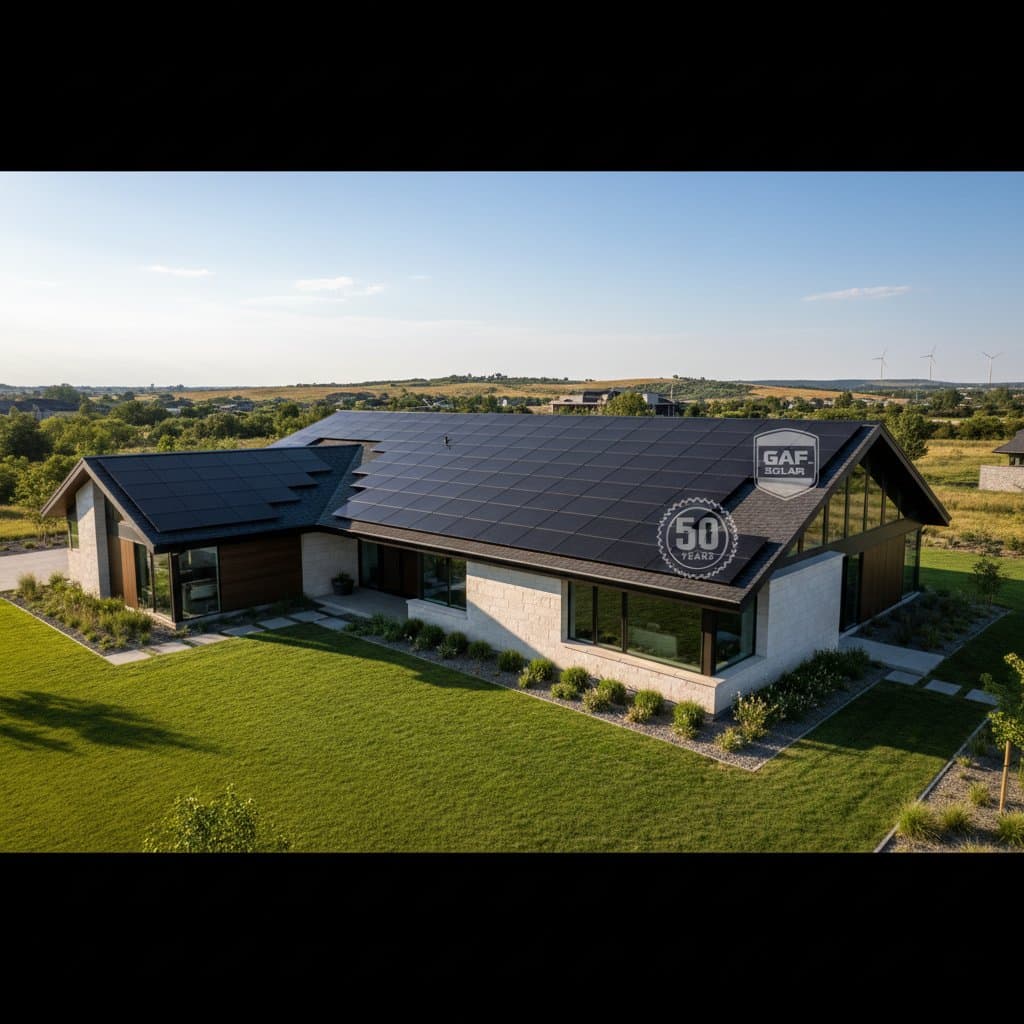
Secure 50-Year Solar Roof Protection in 2026
Solar research often overwhelms homeowners who seek to safeguard both their roof and solar investment over decades. A fifty-year solar roof warranty may appear ambitious, but advanced integrated roofing systems render it achievable. These systems integrate power generation directly into the roofing structure, eliminating the need for separate bolt-on panels.
This guide details the mechanics of a long-term solar roof warranty, its significance, and essential evaluation criteria for products such as GAF Solar Roofing. Readers gain insights into coverage assessment, payback calculations, and strategies for sustaining system performance across half a century.
How an Integrated Solar Roof Functions
An integrated solar roof substitutes traditional shingles with photovoltaic tiles that replicate the appearance and durability of standard roofing materials. Each tile incorporates tempered glass for protection, a silicon-based photovoltaic cell for energy conversion, and sealed connectors that interlock with neighboring tiles. Supporting layers include a waterproof membrane, flashing, and underlayment compliant with local building codes.
Sunlight striking the tiles prompts photons to dislodge electrons within the silicon cells, generating direct current electricity through an internal circuit. A nearby inverter transforms this direct current into alternating current suitable for home appliances. Excess energy routes to the utility grid or an optional battery storage system.
The engineering emphasizes durability. Interlocking edges and seamless underlayment prevent water penetration, enabling manufacturers to extend a unified warranty across electrical and structural elements.
Comparing Integrated Solar Roofs and Traditional Panels
Installation Method
Traditional solar panels affix to existing shingles via racks that require roof penetrations, creating potential entry points for moisture. Integrated solar roofs employ flush-mounted tiles that form the roof's surface, minimizing gaps and leak risks.
Aesthetics
Integrated systems mimic the elegance of premium shingles or slate, with solar cells seamlessly embedded. This design suits homes in historic districts or areas with strict aesthetic guidelines.
Weight and Structural Impact
These roofs distribute weight uniformly across the structure, frequently proving lighter than racked panels. Reduced load eases permitting processes and lessens overall building stress.
Maintenance
A single warranty and installation team streamline upkeep, avoiding disputes between roofing and solar specialists. Issues receive prompt attention from one accountable provider.
Cost Considerations
Initial expenses for integrated roofs exceed those of traditional setups due to their dual functionality. However, combined replacement of roof and solar elements, coupled with extended warranties, yields substantial long-term financial benefits.
Benefits of a Unified Manufacturer Warranty
Separate roofing and solar providers often limit coverage to their respective components, leading to accountability gaps. A leak adjacent to a panel mount, for example, might spark debates over responsibility, leaving homeowners to mediate resolutions.
Manufacturers producing both roofing and solar elements eliminate such conflicts. GAF Solar Roofing, developed by an established roofing leader, extends identical warranty terms to underlayment, shingles, flashings, and photovoltaic components. This integration facilitates efficient service and bolsters reliability.
System Monitoring and Upkeep Practices
Contemporary solar roofs feature built-in digital monitoring for real-time production tracking. Access daily and lifetime output data via a dedicated mobile application or online portal. Performance declines trigger automatic notifications to certified installers for timely evaluations.
Upkeep demands remain low. Clear debris regularly, prune overhanging branches to avoid shading, and hose down tiles periodically in dusty environments. Schedule professional inspections annually to verify the integrity of flashing, wiring, and sealants.
Shared materials between solar and roofing layers simplify these visits, prioritizing electrical diagnostics over structural repairs. Such efficiency supports the demands of extended warranties.
Essential Factors Influencing Warranty Effectiveness
Adhere strictly to specified installation and maintenance protocols to preserve warranty validity. Key influences include:
- Unauthorized alterations, such as drilling or adding fixtures, which compromise structural integrity.
- Inadequate roof ventilation, leading to excessive heat and accelerated degradation.
- Overlooked maintenance, where unreported damage invalidates future claims.
- Incompatible electrical additions, like non-certified inverters, that affect system compliance.
- Damage from severe weather, often necessitating supplemental insurance coverage.
Maintain detailed records of all inspections and services to expedite warranty processes.
Implementing and Sustaining Your Solar Roof
Following installation and activation, arrange yearly professional assessments to uphold warranty terms. Ensure gutters remain unobstructed, review production metrics each month, and address any observable issues without delay.
For home sales, initiate warranty transfer procedures with the manufacturer to pass protections to the buyer. This step enhances property appeal by guaranteeing decades of reliable performance.
Integrated solar roofs deliver more than protection; they foster assurance in sustainable home energy. Proper oversight ensures that weather resistance and power generation coexist under one robust warranty, powering savings and environmental benefits for generations.
FAQ
What distinguishes a solar roof from traditional panels on shingles?
A solar roof integrates power-generating tiles that replace shingles, functioning as both roofing and energy source. Traditional panels attach above existing shingles using racks and fasteners.
Do integrated solar roofs withstand heavy snow or hail?
Yes, the tempered glass tiles undergo rigorous impact testing, matching the resilience of premium roofing products.