
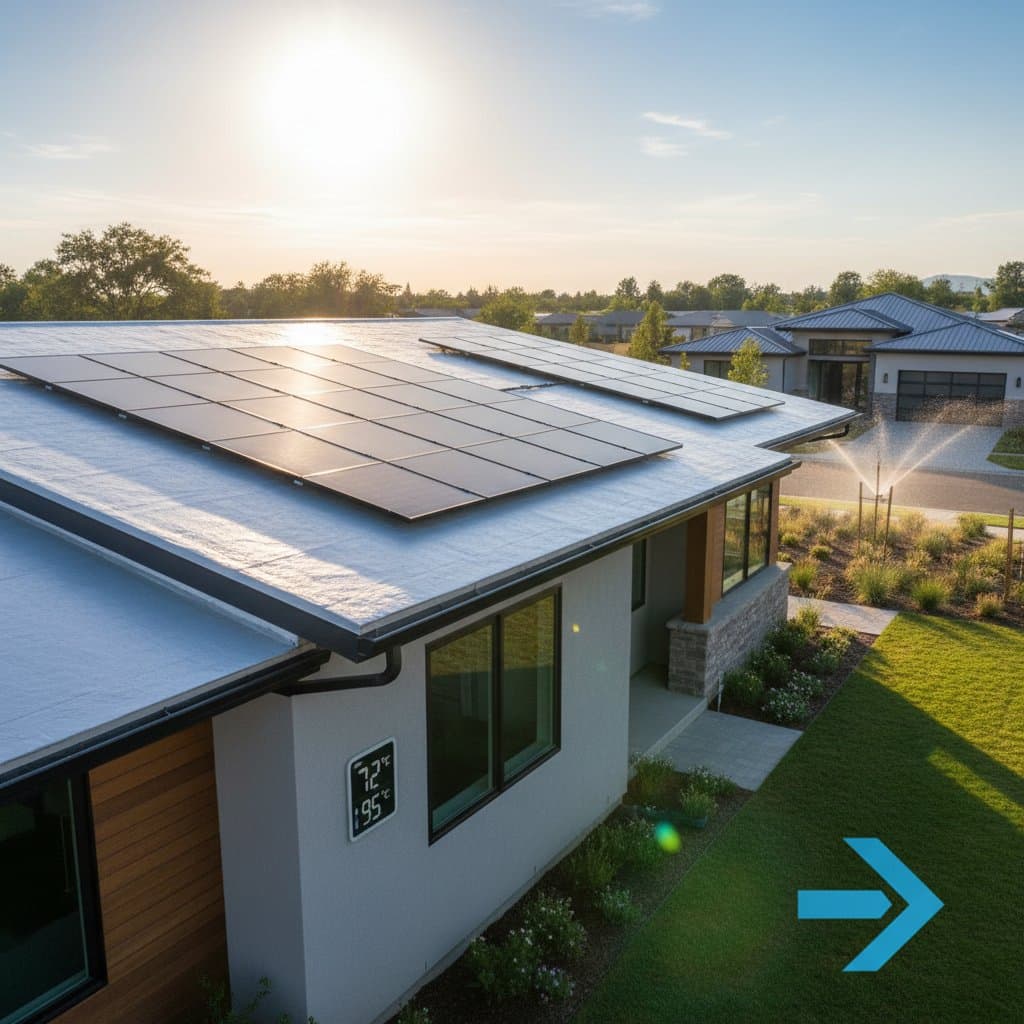
Smart Roof Coatings: Reflect Heat, Slash AC Costs 40%
Solar research often overwhelms homeowners at the outset. Many focus on panels first, but one straightforward method to reduce summer energy bills lies directly overhead. Smart roof coatings employ reflective technology to deflect sunlight, which lowers rooftop temperatures and minimizes indoor heat buildup. Consequently, air conditioning systems operate with less intensity, resulting in reduced electricity expenses.
These coatings do not supplant solar panels; instead, they enhance their performance. A cooler roof safeguards the underlying structure and optimizes the output of rooftop solar installations. The concept appears simple, yet grasping the underlying science proves essential prior to engaging a contractor.
How Smart Roof Coatings Work
Roofs absorb sunlight as heat under normal conditions. Dark surfaces frequently exceed 150 degrees Fahrenheit during peak summer heat. This thermal energy transfers through roofing layers into the attic and subsequently warms interior spaces. Air conditioners must then exert greater effort to expel the accumulated heat.
Smart roof coatings alter the surface properties through specialized pigments and reflective particles. These elements redirect solar radiation skyward rather than permitting absorption. The key metric here is solar reflectance. A standard dark roof reflects merely 10 percent of incoming sunlight, whereas advanced coatings achieve 70 to 85 percent reflection.
Coatings also exhibit high thermal emittance, enabling rapid dissipation of any residual heat after sunset. This prevents overnight temperature retention. When both reflectance and emittance perform at elevated levels, the roof maintains substantially lower temperatures across the entire day.
Real Numbers Behind the Savings
Consider a representative Philadelphia row home or single-family residence featuring a 1,500-square-foot roof. At midday, the surface absorbs approximately 1,000 watts of solar energy per square meter. Absent reflective treatment, a significant portion converts to heat that infiltrates living areas.
A coating reflecting 75 percent of sunlight diminishes heat uptake by about three-quarters. If an untreated roof hits 150 degrees, the coated version might hover around 100 degrees. This 50-degree reduction translates to attic cooling of 20 to 30 degrees, substantially easing the burden on cooling systems.
Reduced air conditioner runtime directly lowers electricity consumption. Research in comparable climates indicates that reflective coatings decrease cooling expenses by 20 to 40 percent. For a household incurring 150 dollars monthly in summer electricity, savings range from 45 to 60 dollars per month. Over a five-month season, annual benefits accumulate to 225 to 300 dollars.
Cost, Payback, and Lifespan
Installation of smart roof coatings generally costs 1.50 to 3.00 dollars per square foot, varying by material and roof preparation needs. For a 1,500-square-foot roof, total expenses span 2,250 to 4,500 dollars.
Annual savings averaging 250 dollars yield a payback period of 9 to 18 years. Most coatings endure 15 years prior to recoating, allowing savings to offset or surpass initial outlays during their service life.
Integrating the coating with routine roof maintenance or replacement accelerates payback. Local utilities and state programs frequently provide rebates for reflective roofing solutions, further decreasing upfront investments.
Installation and Material Choices
Preparation begins with thorough cleaning of the existing roof. Repairs address cracks or blisters, followed by primer application to ensure strong adhesion. The reflective coating applies via spraying or rolling, typically in two layers for uniform protection. It cures to a sleek, luminous surface.
Popular options include:
- Acrylic formulations, water-based and cost-effective, best for flat or low-slope roofs.
- Silicone variants, resistant to standing water and ultraviolet degradation, appropriate for wet or stormy regions.
- Polyurethane types, offering robust, seamless barriers suitable for roofs enduring frequent access.
Selection depends on reflectivity targets and expected durability. Professionals advise sample testing to verify compatibility and visual results.
Pairing Smart Roof Coatings with Solar Panels
Reflective coatings integrate seamlessly with solar panels. Lower roof temperatures enhance module efficiency, as elevated heat diminishes photovoltaic performance by up to 2 to 5 percent in output.
Sequence installation carefully: apply the coating prior to mounting panels. This approach guarantees complete coverage and avoids complications with brackets or shading. The bright finish complements solar arrays, imparting a contemporary aesthetic to the roofline.
Environmental and Comfort Benefits
Beyond energy conservation, reduced roof temperatures prolong material longevity by mitigating thermal cycling. Asphalt shingles and membranes suffer accelerated deterioration from intense heat exposure. Cooler conditions decelerate this process, postponing expensive renewals.
On a broader scale, reflective roofs combat the urban heat island phenomenon, where developed areas overheat relative to rural zones. By redirecting sunlight, these surfaces moderate neighborhood temperatures, curbing collective energy demands and enhancing air quality.
Within residences, effects manifest promptly. Attics remain temperate, upper-level rooms achieve greater comfort, and air conditioners activate less frequently. Consistent indoor climates stabilize humidity levels, fostering better air quality and shielding interiors from thermal harm.
Maintenance and Long-Term Care
These coatings demand little ongoing attention. Conduct biannual inspections for signs of cracking or delamination, particularly post-storm. Gentle cleaning with detergent and water restores reflectivity by eliminating accumulated debris.
Recoat upon observing diminished performance or per manufacturer guidelines. Limit foot traffic and deploy protective padding for necessary rooftop work. Diligent practices sustain efficacy beyond ten years.
Steps to Implement a Reflective Roof Upgrade
Initiate with a professional roof assessment to identify leaks, drainage problems, or structural weaknesses requiring prior attention. Request documentation detailing solar reflectance and thermal emittance ratings. Seek endorsements from established energy efficiency standards.
For homes with existing solar panels, consult installers regarding preparatory cleaning or temporary disassembly. Specialized contractors manage integrated projects encompassing both coating and solar elements with efficiency.
A reflective roof upgrade stands as an accessible strategy for diminishing energy costs and fortifying homes against thermal extremes. Combined with optimized insulation and cooling systems, it fosters enduring comfort and financial advantages.
FAQ
How long does a reflective roof coating last?
Most products endure 10 to 15 years before recoating, contingent on material and upkeep.
Can any roof be coated?
Flat and low-slope roofs suit these applications ideally. Certain pitched shingle roofs accommodate specialized coatings.