
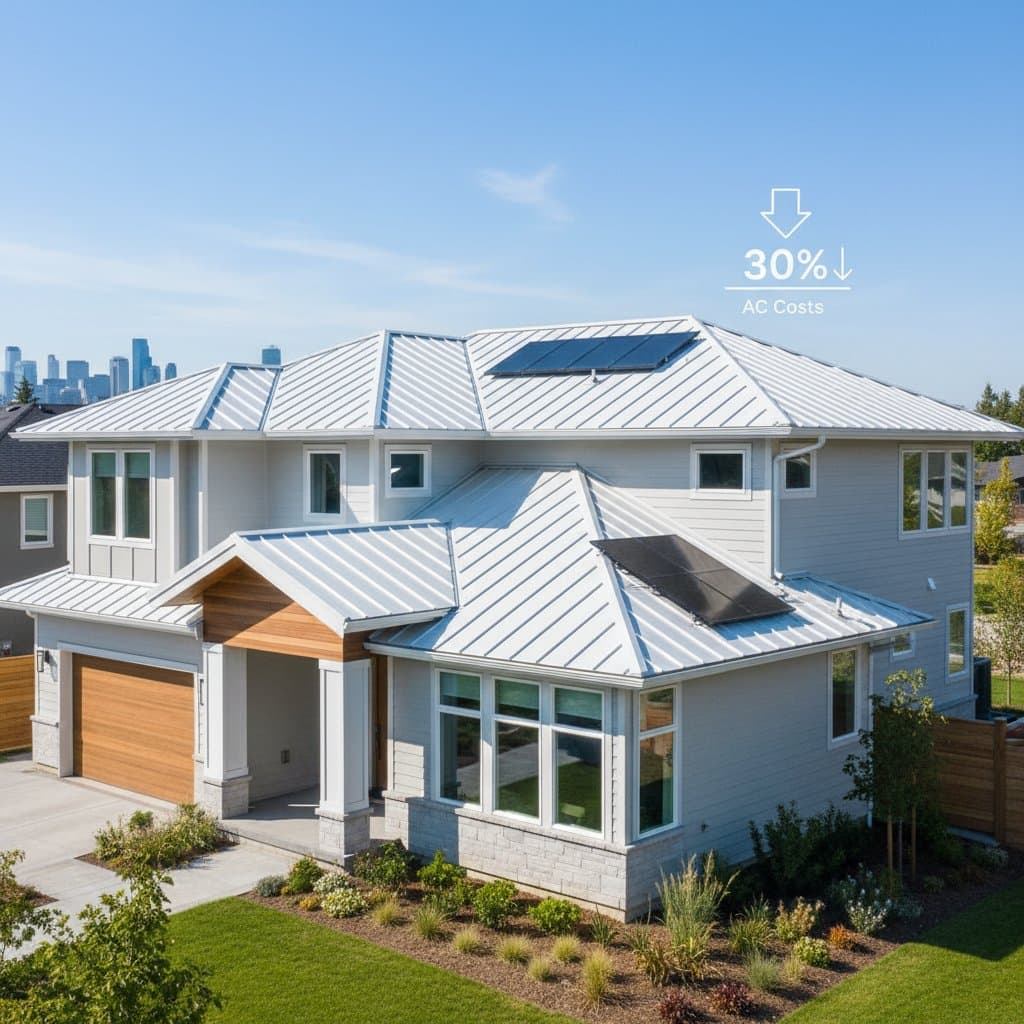
Cool Roofs: Reducing AC Costs by 30 Percent
Homeowners seek effective methods to maintain comfort during rising summer temperatures without escalating energy expenses. In urban areas such as Philadelphia, cool roofs emerge as a reliable solution. Originally popular for commercial structures, these reflective roofing systems now appeal to residential properties. They decrease air conditioning demands by up to 30 percent, elevate living comfort, and prolong roof durability.
Cool roofing represents a practical technology applicable to new builds and replacements. These roofs reflect sunlight and absorb minimal heat, which substantially lowers surface temperatures. This adjustment influences daily home comfort and energy consumption on hot days.
Principles of Cool Roof Functionality
Cool roofs redirect visible, infrared, and ultraviolet light away from the surface, preventing conversion to heat. Professionals evaluate effectiveness through two key attributes.
- Solar Reflectance: This measures the proportion of sunlight reflected by the surface. Superior cool roofs reflect 70 to 80 percent of sunlight, in contrast to 5 to 20 percent for typical dark roofs.
- Thermal Emittance: This indicates how efficiently a surface releases any absorbed heat. High-emittance materials dissipate heat rapidly after sunset.
These attributes collectively control roof temperature and its effect on interior spaces.
Various cool roof types accommodate diverse architectural preferences.
- Reflective Asphalt Shingles: Equipped with granules that mimic conventional appearances while enhancing reflection.
- Coated Metal Roofs: Treated with pigments designed to repel solar radiation.
- Light-Colored Membranes: Ideal for flat or low-slope roofs, providing broad coverage.
- Reflective Coatings: Applied to existing roofs to increase reflectivity without full replacement.
Each variant offers distinct reflectivity levels, expenses, and service life. All contribute to reduced cooling requirements.
Financial Considerations, Savings, and Return on Investment
Cool roof installation typically adds 2 to 5 percent to conventional roof costs. For a 2,000-square-foot residence, this equates to an additional $600 to $1,000. Energy reductions recoup this investment over several seasons.
Examine a scenario where annual electricity totals $2,400, with 35 percent allocated to cooling, or $840. A 30 percent decrease yields $252 in yearly savings. Across 10 years, savings reach $2,520, surpassing the initial premium.
Durability provides further advantages. Reduced thermal stress slows material degradation. Reflective elements retain efficacy for decades through routine cleaning and checks, amplifying overall value.
Available Incentives and Community Programs
Utilities and local governments provide rebates for roofs meeting defined efficiency criteria. Such programs target reductions in peak summer energy consumption. In fire-prone regions, cool roofs may qualify for insurance discounts due to lowered risk.
Philadelphia advances sustainability through reflective roofing promotions for homes and businesses. These efforts stabilize electrical grids and curb emissions by easing summer demands. Contact local building authorities or energy agencies for active rebates and certified products.
Process for Installation and Upkeep
Installation mirrors standard roof replacement procedures. Certified contractors assess structural integrity, identify moisture issues, and prepare surfaces. Effective sealing and ventilation ensure sustained results.
For viable existing roofs, apply reflective coatings as a direct enhancement. These function as durable sealants, filling minor fissures and creating a radiant barrier. Renew coatings every 10 years to preserve performance.
Upkeep remains straightforward. Remove debris, foliage, and accumulations that diminish reflection. Annual or biannual washing with mild soap and water suffices. Inspect post-storms to address potential damage promptly.
Enhanced Comfort and Additional Advantages
A primary benefit is improved interior climate. Attic-adjacent rooms maintain lower temperatures, reducing reliance on cooling systems. In homes lacking central air, this upgrade significantly boosts habitability during extreme heat.
Cool roofs safeguard structural components. Moderate temperatures limit expansion and contraction, easing wear on shingles, seals, and flashings to prevent leaks. In attics, diminished heat preserves insulation and stored goods.
Environmentally, reduced energy use lowers emissions from electricity production. By alleviating peak-hour demands, cool roofs decrease reliance on high-pollution facilities, improving local air quality.
Incremental Approaches and Complementary Measures
Full replacement may not suit every budget, yet partial upgrades yield benefits. Apply light-colored elastomeric coatings to current roofs for up to 80 percent sunlight reflection. These options cost less than overhauls while delivering cooling relief.
Combine cool roofs with attic insulation, radiant barriers, or improved airflow for amplified effects. Enhanced insulation alone reduces cooling needs by 10 to 15 percent. Integrated strategies foster year-round efficiency and comfort.
For upcoming replacements, select verified cool materials. Consult contractors on products endorsed by groups like the Cool Roof Rating Council, which confirm reflectance and emittance standards.
Practical Actions for Homeowners
- Conduct a Roof Evaluation: Review current condition, sun exposure, and nearby shading.
- Review Utility Records: Analyze at least 12 months of bills to gauge cooling expenditures.
- Evaluate Options: Compare cool roof variants and obtain consistent pricing estimates.
- Inquire on Guarantees: Discuss warranty details and upkeep protocols with installers.
- Identify Subsidies: Research rebates or programs to offset initial outlays.
- Schedule Routine Care: Establish yearly cleaning to sustain reflectivity.
These steps build toward a more durable, efficient residence. Widespread adoption in communities yields collective gains in temperature moderation, air purity, and grid reliability.
Frequently Asked Questions
Will a cool roof appear overly bright or atypical? Modern options include varied colors and textures that blend with standard roofs, maintaining reflectivity without stark contrasts.
Is installation possible over an existing roof? Yes, provided the base is stable and regulations permit; coatings or overlays serve as effective retrofits.