
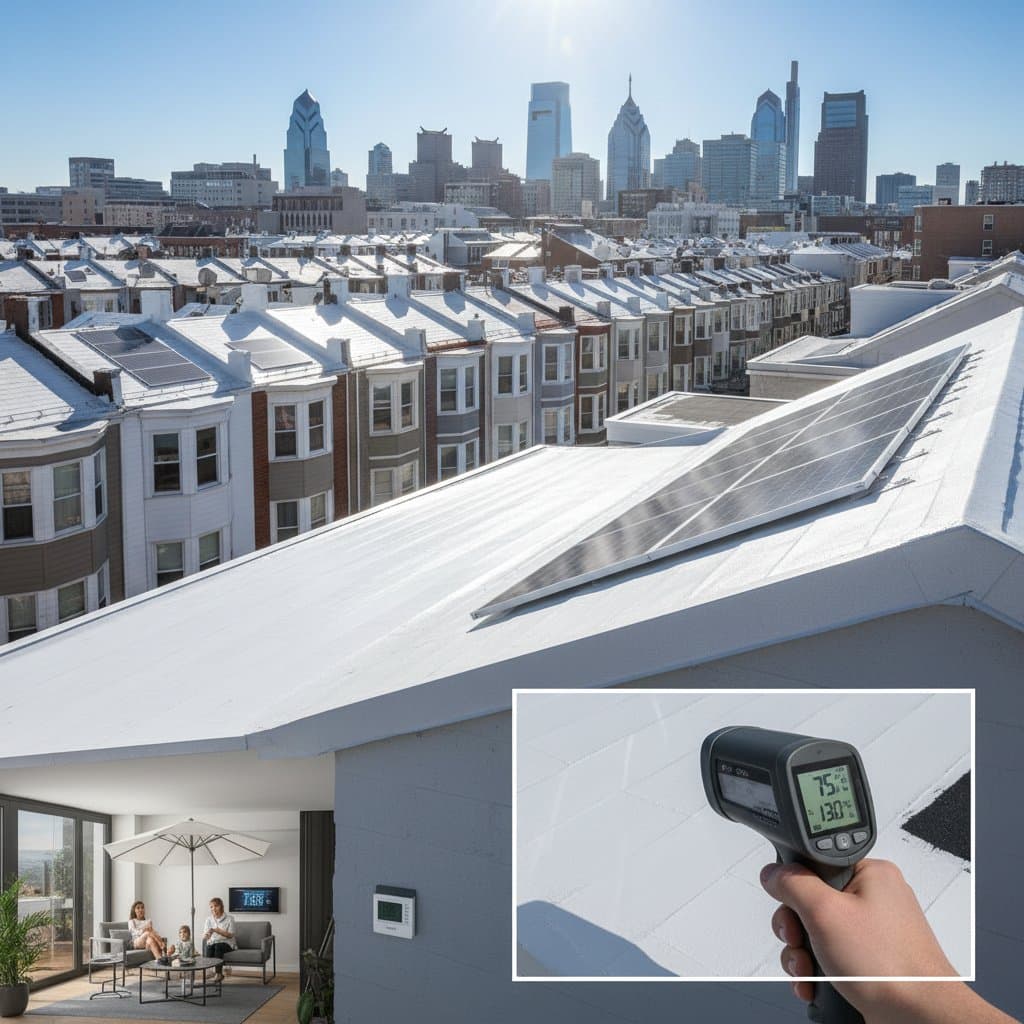
Heat-Reflecting Roofs Reduce AC Costs by Up to 40% by 2026
Philadelphia summers grow more intense each year, pushing homeowners to seek relief from rising temperatures and escalating utility bills. Heat-reflecting roofs emerge as a practical solution, capable of lowering air conditioning expenses by as much as 40 percent while prolonging roof lifespan. This cool roof technology incorporates specialized reflective coatings and materials that repel solar heat, maintaining cooler indoor spaces with less reliance on mechanical cooling.
How Heat-Reflecting Roofs Function
Traditional dark roofs capture sunlight, causing surface temperatures to soar well beyond outdoor air levels and channeling excess heat into the home. Heat-reflecting roofs counteract this by integrating light-colored pigments, ceramic granules, or acrylic coatings that reflect up to 80 percent of solar radiation back into the atmosphere. This mechanism keeps roof surfaces 50 to 100 degrees Fahrenheit cooler, minimizing heat penetration through the attic and reducing the workload on HVAC systems.
Homeowners notice immediate improvements in comfort, especially during prolonged heat waves. Air conditioners operate less frequently, leading to measurable drops in energy consumption. Over time, these savings accumulate, often offsetting the upgrade cost within three to five years.
Ensuring Safety and Structural Integrity
Prioritize a thorough roof inspection before applying any reflective treatments. Address issues like damaged shingles, faulty flashing, or existing leaks to avoid complications such as moisture entrapment or structural weakening. Professional assessments confirm the roof deck's stability, adequate ventilation, and proper insulation levels.
Engage licensed contractors for evaluations, as they adhere to safety standards and manufacturer guidelines. Avoid applying coatings over active leaks or unclean surfaces, which could lead to adhesion failures. For roofs with electrical elements like conduits or solar wiring, consult a certified electrician to ensure all connections remain secure and waterproof post-application.
Selecting the Right Cool Roof Materials
Choose materials based on your roof's pitch, existing composition, and local weather patterns for optimal performance.
- Reflective asphalt shingles feature embedded granules that scatter sunlight effectively, blending seamlessly with neighborhood aesthetics while earning certification from the Cool Roof Rating Council.
- Single-ply membranes like TPO or PVC offer inherent reflectivity, ideal for flat or low-slope roofs in residential and small commercial applications.
- Elastomeric coatings form a durable, elastic layer over various substrates, including metal or bitumen, providing both reflection and waterproofing.
- Painted metal roofs combine high reflectivity with longevity when paired with insulating underlayments, resisting thermal expansion and contraction.
Verify compliance with building codes through your installer's documentation, including solar reflectance indices above 0.65 for superior heat rejection.
Step-by-Step Installation Guide
Professional installation ensures lasting results and warranty validity. Follow this structured process:
- Initial assessment and cleaning. Conduct a detailed inspection for defects, followed by pressure washing or manual debris removal to promote strong bonding.
- Preparation of the surface. Apply primers or perform repairs as dictated by product specifications to enhance durability.
- Coating application. Use rollers, sprayers, or trowels to distribute the material evenly, achieving the recommended dry film thickness of 20 to 30 mils.
- Curing period. Allow 24 to 48 hours for drying, avoiding foot traffic until fully set.
- Final verification. Test reflectivity with a pyranometer and inspect for consistent coverage and edge sealing.
When solar panels are installed, protect mounting points from coating overspray and reconfirm electrical grounding to safeguard system integrity.
Key Energy and Environmental Advantages
Studies from the Department of Energy indicate that cool roofs decrease cooling energy requirements by 10 to 40 percent, varying by region and roof configuration. In urban Philadelphia, adopting these roofs citywide mitigates the urban heat island phenomenon, potentially cooling ambient temperatures by 2 to 5 degrees Fahrenheit.
Residents enjoy sustained indoor comfort without constant AC adjustments. Reduced attic heat preserves insulation effectiveness and slows material degradation from UV exposure. Environmentally, lower energy use translates to fewer carbon emissions, supporting broader sustainability goals.
Evaluating Costs and Return on Investment
Retrofit coatings start at $1.50 to $3 per square foot, while full replacements range higher depending on material choices. Factor in potential rebates from utilities or programs like Pennsylvania's energy efficiency initiatives, which can cover 20 to 50 percent of costs.
Calculate payback by estimating annual AC savings; for a typical 2,000-square-foot home, expect $200 to $500 in yearly reductions. Consult local providers for personalized quotes and incentive eligibility to maximize financial benefits.
Ongoing Maintenance Practices
Preserve reflectivity by clearing leaves, dirt, and pollutants quarterly with gentle washing solutions. Annual visual checks identify early signs of wear, such as thinning or discoloration, prompting timely touch-ups.
Manufacturer guidelines often recommend recoating every 5 to 10 years based on exposure. Maintain clear drainage systems to avert water pooling, and for integrated solar setups, arrange yearly electrician reviews to uphold electrical safety.
Steps to Implement Your Cool Roof Upgrade
Start by scheduling a free consultation with a certified roofer experienced in cool technologies. Review performance data, including three-year warranties on reflectivity, and compare bids from multiple vendors. This upgrade not only curbs immediate costs but also future-proofs your home against escalating energy demands through 2026 and beyond.