
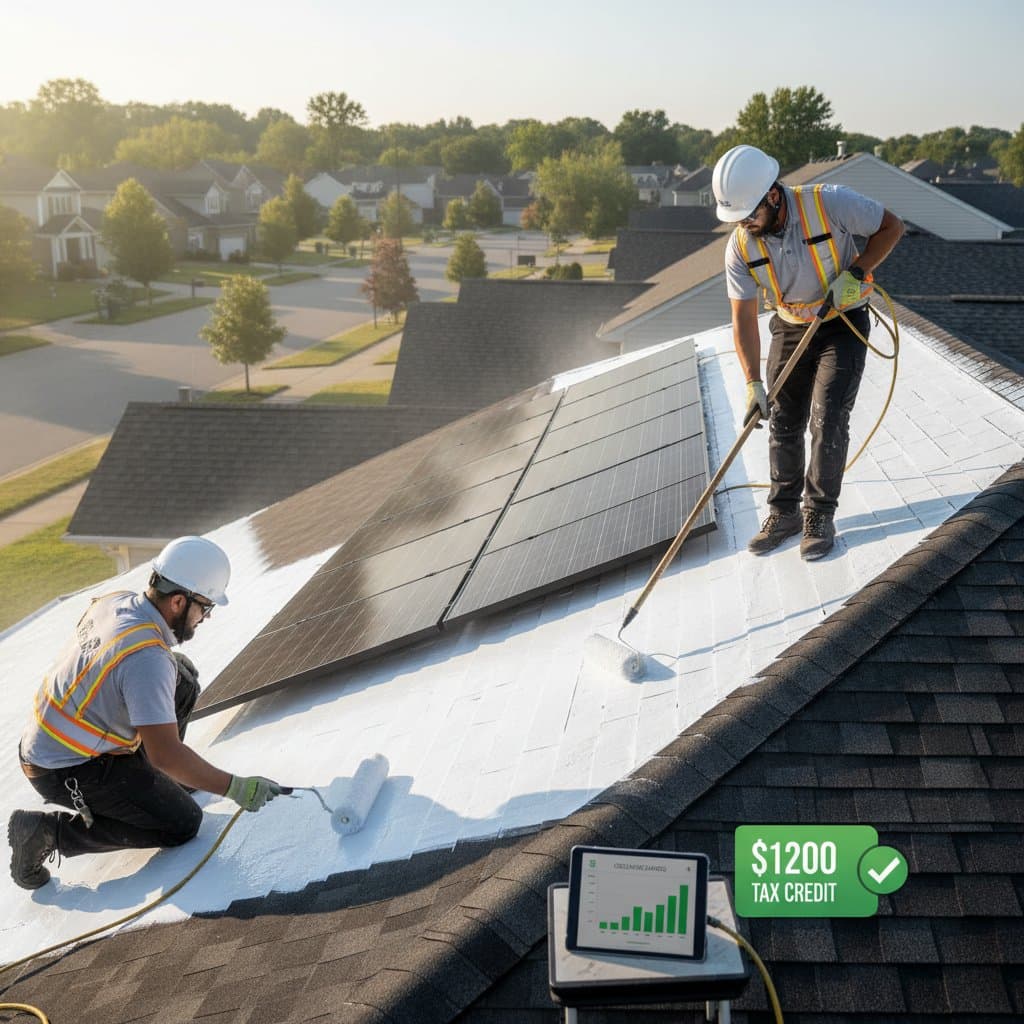
Unlocking $1,200 in Federal Tax Credits for Energy-Saving Roof Coatings
Homeowners across the United States face rising energy bills, particularly during hot summers. A recent federal initiative offers relief through tax credits for innovative roof solutions. Reflective roof coatings, known as cool roofs, provide an effective way to reduce cooling costs while qualifying for substantial financial incentives.
These coatings reflect sunlight and release absorbed heat efficiently. As a result, homes stay cooler without relying heavily on air conditioning units. The federal government recognizes this technology's potential to lower energy consumption nationwide.
Understanding the Federal Tax Credit
The Inflation Reduction Act of 2022 introduced expanded tax credits for energy-efficient home improvements. Under this program, eligible homeowners receive up to $1,200 annually for qualified upgrades. Reflective roof coatings fall into the category of building envelope improvements, which aim to enhance insulation and reduce heat gain.
To qualify, the coating must meet specific standards set by the Environmental Protection Agency. Products certified under the ENERGY STAR program ensure compliance with these requirements. Installation must occur on the primary residence, and the work should be completed by professionals or following manufacturer guidelines.
Homeowners claim this credit on their federal income tax returns using Form 5695. Documentation includes receipts for materials and labor, along with proof of ENERGY STAR certification. Consulting a tax professional helps navigate any state-specific variations or additional incentives.
How Cool Roofs Reduce Cooling Costs
Traditional dark roofs absorb up to 90 percent of solar radiation, converting it into heat that transfers indoors. Cool roofs, by contrast, reflect 65 to 80 percent of sunlight through specialized pigments and materials. This reflection keeps surface temperatures 50 degrees Fahrenheit lower than conventional roofs on sunny days.
Lower roof temperatures translate to reduced indoor heat buildup. Air conditioning systems operate less frequently, leading to savings of 10 to 15 percent on cooling bills. In regions with intense sunlight, such as the Southwest or urban areas like Philadelphia, these reductions prove even more significant.
Beyond immediate savings, cool roofs extend the lifespan of roofing materials. Heat degradation accelerates wear on shingles and membranes, but reflective coatings slow this process. Expect roofs to last 10 to 20 years longer, postponing costly replacements.
Benefits for Comfort and Sustainability
Installing a cool roof enhances overall home comfort. Indoor temperatures drop by several degrees, creating a more pleasant living environment without constant thermostat adjustments. Families enjoy consistent coolness throughout the day, especially in attics and upper floors.
These roofs contribute to broader environmental goals. By curbing energy use, they lower greenhouse gas emissions from power plants. In dense neighborhoods, widespread adoption reduces the urban heat island effect, where built environments trap warmth and elevate local temperatures.
For homes with solar panels, cool roofs offer an added advantage. Cooler surfaces improve panel efficiency, as high temperatures can decrease output by up to 20 percent. This synergy maximizes renewable energy production while minimizing reliance on grid power.
Steps to Install Reflective Roof Coatings
Assess your current roof condition before proceeding. Inspect for damage, leaks, or wear that might require repairs first. A professional roofer evaluates suitability and recommends the best coating type, such as acrylic, silicone, or elastomeric formulas.
Select ENERGY STAR-certified products from reputable manufacturers. These coatings come in white or light colors to maximize reflectivity. Coverage rates vary, but a typical single-family home requires 500 to 1,000 square feet of material.
- Prepare the surface by cleaning debris and repairing cracks.
- Apply a primer if recommended by the product instructions.
- Spread the coating evenly using rollers, sprayers, or brushes for uniform coverage.
- Allow drying time between coats, usually 24 hours, before adding a second layer.
- Inspect the finished application for full coverage and adhesion.
Hire certified installers for complex roofs or if you prefer professional service. Costs range from $0.75 to $2.00 per square foot, depending on material and labor. With the tax credit, the net investment drops considerably, often achieving payback within three to five years through energy savings.
Maximizing Long-Term Savings and Performance
Maintain the coating through annual inspections and gentle cleaning. Avoid harsh chemicals that could degrade the reflective properties. Reapplication every 10 to 15 years preserves effectiveness and qualifies for additional credits if needed.
Combine roof coatings with other efficiency measures for greater impact. Insulate attics, seal air leaks, and upgrade to high-efficiency HVAC systems. These steps amplify savings and may unlock further tax incentives under the same federal program.
Homeowners who adopt cool roofs report not only financial benefits but also improved quality of life. Reduced energy dependence fosters resilience against fluctuating utility rates. In the end, this upgrade transforms a simple roof into a powerful tool for sustainability and savings.