
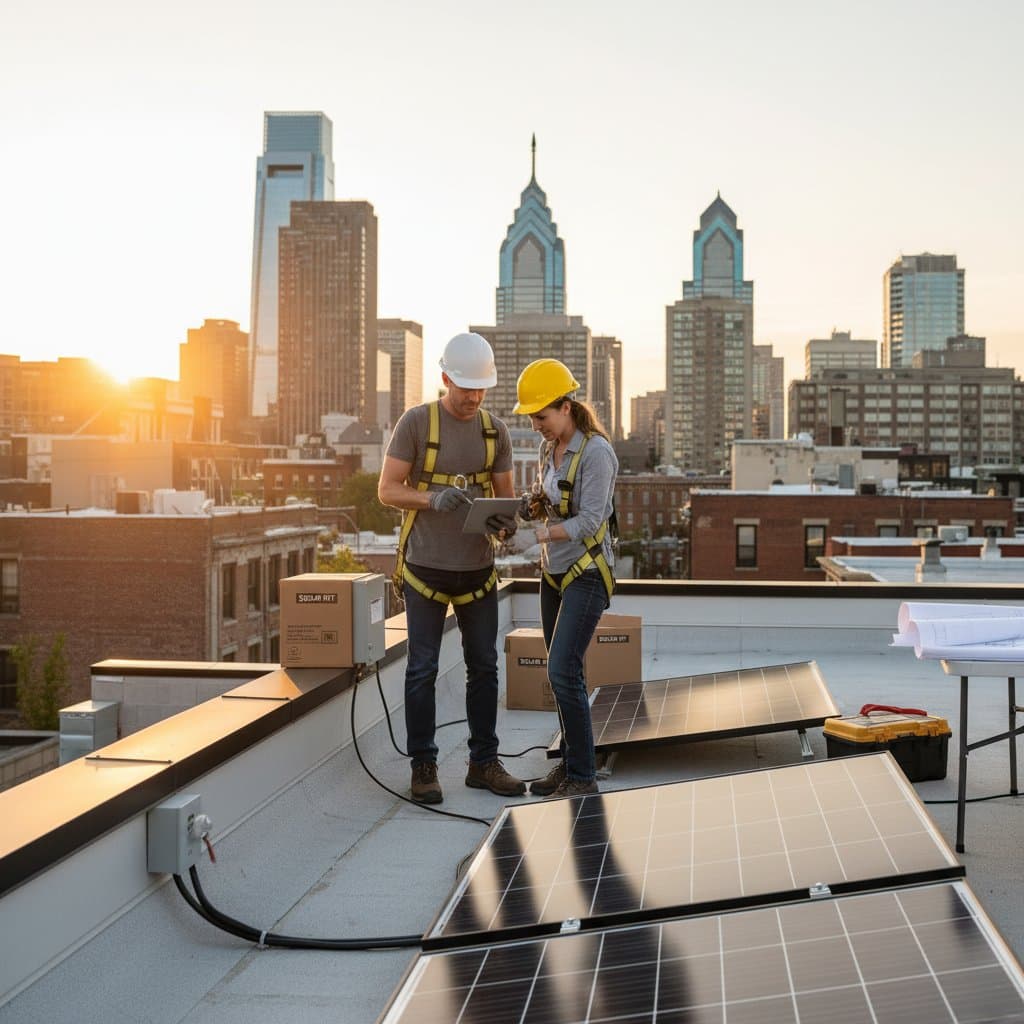
How to Plan, Permit, and Install a $15,000 DIY Solar System in Philadelphia
Philadelphia homeowners increasingly turn to solar energy to reduce utility bills and embrace sustainable living. A do-it-yourself installation under $15,000 offers an accessible entry point, provided you prioritize safety, code compliance, and proper permitting. This guide outlines the process step by step, from initial planning to final inspection, empowering you to build a reliable system while knowing exactly when professional help becomes essential.
The key to success lies in thorough preparation. Local regulations require adherence to the National Electrical Code (NEC) and Philadelphia's building standards. By following these guidelines, you ensure your setup qualifies for incentives like the Solar Renewable Energy Certificates (SRECs) program and avoids costly rework.
Defining Your $15,000 Solar System
A budget of $15,000 suits many rowhouses and small single-family homes in Philadelphia, typically generating 4 to 6 kilowatts of power. This capacity offsets 50 to 80 percent of average household electricity needs, depending on roof orientation and energy consumption patterns. Select high-efficiency monocrystalline panels rated at 350 to 400 watts each; four to six units fit most setups.
Pair these with a grid-tied inverter, such as a 5-kilowatt string inverter or individual microinverters for each panel. Mounting hardware includes aluminum rails, roof flashing kits, and clamps to secure everything without compromising your roof's integrity. Include PVC conduit for wiring runs, a dedicated solar disconnect switch near the service panel, and basic tools like a torque wrench for secure connections.
Budget breakdown helps allocate funds wisely:
- Solar panels: $6,000 to $8,000
- Inverter and optimizer kit: $3,000 to $4,000
- Racking and hardware: $1,500 to $2,000
- Electrical components and wiring: $1,000 to $1,500
- Permit and inspection fees: $500 to $1,000
Source components from certified suppliers to guarantee UL listing and compatibility with PECO, Philadelphia's utility provider. Verify inverter specifications match your system's voltage output, usually 240 volts for residential grids.
Step-by-Step Planning and Design
Start by assessing your home's solar potential. Use online tools to analyze roof pitch, azimuth, and shading from nearby trees or buildings. Aim for a south-facing roof with at least 200 square feet of unshaded space; east or west orientations work but yield 10 to 20 percent less production.
Calculate your energy offset needs. Review past PECO bills to determine monthly kilowatt-hour usage. For a typical 800-square-foot rowhouse consuming 600 kilowatt-hours per month, a 5-kilowatt system produces about 6,000 kilowatt-hours annually in Philadelphia's climate.
Sketch a basic system diagram. Position panels in a single row to minimize wiring length, and plan conduit routes from the roof to the inverter location, often in the garage or basement. Consult the NEC for maximum wire lengths to avoid voltage drop; use 10-gauge PV wire for runs under 50 feet.
Navigating the Permitting Process
Philadelphia requires permits for all solar installations to ensure public safety and grid stability. Submit plans to the Department of Licenses and Inspections (L&I) online, including a one-line electrical diagram, site plan, and structural engineering stamp if your roof exceeds 15 years old.
Prepare documentation meticulously. Detail panel layout, inverter specs, and grounding methods. L&I reviews for compliance with the 2020 NEC and local amendments, such as setback requirements from roof edges.
After approval, schedule inspections at key stages: rough electrical, post-mounting, and final energization. Fees range from $200 to $800, depending on system size. Approval typically takes 2 to 4 weeks; track your application status via the L&I portal.
Notify PECO early for interconnection approval. Submit their Net Metering Application with your permit, including inverter certification. They inspect for anti-islanding protection, which prevents the system from feeding power during outages.
Hands-On Installation Steps
With permits in hand, begin with roof preparation. Inspect for damage and install flashing kits at penetration points. Secure mounting rails parallel to roof rafters, spacing them 24 to 48 inches apart for even load distribution.
Mount panels next, torquing bolts to manufacturer specifications, usually 10 to 12 foot-pounds. Connect series strings with MC4 connectors, ensuring positive to negative polarity. Route wires through conduit to the disconnect and inverter.
Install the inverter indoors, away from direct sunlight. Wire it to your main service panel via a backfed breaker sized to the system's output, such as 25 amps for a 5-kilowatt array. Ground all metal components to a single point using 6-gauge copper wire.
De-energize the main breaker before any connections. Test continuity with a multimeter and verify no shorts. Only then schedule the final inspection.
Identifying and Mitigating Risks
Electrical work carries inherent dangers, so proceed with caution. Loose roof penetrations lead to water intrusion; seal all holes with silicone caulk and install diverter strips above mounts.
Undersized wiring causes overheating and fire risks. Reference NEC Table 310.16 for ampacity ratings; for example, 10-gauge wire handles 30 amps at 75 degrees Celsius. Install fuses or breakers rated 1.25 times the maximum current.
Omit no safety features. Place a visible disconnect within 10 feet of the array for emergency shutoff. Ground faults can energize metal surfaces; bond the racking frame to the equipment grounding conductor.
If you encounter unfamiliar issues, such as unusual voltage readings or equipment incompatibility, halt work immediately. Consult a licensed electrician to resolve them, preserving warranty coverage and code compliance.
Ongoing Maintenance for Long-Term Performance
After activation, monitor system output daily via the inverter's app or display. Expect 15 to 20 percent seasonal variation due to weather; investigate drops exceeding 10 percent.
Clean panels quarterly, using deionized water to avoid mineral spots. Inspect connections for corrosion, especially in Philadelphia's humid summers. Trim overhanging branches annually to maintain full sun exposure.
Schedule professional inspections every two years. A NABCEP-certified technician verifies insulation resistance, tests for ground faults, and optimizes string performance. These checks extend system lifespan to 25 years or more.
Realizing Savings and Sustainability
A compliant $15,000 DIY solar system pays for itself in 7 to 10 years through bill reductions and incentives. In Philadelphia, you qualify for federal tax credits covering 26 percent of costs, plus state rebates.
Beyond finances, you contribute to cleaner air and energy independence. Your installation sets a model for neighbors, potentially increasing community adoption. With diligent planning and execution, this project delivers reliable power and peace of mind for decades.