
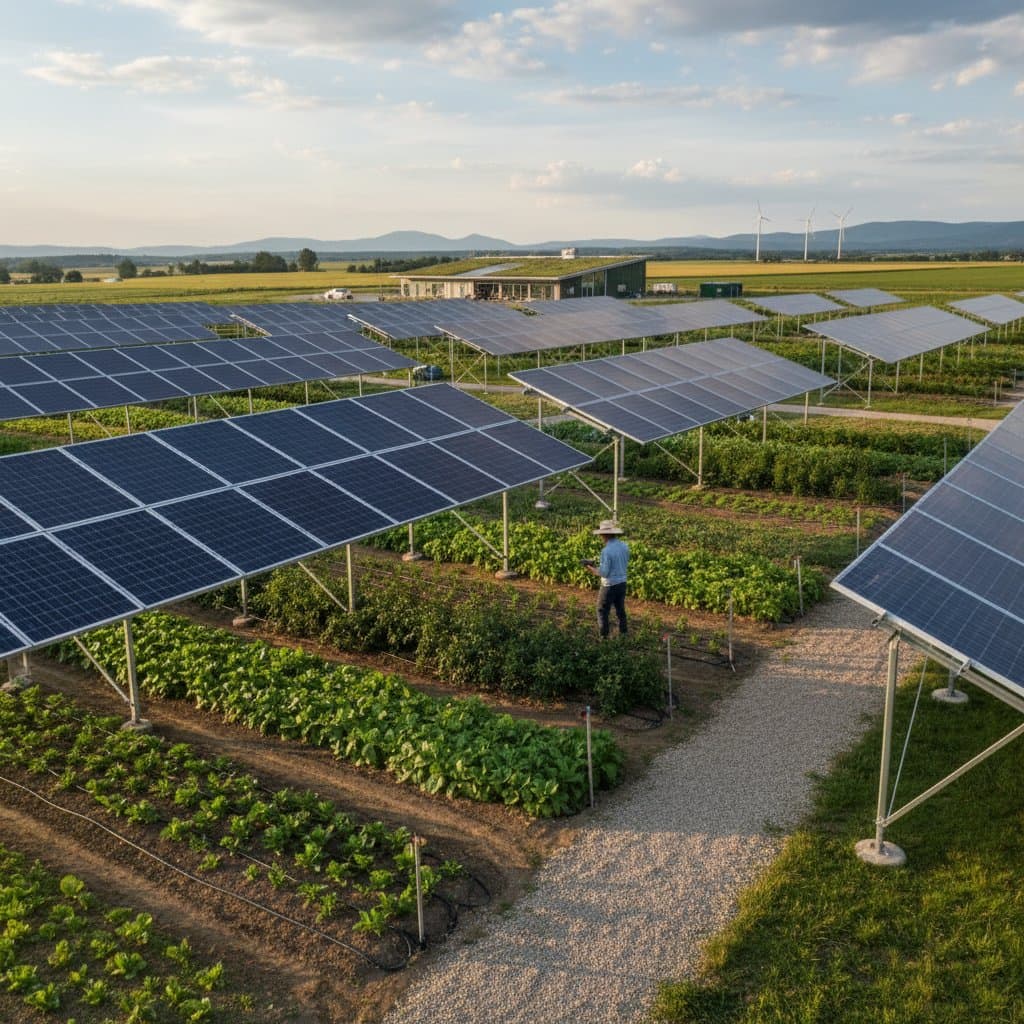
Agrivoltaics in 2025: The Rise of Farming Beneath Solar Panels
Agrivoltaics integrates solar energy production with crop cultivation on the same land. This method reshapes rural economies by enhancing land productivity and promoting energy self-sufficiency. Farmers collaborate with solar experts to install systems that safeguard soil quality, cut water consumption, and deliver consistent revenue streams.
PhillyGoSolar monitors the expansion of these projects in areas where agricultural preservation meets renewable energy targets. What began as innovative trials now stands as a viable strategy for long-term land stewardship.
Reasons Farmers Adopt Dual-Use Solar Systems
Farming faces uncertainties from climate variability, volatile commodity prices, and rising operational expenses. Dual-use solar provides equilibrium through elevated panels that permit ongoing crop growth alongside electricity generation.
Farmers secure multiple advantages:
- Steady revenue sources. Lease arrangements or direct ownership yield fixed payments that buffer against crop market swings.
- Lower moisture loss. Shading from panels preserves soil hydration, which decreases irrigation demands by up to 20 percent in arid conditions.
- Enhanced crop resilience. Structures offer protection against excessive sunlight, frost, or storm damage for vulnerable plants.
- Self-generated power. Produced electricity operates farm tools, lighting, and processing units, reducing reliance on external suppliers.
Research from the National Renewable Energy Laboratory indicates that shaded environments reduce plant temperature stress and sustain optimal soil dampness. Such conditions elevate output for shade-tolerant produce like berries and shade-adapted grains.
Mechanics of Agrivoltaic Installations
Dual-use setups differ from conventional solar farms by prioritizing access for agricultural activities. Engineers design arrays to optimize light penetration for plants while maximizing power output.
Standard components encompass:
- Raised mounting frames. Panels mount at heights of eight to ten feet, accommodating tractors and harvesters below.
- Expanded row intervals. Gaps of 15 to 20 feet between arrays ensure adequate illumination for crop rows.
- Dynamic orientation mechanisms. Select systems adjust panel angles hourly to distribute sunlight evenly across fields.
- Ecological understory. Ground surfaces feature wildflowers, legumes, or grazing areas instead of impervious materials.
Electrical infrastructure adheres to rigorous standards. Installers route conduits underground, connect inverters securely, and integrate with utility grids following approved protocols. Property owners must engage certified professionals for all connections to avoid hazards.
Navigating Land Regulations and Permits
Agrivoltaics influences zoning policies in agricultural zones. Authorities increasingly recognize these projects as extensions of farming operations, easing approval processes and maintaining favorable property assessments.
Local rules vary widely. Applicants often submit erosion control strategies, drainage evaluations, and ecological surveys. Early discussions with zoning officials identify requirements and avert delays or modifications.
Optimizing Crops and Ecosystem Gains
Crop selection influences success in shaded settings. Shade-loving varieties such as kale, cucumbers, and medicinal herbs flourish, while sun-dependent staples like corn demand careful panel configurations.
Agrivoltaics yields ecological advantages:
- Minimized topsoil displacement during precipitation events.
- Tempered habitats that foster insect pollinators.
- Prolonged cultivation periods in high-temperature regions.
- Enhanced infiltration that curbs surface water flow.
These installations bolster ecological diversity. Under-panel flora draws beneficial insects, enhancing pollination efficiency in adjacent croplands.
Broader Economic and Social Effects
Agrivoltaics fosters alliances among agriculturalists, energy firms, and power providers. Landowners lease portions for solar while sustaining harvests or pastoral activities, channeling earnings into infrastructure enhancements.
Regional workforces expand through roles in design, assembly, and upkeep. Routine checks on panels and wiring sustain employment in technical services.
Farm energy specialist Laura Chen observes that agrivoltaics connects energy reliability with agricultural output. She notes farmers build durability by powering operations internally and exporting surplus to networks.
Ensuring Safe Setup and Ongoing Care
Agrivoltaic sites blend farming risks with electrical dangers. Workers approach all components as potentially active until verified otherwise.
Prior to any fieldwork:
- Employ voltage detectors to isolate inactive lines.
- Position conductive items away from cables and enclosures.
- Don protective gear including dielectric hand coverings and eye shields.
- Implement isolation protocols for temporary deactivations.
Evidence of damage like burn traces or circuit interruptions signals urgent intervention. Professionals diagnose and repair issues such as insulation failures or earth connections.
Scheduled evaluations cover fastener tightness, weed management, and frame integrity. Vigilant oversight averts electrical discharges that threaten vegetation or spark fires.
Launching an Agrivoltaic Initiative
Rising pressures on arable land position agrivoltaics as a harmonious solution. It safeguards productive acres, bolsters local supply chains, and amplifies clean power without sacrificing cultivation.
Prospective participants begin with comprehensive evaluations of sunlight patterns, terrain characteristics, and infrastructure proximity. Teaming with accredited installers guarantees compliance with electrical norms and seamless energy integration.
This integrated model secures enduring viability for agriculture and renewables alike.