
Community Battery Sharing Reduces Household Energy Bills by 40 Percent
Many homeowners seek lower energy costs yet face high upfront expenses for batteries and solar panels. Community battery sharing provides a practical alternative through pooled storage resources. This approach lowers typical household electricity expenses by about 40 percent while retaining clean power benefits at the local level.
The Value of Shared Storage Systems
Rising electric rates and frequent power interruptions during peak periods affect many neighborhoods. Shared energy storage addresses these issues by balancing supply and demand across multiple homes. The battery stores excess solar output during daylight hours and releases power when grid rates reach their highest levels. This coordination lowers utility charges, eases pressure on the broader grid, and supplies limited backup power during brief outages.
Shared batteries also increase the effective return from solar panels. Excess generation flows into the communal unit rather than exporting to the grid at reduced credit rates. Participants therefore retain more economic value inside the neighborhood.
Operational Mechanics of Shared Batteries
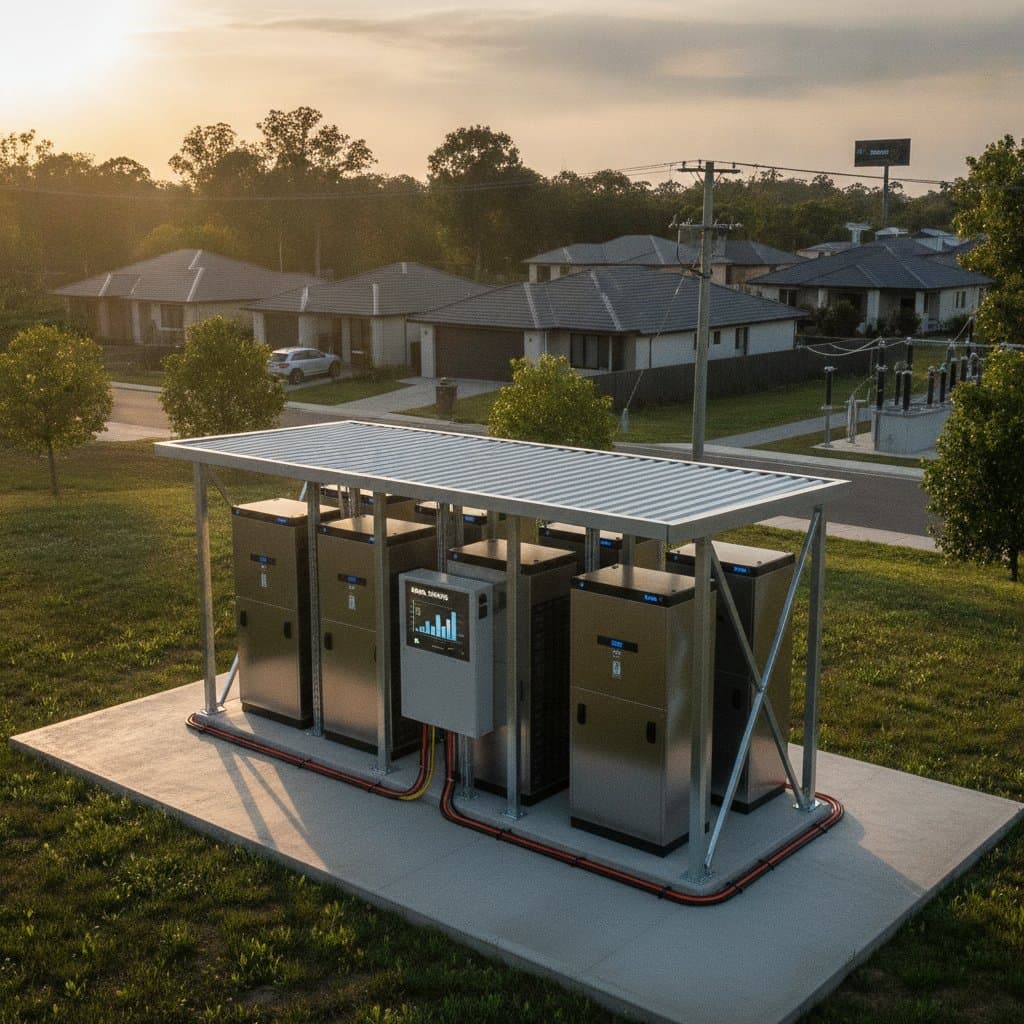
A community battery typically occupies a compact enclosure near a group of homes or an apartment building. It links to a shared solar array or several individual rooftop systems. Software monitors electricity flows in real time. Surplus solar production charges the battery, while later demand draws from stored capacity.
The platform records contributions and withdrawals for each household. Credits and charges settle automatically through metering and billing tools. This process mirrors shared utility arrangements and maintains transparency for all participants.
Financial Analysis and Payback Periods
A neighborhood of ten homes might install a 200 kilowatt hour battery. Each residence generates roughly 25 kilowatt hours of solar power daily, with about half available for later use instead of grid export. At an average rate of 24 cents per kilowatt hour, stored energy yields daily savings near 3 dollars per home, or approximately 1000 dollars annually.
Total installed cost for the battery reaches about 120000 dollars. Division among ten participants produces an individual share near 12000 dollars. With yearly savings of 1000 dollars, the simple payback period equals roughly 12 years. Local rebates or tax credits can shorten this interval to eight years or less.
Available Support Programs and Site Options
Grants, tax credits, and utility payments frequently support shared storage projects. Energy cooperatives allow groups to secure favorable financing and manage assets collectively. Prospective participants should review interconnection requirements and generation limits with their utility provider.
In dense urban settings, batteries can occupy parking areas or spaces beside community buildings. This placement avoids structural concerns associated with rooftops and simplifies service access. Multifamily properties also benefit because individual battery installations often prove impractical.
System Performance and Backup Capability
Lithium iron phosphate batteries commonly achieve 90 percent round trip efficiency. Thermal controls and remote monitoring extend service life, with typical warranties spanning ten to fifteen years. Software updates maintain safety margins and optimize output.
During outages the system disconnects from the grid and supplies essential loads such as refrigeration and lighting. Capacity allocation ensures each participant receives a proportional share of available runtime.
Additional Community Advantages
Shared storage reduces neighborhood noise and eliminates the need for gasoline generators. Properties connected to these systems often command stronger resale interest due to documented operating savings and added resilience. Over time the arrangement displaces peak fossil fuel generation and lowers household carbon emissions.
Initial Planning Steps
- Identify five to ten neighboring homes willing to explore the concept.
- Collect recent utility statements to map usage and rate patterns.
- Commission a solar access assessment for available roof or ground space.
- Solicit comparable proposals that specify battery capacity, inverter performance, and connection expenses.
- Consult the utility and local energy office regarding applicable incentives.
- Designate responsibility for routine monitoring and warranty administration.
Monthly performance reports confirm actual savings after commissioning. Periodic inspections verify ventilation and electrical connections.
Daily Integration and Ongoing Operation
Once active, the battery charges and discharges without direct user intervention. Residents gain awareness of timing large appliance use to coincide with peak solar production. Coordinated load shifting across the group extends overall savings.
Shared storage demonstrates that clean energy systems can operate through neighbor level cooperation. Participation strengthens both individual finances and collective grid stability.