
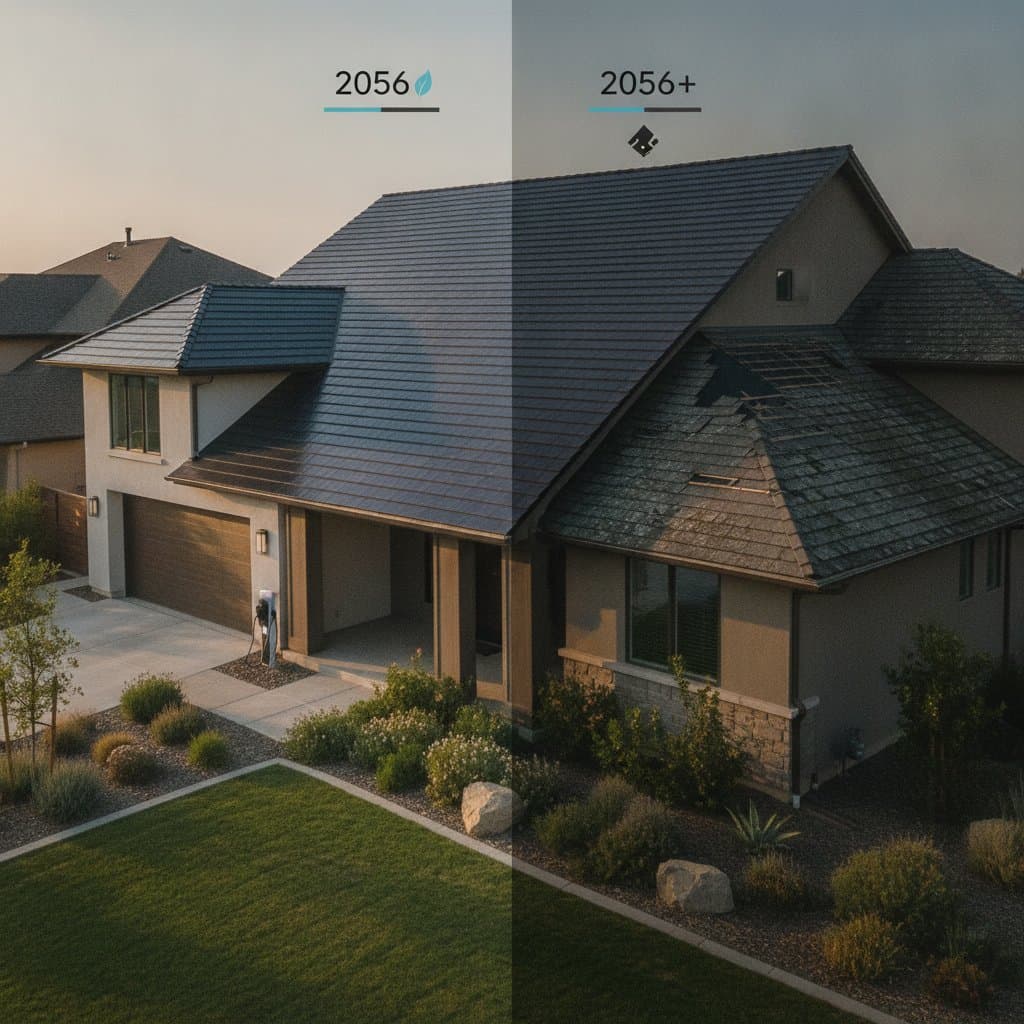
Solar Roof Tiles That Last 30 Years Longer Than Shingles
Many homeowners in Philadelphia hesitate when they hear about solar roofing. They imagine bulky panels sitting on top of shingles. They also worry that the roof might wear out before the solar system does. In reality, new solar roof tiles are built to outlast asphalt shingles by decades while generating clean electricity the entire time.
How Solar Roof Tiles Work
A solar roof tile combines the function of a standard roofing shingle with a photovoltaic cell. Each tile is a small energy generator made of tempered glass, silicon cells, and weather-sealed backing. When sunlight hits the tile, photons excite electrons in the silicon layer. The movement of these electrons creates direct current, which passes through an inverter that turns it into usable alternating current for household needs.
Unlike traditional panels that sit on racks, solar tiles integrate directly with the roof deck. They interlock to form a continuous waterproof surface. The design creates a unified appearance that looks like a modern architectural finish instead of a retrofit system.
Comparing Lifespans
A high-quality asphalt shingle roof often lasts 20 to 25 years before showing signs of wear. In contrast, solar roof tiles are engineered to last 50 to 60 years. That is roughly 30 years longer than shingles. The tiles maintain both energy production and weather resistance over that time.
The extended life comes from durable materials. The top layer is tempered glass that resists hail, wind, and heavy rain. There are no granules to shed or asphalt layers to crack. Because the tiles are sealed units, they resist moisture intrusion and ultraviolet degradation. Each tile also carries a power output warranty that typically guarantees at least 80 percent of its original capacity after several decades.
Example of Energy and Cost Savings
Consider a 7 kilowatt solar roof sized for a medium home in Philadelphia. Each kilowatt can produce about 1,300 kilowatt-hours per year in this region. The system would generate roughly 9,100 kilowatt-hours annually. If the utility rate is 18 cents per kilowatt-hour, that equals about 1,640 dollars in yearly energy value.
If the roof lasts 55 years, the system could produce close to half a million kilowatt-hours over its lifetime. Even with gradual efficiency loss, the total energy value could reach 80,000 dollars before future rate increases.
The upfront cost of a solar roof is higher than asphalt shingles plus separate panels. Yet the combined product replaces both roof and energy system. Federal and state incentives can reduce the initial price by 25 to 30 percent. When factoring in avoided roof replacements and energy savings, many homeowners see full payback within 10 to 14 years, depending on electricity rates and site conditions.
Performance and Aesthetic Benefits
Solar tiles are designed for both performance and appearance. The low-profile installation eliminates gaps where debris collects. The color and texture options help match nearby houses while still giving a modern look. Each tile connects through concealed wiring, so there are no visible conduits.
For efficiency, the tiles use bypass diodes that keep power flowing even if part of the roof is shaded. Smart inverters track performance in real time. This allows homeowners to monitor production through an app.
Installation and Maintenance
Installing solar roof tiles requires certified installers trained in both roofing and electrical systems. The crew removes old shingles down to the deck. They install underlayment, then mount the tiles in overlapping rows. Each tile locks into the next with watertight seals and electrical connectors.
Maintenance is minimal. The glass surface sheds most dirt during rain. A gentle rinse once or twice a year keeps the system operating efficiently. Regular monitoring can alert owners to any drop in performance. If a tile fails, it can be replaced individually without removing large sections of the roof.
Long-Term Value
A solar roof tile system increases property value because it serves as both a premium roof and an energy generator. Buyers see lower utility bills and a roof that will not need replacement for decades. Insurance companies often view these roofs as lower risk because the materials resist fire and impact better than asphalt.
Planning Your Solar Roof Project
Before choosing a solar roof, review your roof pitch, shade coverage, and local utility rules. Request a design that shows estimated production and payback. Compare warranties for both roof integrity and power performance. Once installed, keep the monitoring app active and schedule quick visual checks after major storms.
Switching to solar roof tiles is not only about generating clean power. It is about investing in a roof that protects your home and keeps working long after conventional shingles would need replacement.