
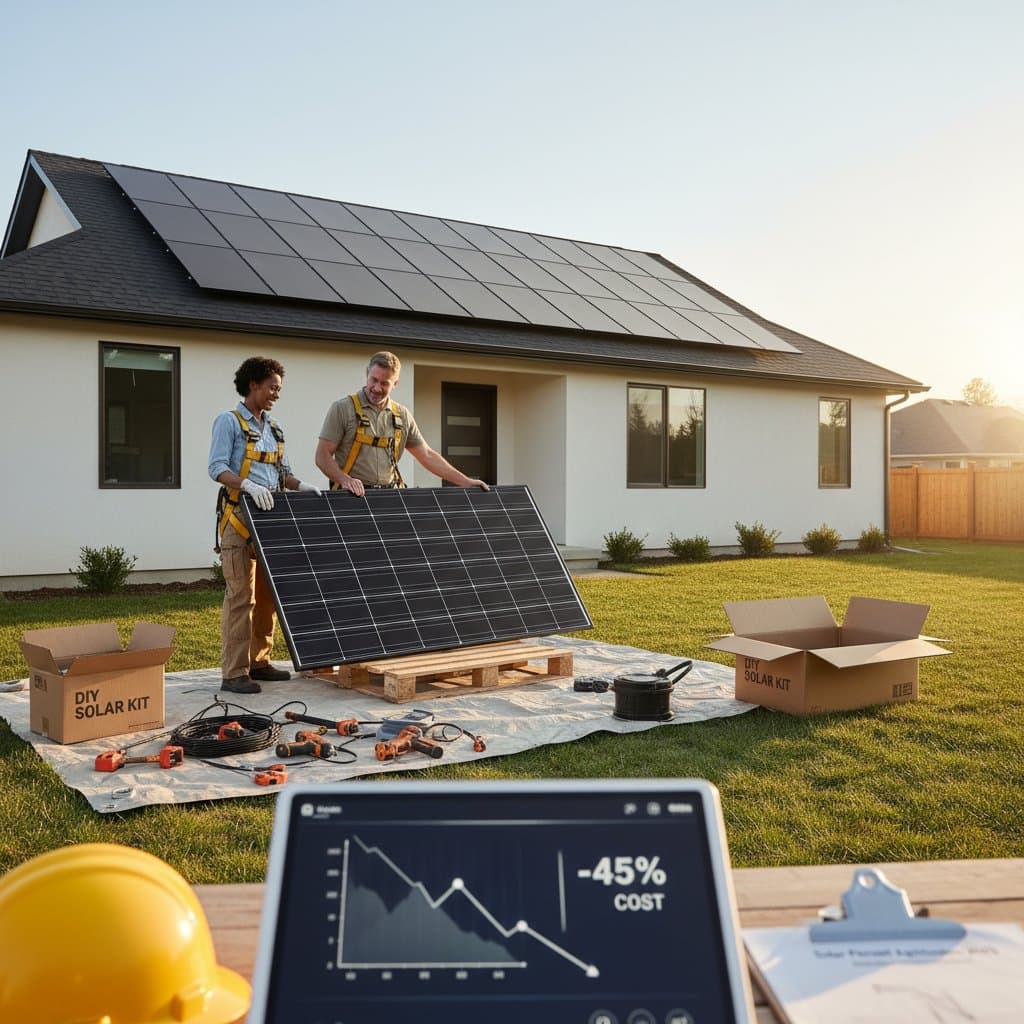
Bypass Professional Fees: DIY Solar Kits for Substantial 2025 Savings
Homeowners often encounter sticker shock when researching solar options, particularly upon realizing that installation expenses dominate the budget. Panels represent only a fraction of the total investment; labor charges, administrative overhead, and regulatory approvals frequently comprise almost 50 percent of the overall expense. Increasing numbers of property owners now opt for DIY solar kits to eliminate these markups, accelerate their transition to sustainable power, and retain more financial benefits from their systems.
These kits target skilled individuals eager to maintain high standards while avoiding inflated service fees. Through meticulous preparation and appropriate equipment, users can construct secure, regulation-adhering setups that generate long-term returns. Such approaches empower residents to customize installations to their specific needs, fostering greater confidence in renewable energy adoption.
Detailed Cost Analysis and Potential Savings
Hiring experts for solar setup typically incurs rates of 2.75 to 3.50 dollars per watt. For a standard 6 kW array, this translates to approximately 18,000 dollars, encompassing all labor components. In contrast, a comparable DIY kit retails for 9,000 to 10,000 dollars, allowing owners to oversee the assembly process and coordinate necessary evaluations.
Account for supplementary expenses like specialized tools, application fees, and professional electrical reviews, yet savings commonly range from 30 to 45 percent. Applying the federal investment tax credit further shortens the recovery timeline to five through seven years, influenced by regional electricity prices and solar irradiance levels. This structure positions DIY as a viable strategy for budget-conscious households seeking rapid financial recovery.
Examine a practical illustration to grasp the calculations:
- Array capacity: 6 kW
- Energy generation per kW: 1,300 kWh annually
- Total yearly production: 7,800 kWh
- Electricity tariff: 18 cents per kWh
- Yearly expense reduction: 1,404 dollars
With persistent base charges of about 15 dollars monthly, net annual benefits approximate 1,224 dollars. Across seven years, cumulative avoided costs approach 8,500 dollars, and the installation persists in delivering power for 25 years or longer, amplifying lifetime value.
Required Tools, Competencies, and Safety Protocols
Mounting solar panels demands more than basic handyman skills; it involves navigating heights, operating machinery, and performing elementary electrical tasks. Individuals with prior involvement in residential wiring or building trades tend to excel in these endeavors. Lacking formal electrical certification, participants should engage a qualified electrician for the critical interconnection to the utility grid, ensuring compliance and risk mitigation.
Gather these indispensable implements before commencing:
- Drill equipped with bits for metal and masonry surfaces
- Torque wrench to secure mounting hardware precisely
- Multimeter for verifying voltage and continuity
- Safety harness paired with roof anchors for elevated work
- Conduit bender alongside wire strippers for cabling preparation
Errors in circuitry risk equipment failure or warranty invalidation, underscoring the importance of thorough manual review. Reputable kit providers frequently supply virtual assistance for resolving issues, enhancing user success rates. Adhering to these practices minimizes hazards and upholds system integrity.
Ideal Conditions for Pursuing DIY Installation
DIY solar initiatives prove most advantageous under certain circumstances:
- Roofs exhibit solid structural integrity with limited obstructions from shadows
- Participants possess familiarity with renovation tasks and technical procedures
- Municipal approval processes remain efficient and accessible
- Power providers accommodate modest interconnections to the network
Intricate roof geometries, persistent shading, or outdated service panels may necessitate expert intervention to avoid complications. Nevertheless, for suitable candidates, the economic advantages and personal accomplishment of independent setup render the investment compelling. Evaluate site specifics early to determine feasibility and align expectations.
Optimizing System Longevity and Efficiency
Schedule routine assessments of energy yield each month, benchmarking against projections derived from local insolation data. Declines in performance might indicate faulty joints or emerging blockages; address promptly to restore output. Employ gentle brushes and plain water for surface cleaning, steering clear of harsh chemicals that could etch materials.
In regions prone to winter precipitation, remove accumulations carefully to avert thermal stress. Maintain unobstructed ventilation around inverters to facilitate cooling and prevent overheating. These habits extend operational lifespan, ensuring consistent contributions to household energy needs and financial offsets.
Common Questions on DIY Solar Kits
What certifications or permits are required for DIY solar?
Most jurisdictions mandate building permits and electrical inspections to verify adherence to codes. Consult local authorities or online resources for forms and timelines; some areas offer streamlined approvals for small residential arrays. Professional sign-off on wiring often satisfies final requirements.
Can DIY installations qualify for tax incentives?
Yes, provided the system meets performance standards and documentation proves compliance. The federal solar investment tax credit applies to eligible equipment costs, regardless of installation method, as long as safety protocols are followed. Track receipts and consult tax professionals for optimal claims.
How long does a typical DIY installation take?
For a 6 kW setup, expect 2 to 4 weekends, depending on experience and weather. Allocate time for planning, mounting, wiring, and testing phases. Beginners may benefit from phased approaches to build proficiency gradually.
What if I encounter issues during installation?
Kit manuals include troubleshooting guides, and manufacturers provide support lines. For complex problems, pause work and seek electrician input to prevent damage. Online forums from solar communities offer peer insights without compromising warranties.