
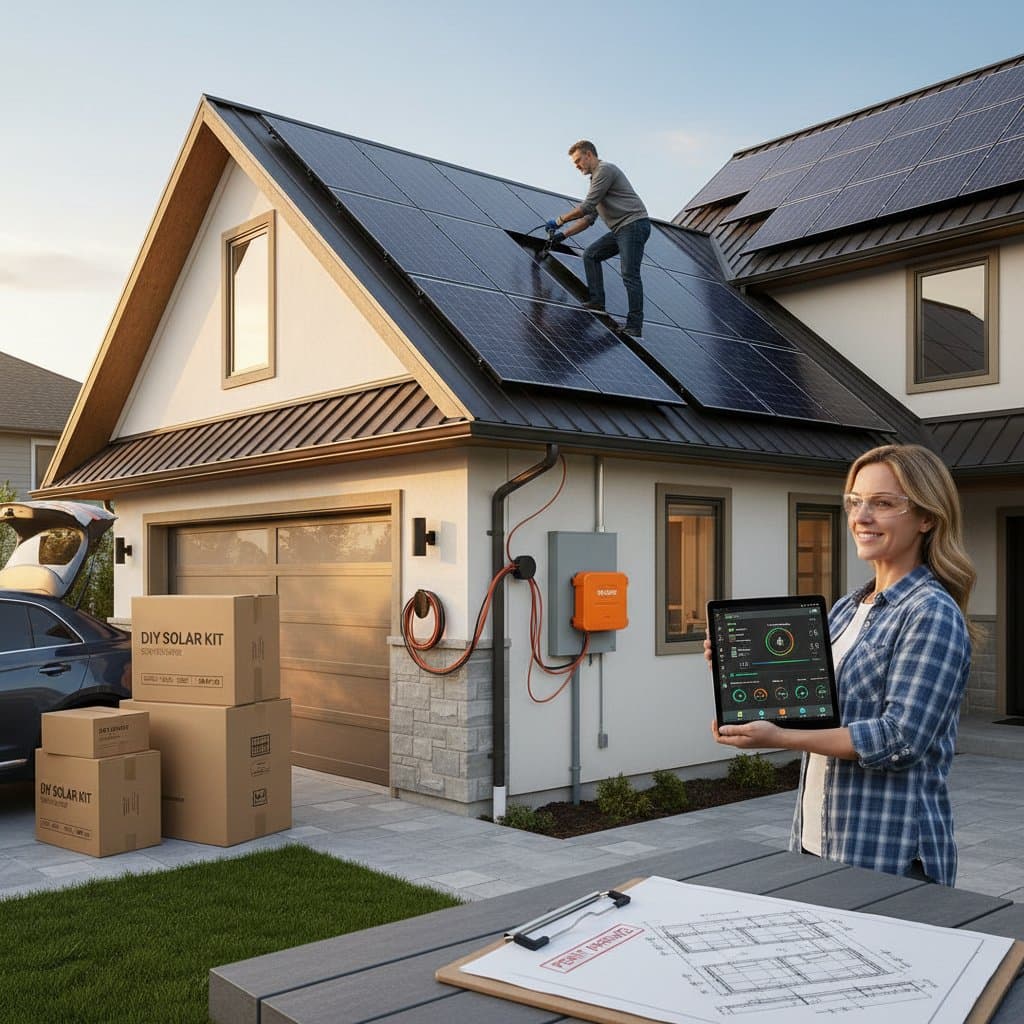
Install $8,000 DIY Solar Systems Without Electricians
Solar research often overwhelms homeowners at the outset. Many seek to lower costs and secure energy independence, but the prospect of roof work or electrical wiring deters them. Plug-and-play kits now enable straightforward installations of solar power systems for around $8,000, eliminating the need for professional electricians.
The benefits prove straightforward. Homeowners avoid labor expenses and contractor timelines while obtaining dependable clean energy. With thorough preparation and appropriate equipment, such projects remain safe, adhere to codes, and deliver impressive efficiency.
Calculate Output and Savings
Consider a basic scenario with a 5 kW plug-and-play system. In the Philadelphia area, a typical solar array generates approximately 1,200 kilowatt-hours per kW annually.
Step 1: Determine Annual Output
5 kW multiplied by 1,200 kWh equals 6,000 kWh per year.
Step 2: Apply Utility Rate
With an average blended rate of 18 cents per kWh, this offsets about $1,080 in annual bills.
Step 3: Compute Net Savings
Subtract fixed utility fees of roughly $120 per year to arrive at $960 in net savings.
For an $8,000 system, the payback period spans eight to nine years. After that point, generated electricity costs nothing beyond minor maintenance.
Navigate Permits, Incentives, and Compliance
DIY systems require adherence to local permitting and inspection requirements. Most areas demand an electrical permit and potentially a structural assessment for roof-mounted panels. Certain municipalities streamline approvals for systems under 10 kW.
Incentives accelerate payback considerably. The federal tax credit applies to a portion of costs for qualifying installations, including those completed by homeowners with standard equipment. Pennsylvania offers net billing, where surplus energy yields bill credits.
Qualification demands utility registration and UL-listed components. Retain receipts and installation records for verification.
Prioritize Safety and Electrical Connections
Safety demands utmost attention in every project. Plug-and-play kits feature pre-wired connectors that minimize risks of live wire exposure. Disconnect all power sources before manipulating any cables.
For outlet-plugged kits, select a circuit rated to handle the system's current. Larger configurations might necessitate a dedicated circuit, which a licensed electrician installs, even if homeowners manage other aspects.
Grounding forms a critical component of solar setups. Kits supply grounding lugs that attach to a copper rod or the home's grounding infrastructure. This measure safeguards against surges and lightning strikes.
Assess Performance and Durability
Contemporary plug-and-play panels come with 25-year output warranties. Microinverters carry guarantees of 10 to 20 years. Systems experience degradation at about 0.5 percent annually, retaining over 85 percent capacity after 20 years.
Monitoring applications display output from individual panels, including daily and monthly totals. Underperforming panels become simple to pinpoint and replace. This modularity surpasses traditional central inverter systems in flexibility.
Weigh DIY Against Professional Installations
Advantages of DIY Approaches
- Reduced initial expenses
- Quicker timelines
- Complete selection of components
- Straightforward future expansions
Advantages of Professional Services
- Comprehensive handling of permits
- Labor-inclusive warranties
- Expert roof and electrical execution
A hybrid model suits numerous homeowners. Individuals perform the installation, while electricians verify connections and confirm code adherence. This balances assurance with affordability.
Handle Maintenance and System Lifespan
Solar panels demand little upkeep. Clean them with water several times yearly to clear dust or pollen. Steer clear of abrasive tools that might damage the glass surface.
Conduct annual checks on mounting hardware and wiring for secure fits. Microinverters, being sealed units, require no routine intervention. Monitor data closely; abrupt output declines often indicate loose connections or shading issues.
Upon system retirement, recycling initiatives process panels and inverters. Manufacturers furnish recycling guidance alongside warranty details.
Prepare for Your DIY Solar Initiative
Prior to kit acquisition, assess roof or ground suitability. Employ online solar calculators to gauge sunlight and obstructions. In Philadelphia, south-facing roofs tilted at 30 to 40 degrees optimize performance.
Evaluate electrical panel capacity. A 200-amp main breaker accommodates up to 40 amps of solar input without issue. Smaller arrays may use supply-side taps, best executed by professionals.
Map cable routes and mounting positions in advance. Study the manufacturer's manual meticulously. Kits often include layout templates for precise spacing and wiring.
Advance Toward Energy Independence
DIY solar installations offer practicality for countless homeowners in the current landscape. Advancements render the process safer, more intelligent, and simpler. A $8,000 plug-and-play system offsets significant household electricity use and yields enduring financial benefits.
To proceed, collect precise site data, review local regulations, and select trusted suppliers. Maintain safety throughout. Diligent preparation empowers clean energy generation under personal control.
Frequently Asked Questions
Do plug-and-play solar kits eliminate the need for electricians?
Small systems plugging into standard outlets require no electrician. Larger ones tying into main panels may need professional circuit installation.
Is grid connection possible for DIY systems?
Yes, where utilities permit. Register for net billing and employ certified equipment.
What occurs during power outages?
Most kits deactivate for safety. Optional batteries provide backup capabilities.
Do warranties apply to DIY installations?
Yes, provided adherence to manufacturer guidelines.
Can renters install plug-and-play solar?
Yes, portable ground or balcony units suit renters due to easy relocation.
How much time does a 5 kW installation require?
Assembly and connection typically fit within a weekend, varying by mounting demands.
Do snow or shade impact performance?
Yes, both diminish output. Site panels for maximum direct sunlight exposure.