
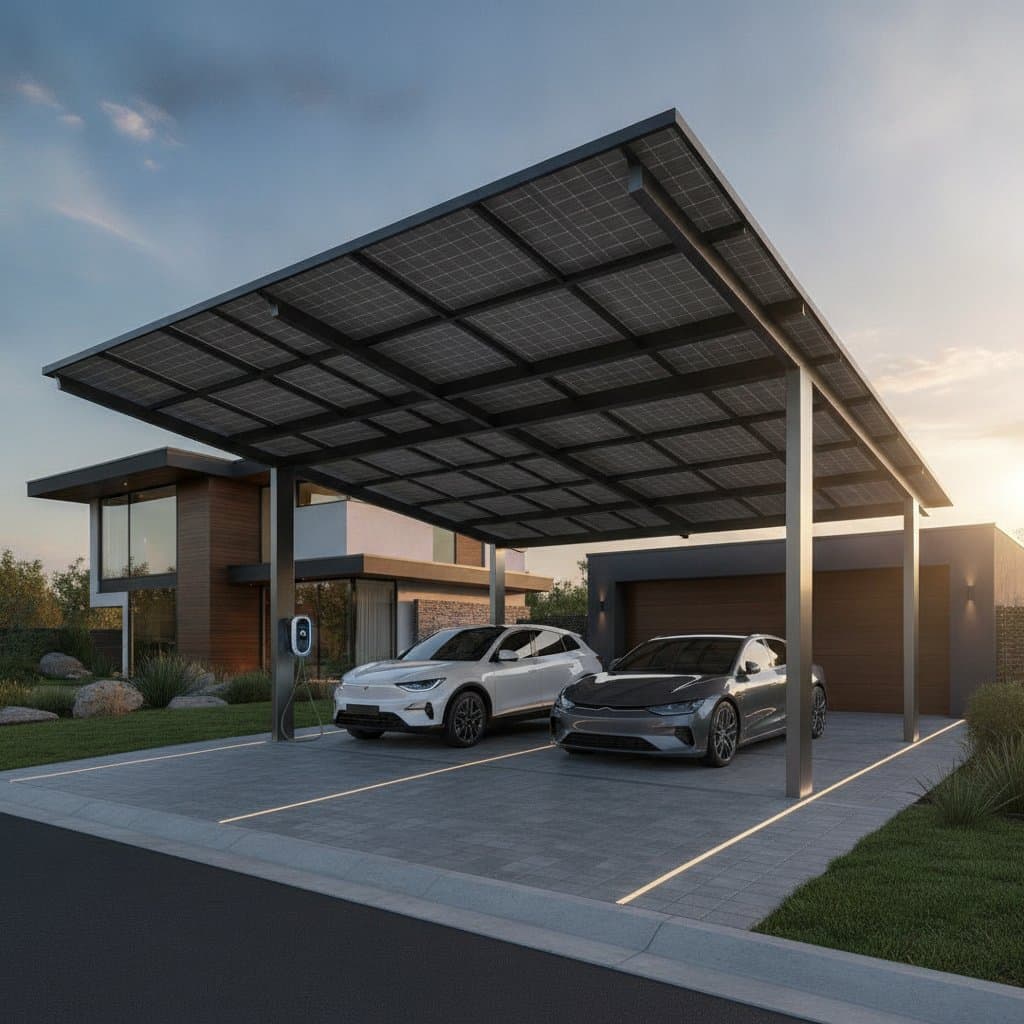
Solar Canopy Carports Deliver Dual Purpose Energy Savings
Many homeowners view their driveway or parking space as untapped potential. A solar canopy carport converts that space into an energy asset. It provides shade and protection for vehicles while generating clean power for the home or electric vehicle.
Solar canopy carports combine energy generation with shelter. Homeowners who lack suitable roof space gain a viable solar option. Those interested in electric vehicles receive an integrated charging station powered by sunlight.
Why Solar Canopy Carports Matter
Energy costs remain a top household concern. Solar carports offset those costs while improving daily convenience. They produce renewable electricity that feeds home power needs or charges an electric vehicle. At the same time they shield cars from rain, snow, and heat.
Every kilowatt of solar capacity on a canopy functions like a rooftop system. The panels mount on a sturdy frame above the parking area. This placement allows orientation toward the best sun angle regardless of roof design. In cities like Philadelphia, where many homes feature complex or shaded roofs, that flexibility provides a major advantage.
How a Solar Canopy Works
A solar canopy carport uses standard photovoltaic technology. Sunlight strikes the silicon cells in each panel and creates direct current electricity. An inverter converts that current to alternating current for home and grid use.
A typical two car canopy holds around seven kilowatts of panels. Each kilowatt produces about 1250 kilowatt hours per year in many locations. That output equals roughly 8750 kilowatt hours annually. At an average utility rate of 24 cents per kilowatt hour the system delivers about 2100 dollars in electricity value before fixed charges.
Costs Incentives and Payback
Solar carports cost more than rooftop systems because they require both solar equipment and structural materials. A small residential canopy ranges from 25000 to 35000 dollars before incentives. Federal tax credits and local solar programs reduce that cost by 30 percent or more. Some states and utilities offer rebates for integrated electric vehicle charging.
When incentives, energy savings, and avoided fuel costs are included the return improves quickly. At 2100 dollars in yearly energy value a typical system reaches payback in about ten to twelve years. System lifespans exceed twenty five years and leave more than a decade of low cost energy production.
Design and Installation Steps
The process follows the same stages as other solar projects with added attention to structure.
- Site assessment. A solar contractor measures sunlight exposure, shading, and available space. Flat open areas work best.
- Design and engineering. The canopy frame must handle snow and wind loads. Engineers specify steel or aluminum supports and ensure proper drainage.
- Permits and approvals. Local building codes govern both electrical and structural parts. The installer handles the paperwork.
- Installation and interconnection. Panels are mounted, wiring is run, and the system connects to the main service panel or electric vehicle charger.
- Monitoring and maintenance. Most systems include online tracking for production and performance.
Cleaning panels a couple of times each year and checking hardware connections keep the system running efficiently.
Additional Benefits
Beyond energy savings solar carports improve comfort and property value. Cars stay cooler in summer and cleaner in winter. The shaded area can double as a covered patio or workspace. Distributed solar generation reduces strain on the grid during peak demand periods.
Entry Points for Every Budget
High Impact Projects
- Full solar canopy with grid tied system
- Integrated electric vehicle charger powered by solar
- Battery storage for backup and load shifting
Medium Impact Upgrades
- Partial canopy or smaller frame for one vehicle
- Smart inverter that manages both home and vehicle charging
Low Cost Starters
- Install a Level 2 charger ready for future solar connection
- Use a shade study to plan the best canopy location
Performance Factors to Watch
Output depends on several conditions. Shading from trees or buildings reduces production. Airflow under the canopy keeps modules cooler than rooftop setups. A smart inverter limits energy loss if one panel underperforms. Battery storage captures surplus energy during the day for evening use.
Next Steps
Gather twelve months of electric bills before contacting a solar professional. Request quotes that use identical assumptions for sun hours, shading, and utility rates. Confirm all available incentives before signing a contract. Check performance through the monitoring app each month and clean panels when dust or pollen builds up.