
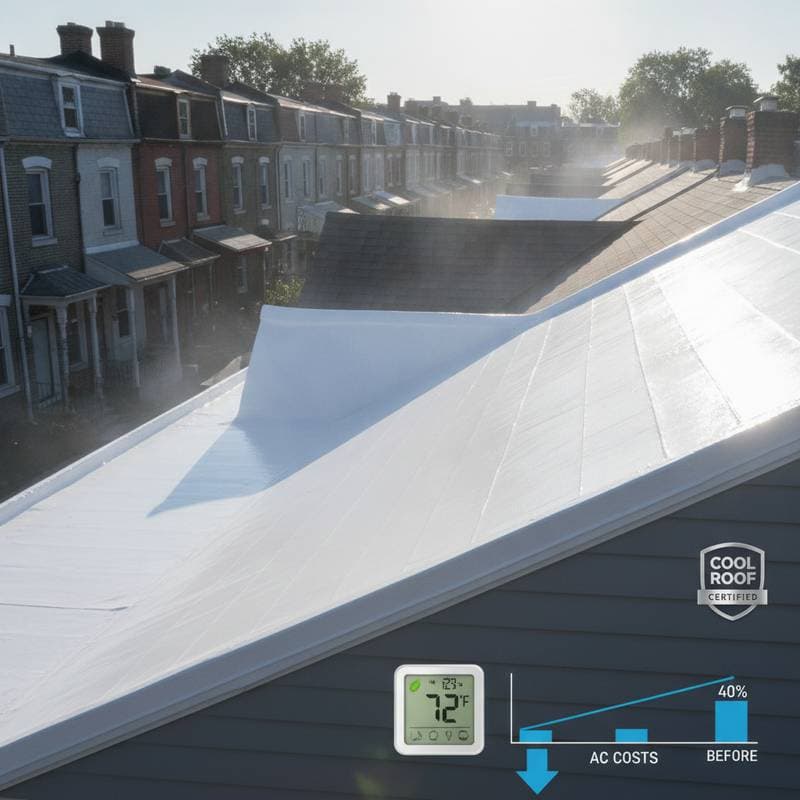
Cool Roof Coatings Cut AC Costs by 40%
Homeowners in Philadelphia are finding that reflective roof coatings keep homes cooler and lower air conditioning costs by as much as 40 percent. These coatings form a bright, solar-reflective surface that repels heat rather than absorbing it. The change in roof temperature can be dramatic, especially on older dark roofs that retain heat long after sunset.
A cool roof system is a specialized coating or membrane applied to an existing roof. It reflects sunlight and emits absorbed heat back into the atmosphere. This keeps the roof surface cooler and reduces the amount of heat transferred into the building below.
The technology can be applied to asphalt, metal, and single-ply roofing systems. It works on both sloped and flat roofs found throughout Philadelphia row homes, brownstones, and light commercial buildings.
Why Roof Temperature Matters
A dark roof can reach 150 degrees on a hot afternoon. That heat radiates into attics and living spaces, forcing air conditioners to run longer. A reflective coating can lower the roof surface temperature by 50 degrees or more. The result is a cooler attic, less heat gain, and a measurable drop in cooling demand.
Lower roof temperatures also slow the aging of roofing materials. Ultraviolet exposure dries out asphalt and adhesives. By reflecting sunlight, cool coatings extend the service life of the roof and reduce waste sent to landfills.
Safety and Installation Boundaries
Before applying any coating, make sure the roof structure is stable and watertight. If soft spots, cracks, or signs of moisture intrusion appear, do not proceed. A licensed roofing contractor should inspect and repair structural problems before any coating work begins.
The coating process involves working at height with potentially slippery materials. Falls from roofs remain one of the most common home improvement injuries. Use a stable ladder, wear non-slip shoes, and never work alone. If walking on a roof feels uncomfortable, call a professional installer certified in cool roof systems.
Avoid applying coatings when the surface is wet or when rain is expected. Moisture trapped under the coating can cause blistering and premature failure.
How Cool Roof Coatings Work
Reflective coatings use pigments that bounce visible and infrared light away from the surface. Two performance metrics define their effectiveness. Solar reflectance measures how much sunlight is reflected. Thermal emittance measures how well the surface releases absorbed heat.
A high-quality cool roof product scores well on both metrics. The combination keeps roof and interior temperatures lower throughout the day. The U.S. Department of Energy and the Cool Roof Rating Council provide independent testing data on certified products. Always look for coatings listed by these organizations to verify performance claims.
Step-by-Step Application Guide
Homeowners can apply a reflective roof coating to smaller low-slope roofs if the surface is in good condition. Larger or more complex roofs should be handled by licensed contractors.
- Inspect the roof. Check for cracks, punctures, or loose flashing. Repair all damages before coating.
- Clean the surface. Use a pressure washer or scrub brush with mild detergent to remove dirt, moss, or loose granules. Allow the roof to dry completely.
- Mix and stir the coating. Follow the manufacturer instructions for consistency. Some coatings must be gently stirred, not shaken.
- Apply primer if required. Certain substrates like bare metal or aged asphalt need a compatible primer for adhesion.
- Roll or spray coating evenly. Use a long-handled roller or airless sprayer. Apply in two thin coats for best coverage.
- Allow full curing. Drying times vary by product and temperature. Avoid foot traffic until the coating is fully set.
Always confirm that the coating and primer are listed for the specific roof type. Using incompatible materials can lead to peeling or cracking.
Recognizing Poor Application Symptoms
A failed coating often shows early signs that are easy to miss. Bubbles or blisters may form under the surface. Peeling or flaking edges can appear near seams. Persistent dark spots indicate uneven coating thickness. Water pooling longer than 48 hours after rain signals drainage issues.
If these symptoms appear, call a licensed roofing contractor. They can test adhesion, measure film thickness, and reapply coating in damaged sections.
Energy and Comfort Benefits
A cool roof reduces indoor temperature swings. Rooms under the roof become more comfortable. Air conditioners cycle less often, which lowers energy bills and extends the life of compressors and fans.
Field studies show that reflective coatings can cut cooling energy use by 20 to 40 percent depending on roof color, insulation level, and attic ventilation. In Philadelphia mixed climate, this reduction translates to hundreds of dollars saved per year for a typical single-family home.
Beyond individual savings, widespread use of cool roofs can reduce the city heat island effect. When many roofs reflect sunlight instead of absorbing it, neighborhood air temperatures drop. That improves outdoor comfort and reduces smog formation caused by trapped heat.
Material Comparisons
Each roof type responds differently to coatings. Asphalt roofs benefit most from white elastomeric coatings that stretch and contract with temperature changes. Metal roofs require specialized acrylic or silicone coatings that resist oxidation and adhere well to smooth surfaces. Single-ply membranes such as TPO or EPDM already reflect some sunlight, but additional coatings can boost performance and extend service life.
Always confirm compatibility through the product datasheet. Combining dissimilar materials can void warranties and cause adhesion failure.
Cost and Return on Investment
The initial cost of applying a cool roof coating ranges from two to four dollars per square foot depending on product type and labor. The payback period is often short due to reduced energy use. Many homeowners see full return within a few cooling seasons.
Some local utilities and sustainability programs offer rebates for reflective roofing projects. Check with the Philadelphia Energy Authority or an electric provider for current incentives. These programs often require products certified by the Cool Roof Rating Council or ENERGY STAR.
Maintenance and Longevity
A properly applied coating can last ten to fifteen years with minimal upkeep. Inspect the roof twice a year, preferably in spring and fall. Remove debris that may trap moisture or shade the surface. Recoat worn or thin areas before the base material becomes visible. Keep gutters and drains clear to prevent standing water.
If chalking, cracking, or exposed substrate appears, plan a recoat. Waiting too long can require a full replacement rather than a simple maintenance layer.
Professional Consultation and Next Steps
While basic coating tasks may suit experienced homeowners, professional evaluation ensures safety and code compliance. Licensed roofers can measure reflectivity, check drainage slopes, and confirm that insulation levels meet local energy code requirements.
Before starting any project, request written estimates from at least two certified installers. Ask for product data sheets, safety data sheets, and warranty terms. Verify that the contractor carries liability and worker compensation insurance.
For homeowners looking to combine solar panels with reflective roofing, coordination between the solar installer and roofer is essential. Mounting hardware must not puncture or compromise the coating layer.
A well-designed cool roof system, properly installed and maintained, delivers decades of comfort, lower energy bills, and measurable environmental benefits. Philadelphia climate and dense housing stock make reflective coatings one of the most practical energy-saving upgrades available today.