
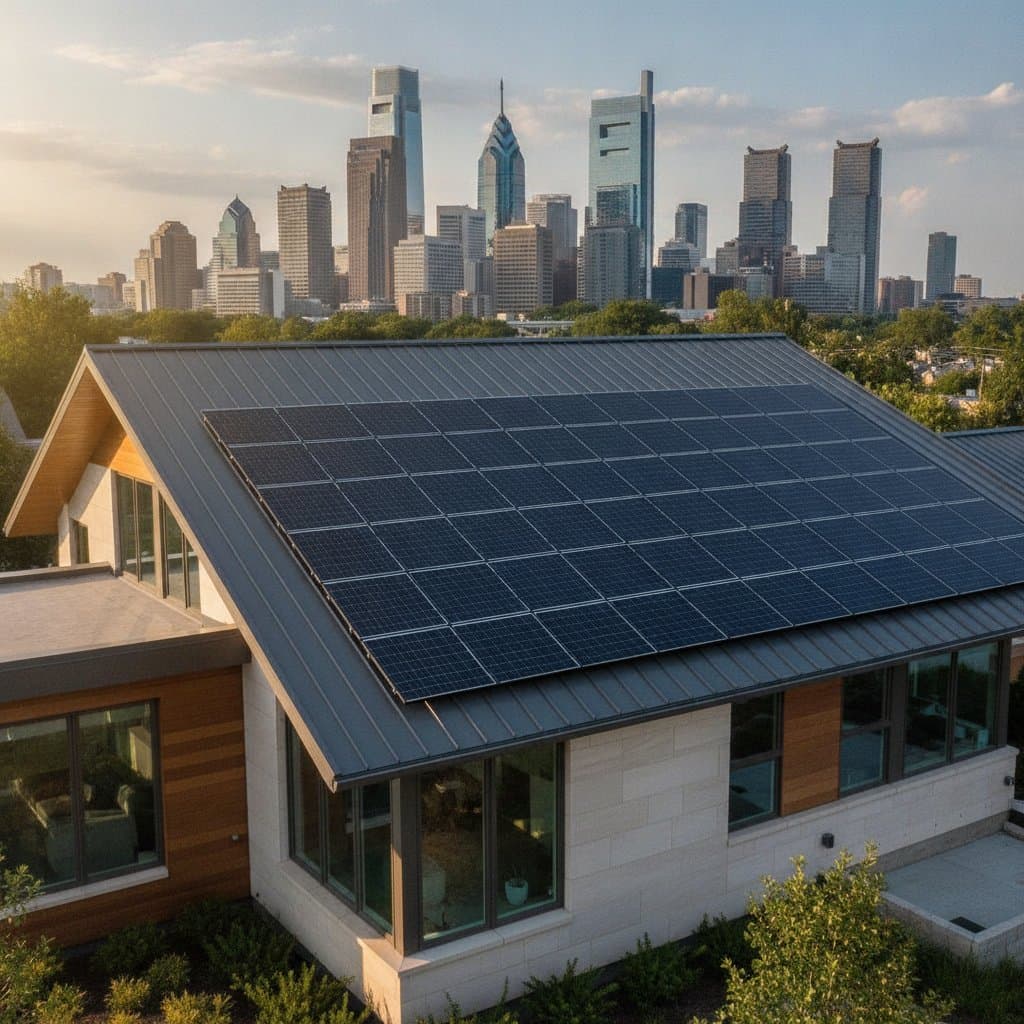
Metal Roofs Support Full Solar Panel Lifespans
Solar equipment choices require careful planning around long term performance. Homeowners often ask which roof type aligns with decades of panel operation. Standing seam metal roofs provide that alignment through durability and straightforward mounting.
This combination reduces future expenses. It also avoids disruptions from roof replacement during the solar system lifetime. Philadelphia area residents gain a stable base for consistent energy production.
Roof Duration and Solar Economics
Panels maintain output over many years with gradual decline. The supporting roof must match that timeline to prevent removal and reinstallation costs. Metal surfaces last approximately fifty years with basic care.
Asphalt alternatives typically require replacement after twenty to twenty five years. That forces panel removal and added labor during peak production periods. Metal eliminates this cycle and preserves system uptime.
Mounting Methods and Performance
Standing seam designs allow clamps that grip seams without penetration. Airflow beneath the panels aids cooling and maintains efficiency. Corrugated options use fewer sealed fasteners than shingle installations.
Current flows from sunlight through silicon cells and into inverters for household use. The roof stays watertight because no fasteners breach the surface. This method lowers leak risks over time.
Financial Projections for Philadelphia Homes
A seven kilowatt system produces roughly nine thousand one hundred kilowatt hours each year at local rates. That output offsets about one thousand five hundred fifty dollars in annual utility costs. Over thirty years the avoided expense reaches forty six thousand five hundred dollars.
Metal roofing prevents a midlife replacement that could exceed twelve thousand dollars. The avoided cost shortens overall payback and improves net returns.
Structural and Installation Advantages
Metal weighs less than tile yet handles added panel loads without issue. Seams serve as built in attachment points that speed mounting. Most residential projects finish mechanical work in one day.
Precise panel alignment improves appearance and output consistency. Weight distribution across rafters remains even throughout the system life.
Temperature Control and Output
Reflective metal surfaces reduce roof heat compared with dark shingles. Lower temperatures help panels operate near rated capacity. The space between roof and modules allows rising air to escape.
Mid Atlantic humidity makes this passive cooling especially useful. Small efficiency gains accumulate across decades of operation.
Routine Care Requirements
Metal needs only occasional rinsing and visual seam checks. No rotting or curling occurs. Monitoring software flags any output changes promptly.
Shingle roofs often demand moss treatment or patching that interferes with arrays. Metal stability keeps attention on electrical components alone.
Warranty Alignment
Metal warranties frequently cover fifty years for weather tightness. Solar performance coverage spans twenty five years. Matching timelines create a unified long term asset that supports higher resale value.
Upfront Costs Versus Lifetime Savings
Metal installation ranges from eight to fourteen dollars per square foot. The premium pays for itself through avoided re roofing and labor. Two scenarios show clear differences after twenty years when asphalt requires full replacement.
Sustainability and Local Conditions
Both materials support recycling at end of life. Metal handles Philadelphia snow, rain, and sun without absorption or ice dam issues. Interlocking seams resist wind and hail effectively.
Preparation Steps
Assess remaining roof life before solar installation. Select clamp systems suited to standing seams and review coating reflectivity. Annual inspections combined with gutter clearing maintain steady performance.
Track production data to address minor issues before they grow.