
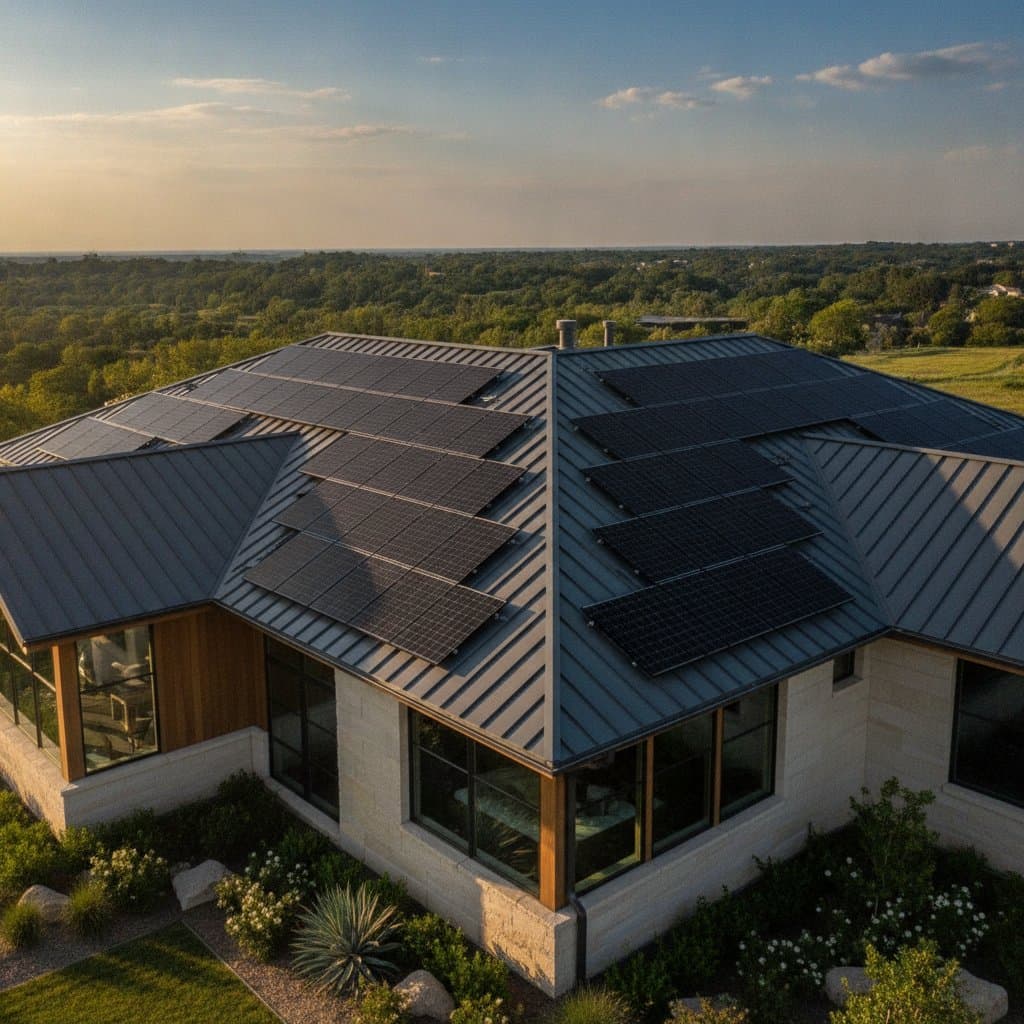
Why Roofers Recommend Metal Roofs for Solar Panels
Solar research can feel overwhelming at first. Many homeowners begin by comparing panel brands or incentives. Roof type often determines how well a solar system performs and how long it lasts. Roofing contractors across the country agree that metal roofs stand out as the most solar-ready surface for residential installations.
The Connection Between Metal Roofing and Solar Efficiency
A solar panel system requires a stable, durable, and weather-resistant foundation. Metal roofing meets these conditions. Made from steel or aluminum sheets with protective finishes, these roofs resist corrosion and hold their shape under temperature changes. That stability keeps mounting hardware tight and panels secure for decades.
Traditional asphalt shingles can crack or age unevenly. Fasteners loosen over time. The roof beneath the panels may need replacement before the solar equipment reaches its full lifespan. Metal roofs avoid that issue. Their average service life often doubles that of asphalt. Homeowners can install solar once and keep it in place without removing and reinstalling panels later.
How Metal Roofs Simplify Mounting
Standing seam metal roofs feature raised vertical seams that run continuously from ridge to eave. Installers use specialized clamps that grip these seams without drilling holes. No penetrations means no leak risk, no flashing, and no extra sealants.
Shingle roofs require a lag bolt driven through the roofing material and into the rafters for each solar mount. Modern flashing systems work well. Every penetration still introduces a potential maintenance point. Standing seam roofs keep the surface intact by clamping directly to the seams.
Corrugated or ribbed metal roofs use mounting brackets at the high points of the ribs with gasketed fasteners. This method requires penetrations. The fasteners sit above the water plane and reduce leak potential compared to flat roofing materials.
Longevity and Lifecycle Value
A solar array carries a production warranty of about twenty-five years. Metal roofing often lasts fifty years or more with minimal maintenance. That alignment allows a homeowner to pair the two systems and expect them to age together. No tear-offs or re-roofing under panels occurs.
A 7 kilowatt system produces around 1,300 kilowatt-hours per kilowatt each year. This equals about 9,100 kilowatt-hours annually. At an average utility rate of 18 cents per kilowatt-hour, that offsets about 1,638 dollars in electricity costs every year. Installation on a roof that lasts as long as the solar system keeps those savings steady.
The same system on a shingle roof that needs replacement halfway through the solar life creates several thousand dollars in removal and reinstallation charges. That extra cost can extend the payback period by two or three years.
Energy Performance and Reflectivity
Metal roofing contributes to energy efficiency before solar panels are added. Many products include reflective coatings that reduce heat absorption. This keeps attic spaces cooler and lowers air conditioning demand. Panels cover a portion of that reflective surface. The system works together to keep the building envelope stable.
Lower roof temperatures help solar panels perform more efficiently. Photovoltaic cells lose about half a percent of output for every degree Celsius above their optimal temperature. A metal roof that sheds heat faster can improve real-world production on sunny summer days.
Maintenance and Durability in Tough Conditions
Philadelphia experiences wide seasonal changes. Metal roofs handle these shifts easily. Snow slides off more quickly and prevents ice buildup around solar mounts. The panels shade the roof and reduce wear from ultraviolet exposure.
Routine maintenance for a solar array on metal remains straightforward. Inspect clamps annually. Rinse panels if debris accumulates. Confirm that no corrosion appears around mounting hardware. Metal roofs resist moss and algae. Cleaning frequency stays low compared to other roof types.
Cost and Return on Investment
Metal roofing costs more upfront than asphalt. The combined solar and roofing investment pays back faster when considered as a single system. A quality metal roof may cost about twice as much per square foot as shingles. Its lifespan and reduced maintenance offset that premium.
Paired with solar incentives such as tax credits and state rebates, homeowners can recover their investment in about eight to ten years. Both the roof and panels continue delivering value for decades after that point.
Selecting the Right Metal Roof for Solar
Standing seam designs offer the cleanest installation. Corrugated panels require more attention to fastener placement. Thicker gauge material improves rigidity and load capacity. Coatings should remain compatible with the mounting system to prevent galvanic reactions.
Homeowners should ask their roofer and solar installer to coordinate on attachment details before installation. Many manufacturers provide certified mounting hardware for their roof profiles. Warranty coverage remains valid with proper selection.
Planning Your Installation
Contact a local roofing professional experienced with solar projects. Discuss roof profile options and mounting methods suited to your home. Coordinate timing with your solar installer to align both systems from the start.