
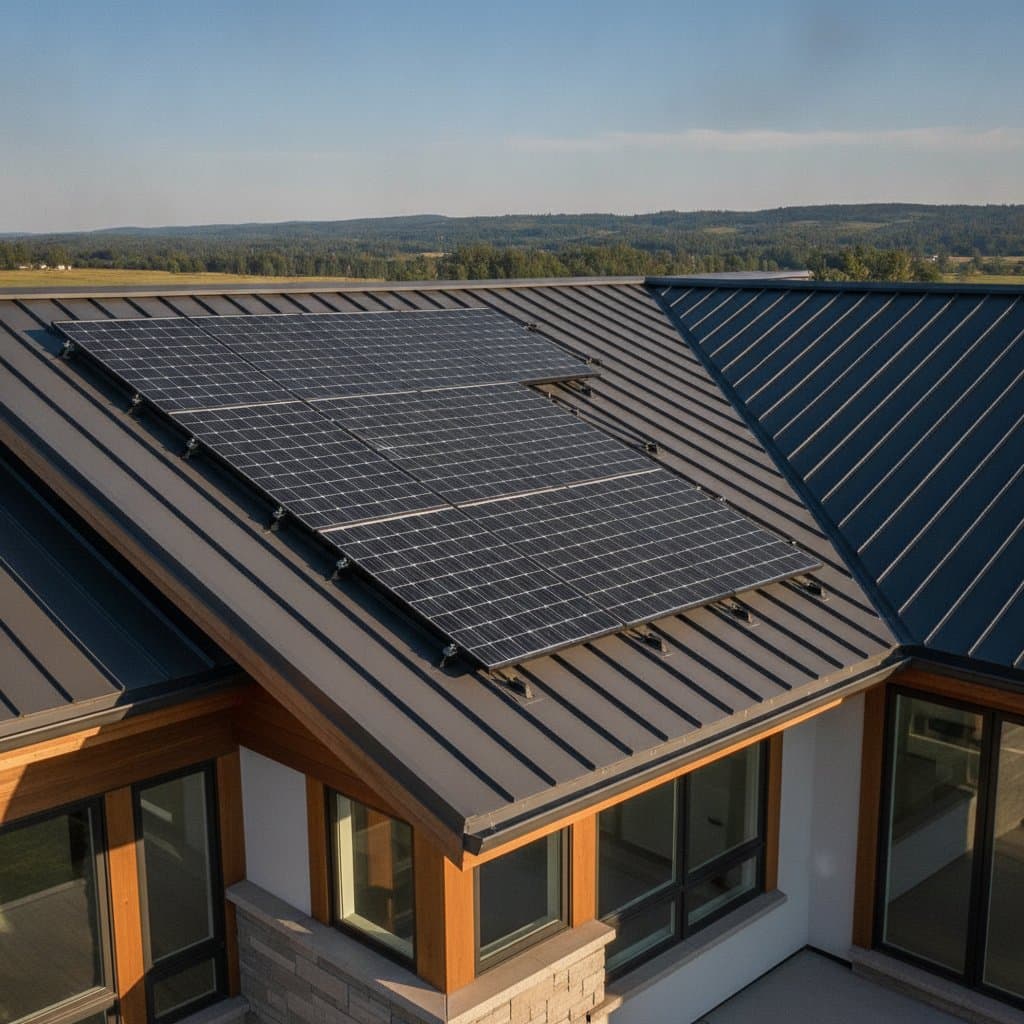
Why Installers Choose Metal Roofs for Solar
Solar installers across the country continue to choose metal roofs as the preferred surface for photovoltaic systems. The reasons are practical, structural, and financial. A metal roof can last several decades, often longer than the solar panels themselves.
This durability reduces replacement risks, protects system integrity, and creates a long-term foundation for renewable energy investment.
Safety and Structural Reliability
A solar array adds weight and requires secure mounting points. Metal panels provide a stable, continuous surface that distributes load evenly. Unlike asphalt shingles, which can crack or shed granules during drilling, metal resists damage from mounting hardware.
Key safety advantages include minimal risk of water intrusion when using proper flashing and gaskets. Fewer roof penetrations result from standing seam attachment systems. Reduced fire risk follows because metal is noncombustible. Consistent torque retention supports mounting bolts.
When installers attach solar racking to standing seams, they often use specialized clamps that grip the seams without puncturing the roof. This design keeps the weather barrier intact and eliminates the need for sealant based penetrations. Homeowners gain peace of mind knowing the roof and solar system remain watertight.
Longevity and Life Cycle Alignment
A well maintained metal roof can last twice as long as many conventional materials. This matches the expected lifespan of high quality solar panels. When the roof and solar system age at a similar rate, replacement timing stays simple.
There is no need to remove panels prematurely for reroofing. By contrast, asphalt shingles may need replacement before panels reach the end of service life. Removing and reinstalling a solar array can add thousands of dollars in labor costs.
Installers prefer metal because it prevents this mismatch and protects the homeowner investment return.
Mounting Flexibility and Compatibility
Metal roofs come in several profiles, including standing seam, corrugated, and ribbed panels. Each supports solar mounting in different ways.
Common attachment methods include standing seam clamps that use non penetrating fasteners to secure racking directly to seams. Corrugated brackets fit panel ridges and seal with butyl washers. Ballasted systems apply when roof pitch or design limits direct attachment.
These options make metal roofs adaptable to nearly any solar design. Installers can select the best system to fit wind, snow, and load requirements. The result is a clean, code compliant installation that maintains the roof warranty and ensures long term stability.
Reduced Maintenance and Weather Resistance
Metal surfaces resist corrosion, mold, and cracking. They shed snow and debris easily, which prevents panel shading and helps maintain steady energy output. The reflective coating on many metal roofs also lowers heat absorption, reducing thermal stress on both roof and solar components.
If leaks, loose fasteners, or corrosion appear, repairs can often proceed without removing solar equipment. This saves time and avoids costly service calls. Installers value this reliability because fewer callbacks mean safer and more predictable performance for their clients.
Code Compliance and Inspection Simplicity
Jurisdictions across the country have adopted building and electrical codes requiring secure attachment methods for rooftop solar. Metal roofs simplify compliance because they already meet uplift and fire classification standards. Installers can present clear documentation to inspectors, which speeds approval.
Inspectors often verify proper grounding and bonding between metal roof and racking. They check UL or ETL listing for mounting hardware. They confirm adequate spacing for thermal expansion and flashing and seal integrity.
Each of these steps protects the homeowner from electrical hazards and ensures the system meets the National Electrical Code. A licensed electrician must perform final connections, test grounding continuity, and verify overcurrent protection.
Cost and Long Term Value
While a metal roof may cost more at installation, it saves money over time. The extended lifespan, reduced maintenance, and lower risk of water damage offset the initial expense. Installers often describe metal roofs as a one time platform for solar.
Once installed, the roof rarely needs intervention for decades. Financial benefits include lower lifetime cost of ownership due to durability. Fewer repair or reroofing interruptions occur. Improved home resale value follows because of the integrated solar ready structure.
Environmental and Recycling Advantages
Metal roofing is often made with recycled content and can be fully recycled at the end of its service life. This reduces landfill waste and supports the sustainability goals of solar adoption. The smooth surface also improves runoff collection for homeowners who use rainwater harvesting systems.
When combined with solar panels, a metal roof creates a layered environmental benefit. It produces clean energy while minimizing material waste. Installers recognize that pairing solar with recyclable roofing delivers measurable environmental returns.
Consulting Professionals for Installation
Homeowners should never attempt to install or modify solar attachments on metal roofs without professional help. Incorrect torque, improper grounding, or poor sealing can create fire hazards or void warranties. A licensed electrician must connect the system to the electrical service panel, verify current flow, and confirm GFCI and AFCI protection where required.
If rust or corrosion appears near mounting points, stop work and call a qualified expert. The same applies to loose seams or fasteners, unexplained tripping of breakers connected to the solar circuit, or signs of water intrusion inside the attic. A professional inspection can confirm structural soundness and electrical safety before any solar integration begins.