
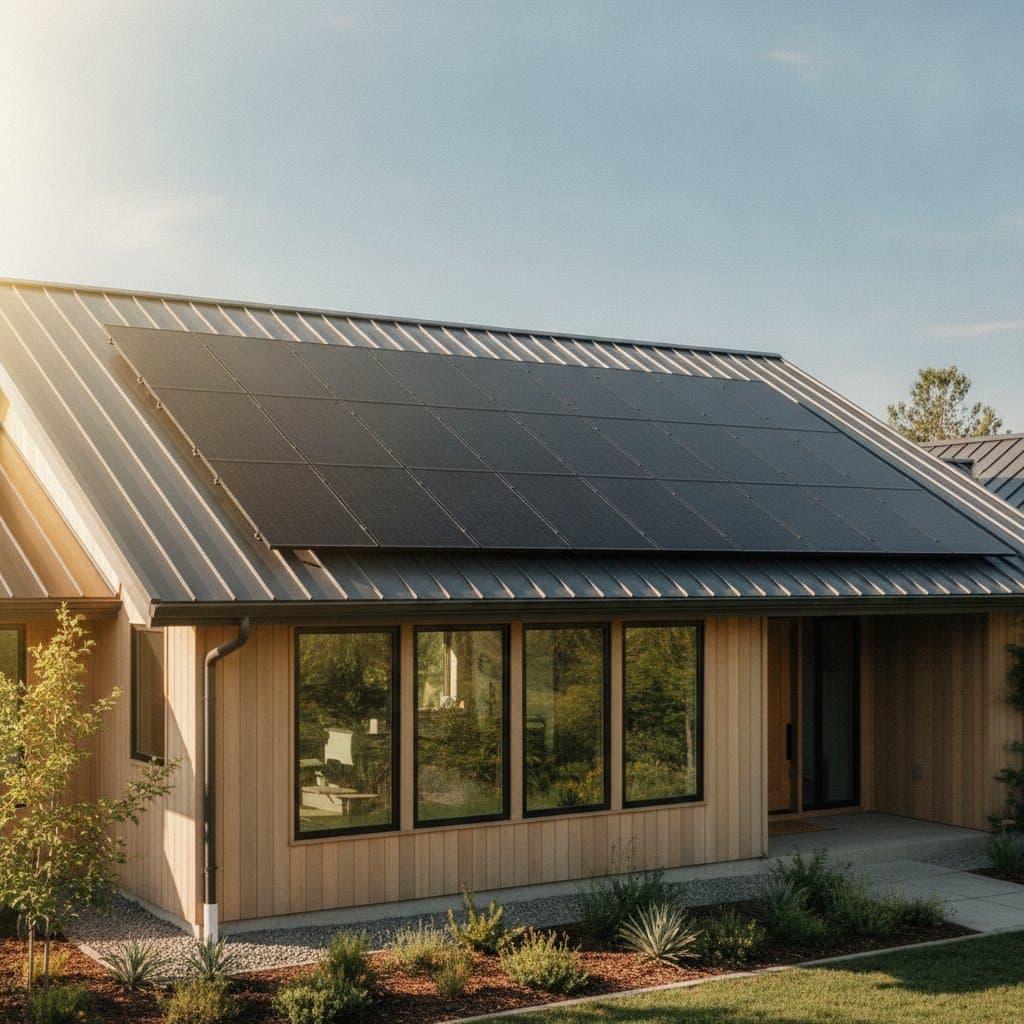
Unlock 50 Years of Energy Savings With Metal Roofs and Solar
Many homeowners wonder if pairing solar panels with a metal roof is worth the investment. The short answer is yes. A properly installed standing seam metal roof with solar panels can deliver dependable power production and protection for half a century.
The combination creates one of the most durable, efficient, and low-maintenance energy systems available for residential properties.
Why Metal Roofs and Solar Work So Well Together
Metal roofs last longer than asphalt shingles and require less upkeep. Their reflective surfaces reduce heat absorption, which helps solar modules operate more efficiently. When panels stay cooler, they produce more electricity from the same amount of sunlight.
A standing seam metal roof also simplifies installation. The seams create built-in attachment points for solar clamps. Installers do not need to drill holes through roofing materials. This eliminates potential leak points and preserves the roof warranty. The clean, flush-mounted look appeals to homeowners who want a sleek design with minimal hardware visible from the ground.
How the System Works in Practice
A solar array on a metal roof performs the same electrical function as on any other roof type. Photons from sunlight strike the photovoltaic cells, freeing electrons that move through a circuit and generate direct current. An inverter converts that current to alternating current that powers appliances, lighting, and HVAC equipment.
The difference lies in the roof structure. Standing seams act like rails. Installers attach clamps directly to those seams, then secure aluminum racking to hold the panels. No penetrations mean fewer materials, less labor, and faster installation. Each panel is wired in series to form strings, which connect to the inverter. Once activated, the system continuously converts sunlight into electricity.
Estimating Energy Output and Savings
Consider a 7 kilowatt system on a south-facing standing seam roof. If the panels produce about 1,300 kilowatt-hours per kilowatt each year, total production equals roughly 9,100 kilowatt-hours annually. At an average utility rate of 16 cents per kilowatt-hour, that output offsets around 1,450 dollars in electricity costs each year.
If electricity prices rise over time, savings grow. Over 25 years of panel production and 50 years of roof life, a homeowner could see more than 35,000 dollars in avoided energy expenses. The exact figure depends on factors such as roof pitch, shading, inverter efficiency, and utility rate structure. Even with conservative assumptions, the payback window for the solar portion often falls between 6 and 10 years, leaving decades of nearly free power afterward.
Cost and Longevity Comparison
Metal roofs cost more upfront than shingle roofs, yet their life expectancy is often two to three times longer. A typical asphalt roof might need replacement every 20 years, while a metal roof can last 50 years or more with minimal maintenance. That means no reroofing under the solar array, which saves thousands in future labor and material costs.
When comparing full lifecycle costs, a metal roof and solar combination often delivers a lower total cost of ownership. The roof protects the panels from heat buildup. The panels shield the roof from UV exposure. Both extend each others lifespan. This mutual benefit creates a stable foundation for long-term energy independence.
Incentives and Installation Considerations
Homeowners can take advantage of a federal tax credit for solar installations and may also qualify for state rebates or net billing programs offered by local utilities. These incentives can reduce the total system cost by 20 to 30 percent or more. In some cases, the metal roof installation qualifies for an energy efficiency credit if it includes reflective coatings that reduce cooling loads.
Before installation, a contractor will inspect the roof structure, measure available surface area, and confirm that the orientation and tilt angle support efficient solar generation. Standing seam profiles are ideal, but corrugated metal and ribbed panels can also work with appropriate mounting hardware. The key is ensuring each clamp and bracket fits securely without compromising the roof integrity.
Maintenance and Monitoring
Both metal roofs and solar panels require minimal upkeep. Homeowners should schedule an annual inspection to check for debris buildup, loose hardware, or shading from new tree growth. Light washing with water and a soft brush keeps panels operating near peak efficiency. Metal roofs benefit from the same cleaning routine, which prevents grime from dulling reflective finishes.
Modern monitoring systems let homeowners view live energy production through an app or web portal. Tracking performance over time makes it easy to spot issues early, such as a faulty inverter or shading from a fallen branch. Quick maintenance ensures consistent output and maximizes return on investment.
Planning for Long-Term Value
Pairing a solar array with a metal roof creates a predictable energy platform that can last half a century. The initial investment supports long-term power security, higher property value, and reduced carbon emissions. Many buyers see solar-ready metal roofs as a premium feature that distinguishes one home from another in the real estate market.
For homeowners planning a roof replacement, integrating solar at the same time avoids the cost and disruption of removing and reinstalling panels later. The alignment of both projects saves money, shortens construction time, and guarantees system compatibility from day one.
Common Questions About Metal Roof Solar Systems
How long can a metal roof with solar panels last? A well-maintained standing seam metal roof can last about 50 years, and solar panels typically produce efficiently for 25 years or more.
Does installing solar on a metal roof require drilling holes? No. Standing seam clamps attach directly to the seams without penetrating the roof surface.
Can older metal roofs support new solar panels? Yes, as long as the roof structure remains sound and free of corrosion. An installer can verify suitability before mounting panels.
Will the panels make the roof hotter? No. Panels often shade the roof, which can reduce surface temperatures and lower cooling costs.
What happens if one panel stops working? Modern inverters or microinverters isolate the affected module so the rest of the system continues producing power.