
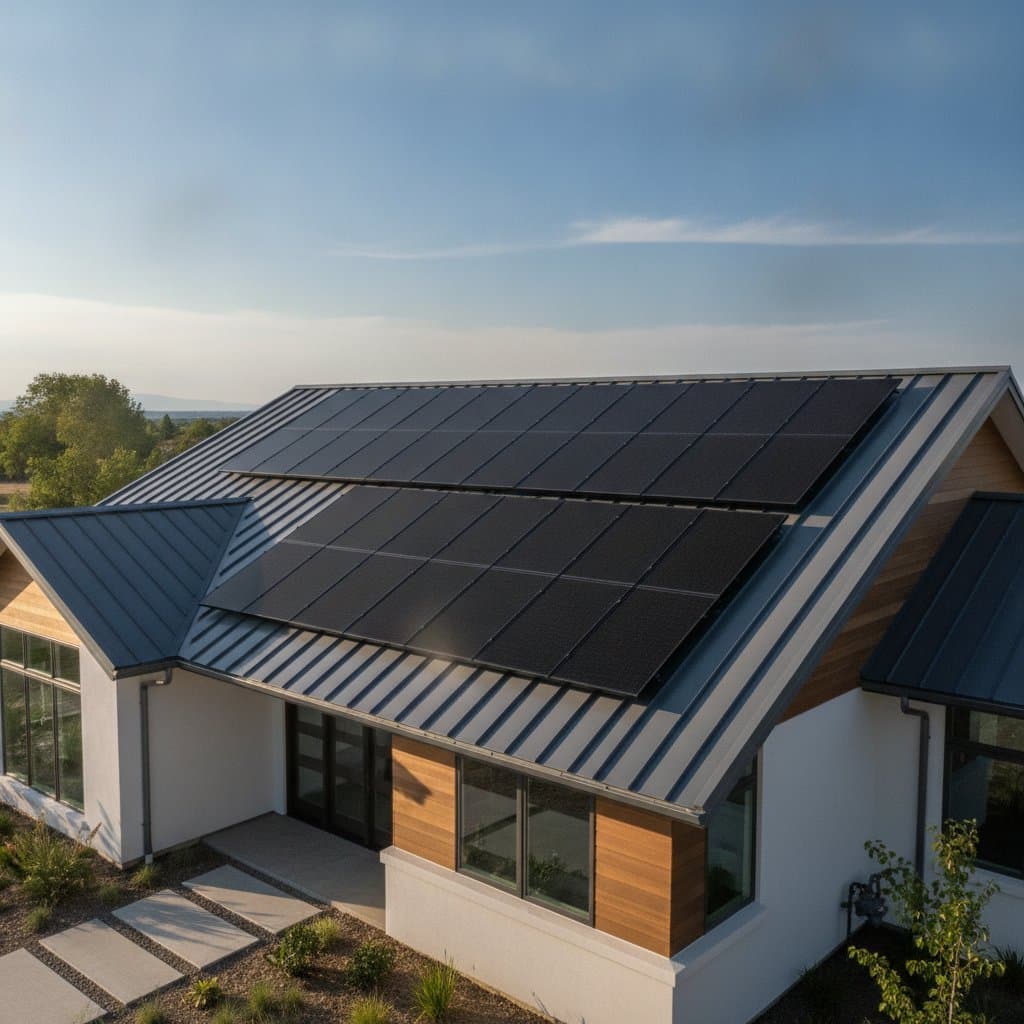
Why 50-Year Metal Roof Solar Systems Are Rising
Many homeowners discover that the best time to install solar panels coincides with roof replacement. The growing popularity of 50-year metal roofs simplifies that decision. Metal and solar complement each other in ways that extend system life, reduce maintenance, and maximize long-term value. A metal roof paired with solar can last half a century with minimal replacement costs.
The Appeal of Long-Life Roofing
Traditional asphalt shingles often last about two decades before showing wear. That lifespan falls short of most solar arrays, which produce energy for 25 years or more. When solar panels outlast a shingle roof, homeowners face the expense of removing and reinstalling the array during roof replacement. A 50-year metal roof breaks that cycle because it outlasts the solar panels and eliminates one of the hidden costs in solar ownership.
A standing seam metal roof suits solar mounting particularly well. The seams provide secure attachment points for clamps that hold solar racking without roof penetrations. This approach protects against leaks and preserves roof warranties. The combination of longevity and watertight design helps both systems perform at peak capacity for decades.
Why Metal Roofs Fit Solar So Well
Solar panels perform best when mounted securely, angled properly, and cooled by air circulation beneath them. Metal roofs deliver all three benefits. The reflective surface keeps temperatures lower, which improves panel efficiency. Panels mounted to standing seams sit slightly above the surface and allow air to flow underneath. That cooling effect can increase power output by several percentage points each year.
Metal panels weigh less than tile or slate yet resist snow loads, high winds, and hail with minimal damage. This durability matches the lifespan of modern solar equipment, which produces power for decades with only minor degradation.
System Lifespan and Performance
Pairing a 50-year roof with a 25- to 30-year solar array creates a nearly maintenance-free energy system. When the solar panels reach the end of their productive life, the roof remains sound and ready to host new modules. In many cases the original mounting hardware stays in place and reduces costs for the next upgrade.
A typical 7-kilowatt solar array on a metal roof in the Philadelphia area generates about 9,100 kilowatt-hours per year. At a utility rate of 24 cents per kilowatt-hour, that output offsets roughly 2,180 dollars in annual electricity costs before fixed fees. Over 25 years, even with slight panel degradation, total savings can exceed 45,000 dollars when incentives and avoided roof replacement costs are included.
Cost and Payback Analysis
A high-quality standing seam metal roof costs between 9 and 14 dollars per square foot installed. That price exceeds asphalt yet delivers more than twice the lifespan. Solar costs average 2.50 to 3.00 dollars per watt before incentives. When installed together, labor and structural costs often decrease because contractors coordinate attachment points and electrical runs.
A homeowner who invests 25,000 dollars in a 7-kilowatt solar array and 30,000 dollars in a metal roof faces a combined cost of 55,000 dollars. After the federal tax credit of roughly 30 percent on the solar portion, the net investment falls to about 47,500 dollars. Annual bill savings above 2,000 dollars produce a payback period of roughly 22 years. Over 50 years the avoided cost of an extra roof replacement improves lifetime returns beyond those of conventional systems.
Incentives and Local Programs
Pennsylvania homeowners can access federal tax credits for solar along with potential local rebates or renewable energy credits. Some utilities offer net metering that credits homeowners for excess generation sent to the grid. Metal roofing can qualify for energy efficiency credits when it includes cool roof coatings that reflect sunlight and reduce heat absorption. The combined impact of solar generation and passive cooling can cut household utility bills by 40 to 70 percent.
Installation Process from Start to Finish
Installing a metal roof solar system follows several coordinated steps. The process begins with a site assessment that evaluates roof pitch, shading, and orientation. A south-facing roof with minimal shade offers the best results, although east and west orientations perform well with only slight production losses.
Once the design receives approval, installers secure permits and order materials. The metal roof goes on first, using standing seams as structural anchors. Solar clamps attach directly to these seams, followed by racking and wiring. Because no penetrations occur, sealing and waterproofing remain simpler and faster than on other roof types.
After utility interconnection approval, the system energizes and begins monitoring through a web or mobile portal. Homeowners track daily, monthly, and lifetime production. Many systems include smart inverters that adjust power flow to match household demand.
Maintenance and Reliability
Minimal upkeep ranks among the strongest arguments for combining solar with metal roofing. Metal roofs need only occasional visual inspections and debris removal. They resist moss growth, cracking, and curling that commonly affect asphalt shingles. Solar panels require periodic cleaning to remove pollen or dust, especially after long dry periods. In most climates rain handles most of the cleaning.
Monitoring software alerts owners to power drops or inverter issues. Because both the roof and solar mounting hardware are built for decades of exposure, annual maintenance costs stay low. A small checkup every few years usually keeps the system in top shape.
Everyday Benefits Beyond Energy Savings
A metal roof solar system improves comfort, reduces noise, and increases home value. The reflective surface keeps attics cooler and lowers the load on air conditioning. The solid construction dampens sound from rain and wind. Many insurers offer discounts for metal roofs because of their fire resistance and durability.
From an environmental perspective, each kilowatt of solar capacity offsets around 1,400 pounds of carbon dioxide per year. A 7-kilowatt system avoids nearly 10,000 pounds annually and contributes to cleaner air.
Choosing the Right Metal Roof Solar Combination
Standing seam designs remain preferred for solar because they simplify attachment and preserve watertight integrity. Corrugated or ribbed panels can support solar but require specialized brackets and more penetrations. Lighter reflective finishes improve thermal performance, while darker finishes may slightly reduce efficiency due to higher surface temperatures.
When selecting materials, look for panels with high recycled content and warranties that match the expected solar life. Many metal roof manufacturers now offer solar-ready systems with integrated clamps and pre-tested structural ratings.
Next Steps for Homeowners
Collect the past 12 months of utility bills to understand energy use. Request a shade analysis from a qualified solar installer to estimate production potential. If the roof approaches replacement age, compare quotes for both asphalt and metal options. Ask each contractor to model combined solar and roof options under the same assumptions. Confirm applicable incentives and interconnection rules in the local utility zone.
A 50-year metal roof solar system creates a long-term partnership between durability and clean energy. It reduces maintenance, avoids future roof replacements, and supports a more resilient home.