
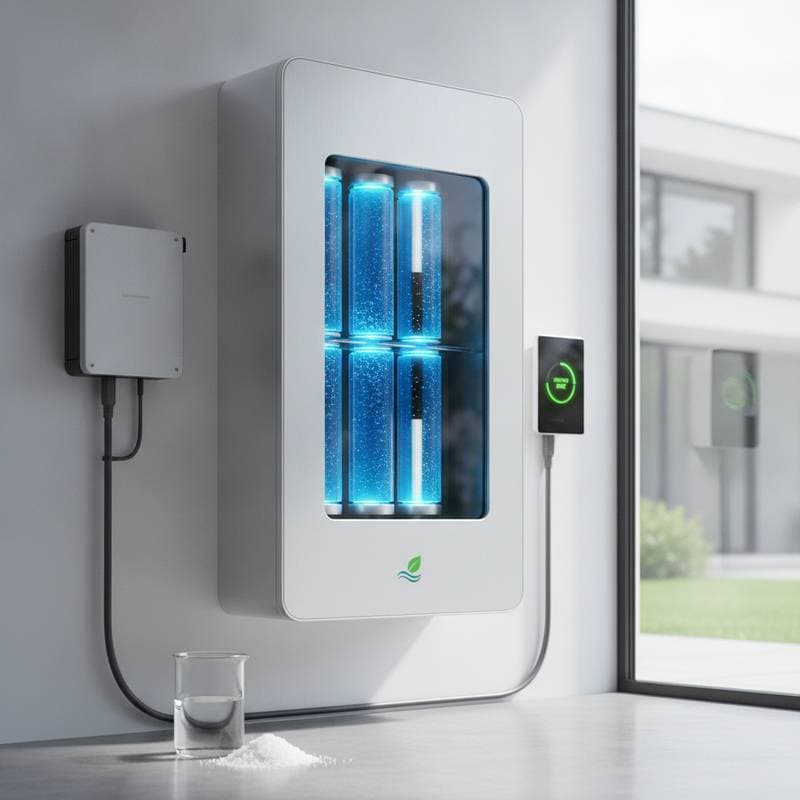
Saltwater Batteries Offer Safer Storage for Home Solar Systems
Home energy storage once required weighing performance against certain risks. Lithium ion batteries provide strong energy density. They also introduce fire hazards and demand careful handling procedures. Saltwater batteries present a practical alternative that aligns with residential safety priorities.
This guide covers how these batteries operate, their safety advantages, proper installation practices, and routine care steps. It emphasizes clear decision points and the value of professional support where needed.
How Saltwater Batteries Operate
A saltwater battery relies on a water based electrolyte containing sodium ions. The electrolyte sits between electrodes typically made from carbon and manganese oxide. Charging moves sodium ions to one electrode to store energy. Discharge reverses the flow to supply power to the home.
The water based electrolyte prevents ignition or explosion. A leak or puncture raises concerns about corrosion rather than fire. Internal materials remain nontoxic and suitable for recycling.
Main Components
- Electrodes made from carbon and manganese oxide for stability.
- Saline electrolyte that moves sodium ions without flammable solvents.
- Separator membrane that maintains electrode separation while permitting ion movement.
- Sealed housing of steel or reinforced polymer that resists moisture.
These elements create a closed system capable of thousands of charge cycles.
Site Preparation and Code Compliance
Local electrical codes still apply despite reduced fire risk. The National Electrical Code and authorities having jurisdiction determine acceptable locations and methods.
Mount units away from direct sun and standing water on stable noncombustible surfaces. Leave space for service access. Use listed connectors and verify torque on all connections. Include clearly labeled disconnect switches for isolation during maintenance.
Submit permit applications with manufacturer data and certification documents before work begins. Complete final inspection prior to energizing the system.
Connecting to a Solar Array
The battery links to the solar array through a compatible inverter. The inverter handles conversion between direct and alternating current while routing surplus energy to storage.
Follow these steps for integration:
- Calculate essential loads such as lighting, refrigeration, and communication equipment.
- Select an inverter approved by the battery maker.
- Install conduit sized for future battery additions.
- Confirm grounding meets code requirements through a licensed electrician.
- Commission the system and monitor initial charge cycles for voltage stability.
Stop testing and consult the installer if readings fall outside specified ranges.
Monitoring Performance
Watch for these indicators of trouble:
- Odor or visible moisture near the enclosure.
- Repeated inverter alerts about voltage imbalance.
- Corrosion at terminals.
- Erratic charge levels despite steady solar input.
Isolate the system at the disconnect switch if any sign appears. Avoid opening the enclosure. Arrange professional evaluation promptly.
Situations Requiring Licensed Help
Homeowners may handle planning and visual checks. Only qualified electricians or certified installers should perform live connections, setting adjustments, module replacements, or insulation tests.
Selecting Storage That Matches Household Priorities
Saltwater batteries suit homeowners who value reduced flammability and simpler recycling. They deliver consistent performance with straightforward maintenance when installed correctly. Professional guidance ensures the system meets both safety standards and long term energy goals.