
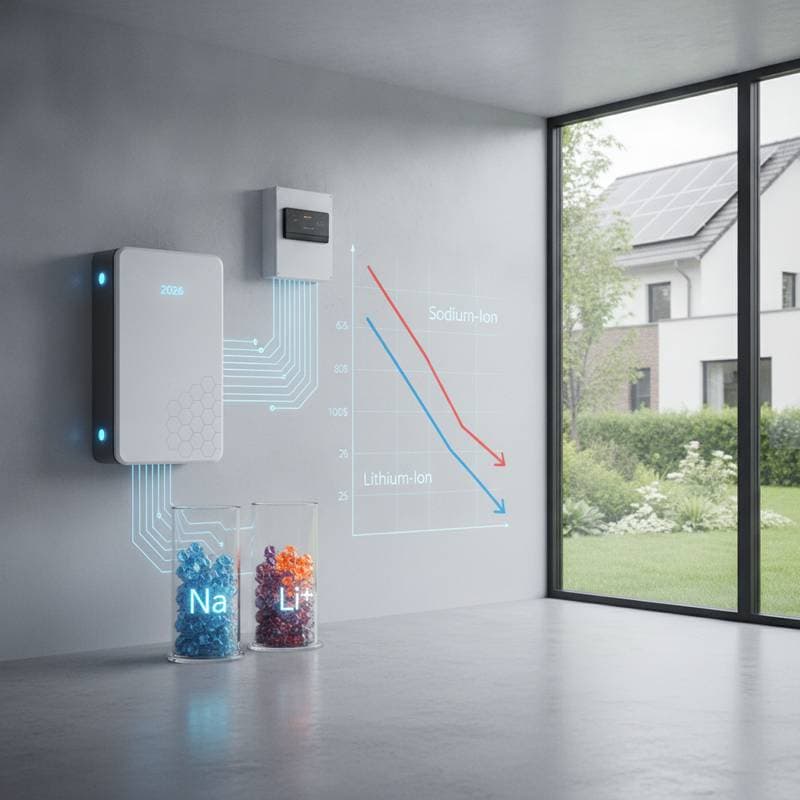
Why Sodium Ion Batteries Offer Lower Costs for Solar Storage
Homeowners exploring solar storage often encounter high prices for lithium batteries. Sodium ion batteries present a lower cost alternative that maintains solid performance for residential use. Their chemistry relies on abundant materials, which reduces expenses and supply risks.
How Sodium Ion Batteries Function
A battery moves ions between electrodes to store and release energy. Sodium ion cells operate similarly to lithium ion cells, but they use sodium ions instead. Sodium comes from common sources such as table salt or seawater, which keeps raw material costs low.
The anode typically consists of hard carbon. The cathode uses layered oxides or compounds containing iron, manganese, or nickel. During charging, sodium ions travel from the cathode to the anode. During discharge, the ions return and produce electrical current. This established process supports near term commercial production.
Performance Comparison with Lithium Ion Batteries
Lithium ion batteries provide high energy density and fast charging. Sodium ion batteries deliver 120 to 160 watt hours per kilogram compared with 150 to 200 watt hours per kilogram for lithium ion units. The lower density affects compact installations but works well for ground mounted or garage systems.
New sodium ion designs achieve 3000 to 5000 cycles before capacity drops below 80 percent. This lifespan equals eight to thirteen years at one cycle per day. Sodium ion cells also perform better in cold temperatures and show lower fire risk through more stable chemistry and nonflammable electrolytes in several designs.
Cost Analysis and Savings Projections
Sodium resources avoid the price swings seen with lithium mining. Analysts project sodium ion battery packs will cost 20 to 40 percent less per kilowatt hour than lithium systems at scale.
A typical 7 kilowatt solar array generates roughly 9100 kilowatt hours annually. A 10 kilowatt hour lithium ion battery costs about 9000 dollars installed. A comparable sodium ion battery may cost near 6500 dollars after production increases. This 2500 dollar reduction shortens payback periods.
At an electricity rate of 20 cents per kilowatt hour, shifting 4000 kilowatt hours to evening use saves 800 dollars yearly. The lithium system repays in about 11 years while the sodium ion system repays in roughly 8 years.
Supply Chain and Environmental Advantages
Sodium extraction requires less water and disturbs fewer ecosystems than lithium mining. Electrodes avoid cobalt and rely on iron or manganese instead. Sodium deposits exist across many countries, which supports local manufacturing and stable pricing.
Suitability for Solar Systems
Sodium ion batteries handle frequent partial charge cycles without rapid degradation. They retain capacity in cooler conditions common in northern regions. A sodium ion unit may occupy 20 to 30 percent more space, yet most garages accommodate the size without issue. Existing inverters integrate directly because voltage ranges and protocols align closely.
Recycling and Secondary Uses
Sodium ion batteries simplify recycling since they lack toxic metals. Producers develop closed loop processes that convert spent materials into new cells. Units that fall below full home storage capacity can still support backup or grid functions at reduced output levels.
Market Availability and Adoption
Specialized installers will introduce sodium ion options first, followed by broader solar providers. Production lines share equipment with lithium facilities to control costs. Systems already satisfy residential safety and performance standards, which accelerates approvals.
Planning Steps for Homeowners
Calculate daily energy consumption and solar generation potential before selecting storage. Request quotes that compare lithium ion and sodium ion options. Verify warranties cover at least 3000 cycles and retain 80 percent capacity at expiration. Confirm temperature ratings and local service availability.
Update system software regularly after installation. Track charge patterns through the monitoring app. Ensure proper ventilation around the enclosure and arrange professional inspections every few years.