
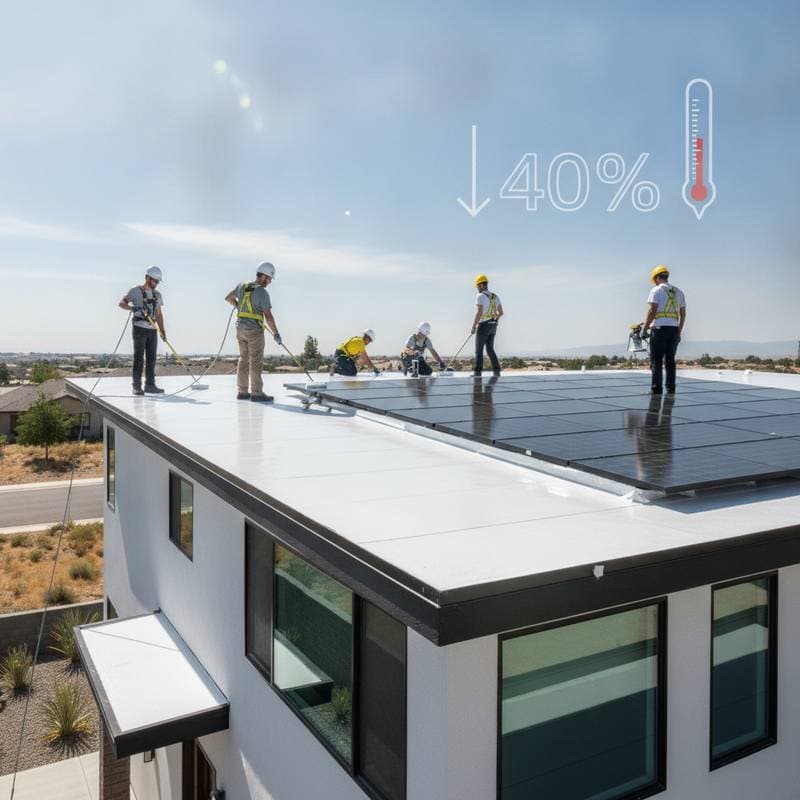
White Reflective Roofs Slash Home Cooling Costs
Solar energy dominates discussions about home efficiency. Yet the surface above your head can make an equal difference. Many homeowners overlook how much heat a dark roof absorbs. On a hot day a typical black asphalt roof can reach 150 degrees Fahrenheit. That heat radiates downward and forces air conditioners to run longer.
A white reflective roof reverses the pattern. It bounces sunlight away instead of absorbing it. The change can cut cooling costs by up to 40 percent while improving comfort.
Roof Color and Material Choices
Roof color and material determine how much sunlight turns into heat. Dark surfaces absorb most incoming energy. Light surfaces reflect a large share back to the sky. The solar reflectance index measures this difference. Higher values indicate cooler performance.
A black shingle roof usually scores between 5 and 20 on the index. A white reflective roof exceeds 80. The gap keeps roof temperatures 50 to 60 degrees lower under identical conditions. Less heat reaches the attic and reduces air conditioning demand.
How Reflective Roofing Works
Reflective roofing uses special pigments or coatings that scatter visible and infrared light. These treatments apply to shingles, metal panels, membranes, or tiles. Sunlight strikes the surface and most of its energy reflects outward rather than entering the structure.
The cooler roof surface limits heat transfer into living spaces. Homeowners notice steadier indoor temperatures and shorter air conditioner cycles.
Cooling Savings Example
Consider a 2,000 square foot Philadelphia home with a dark roof. Annual cooling might consume 8,000 kilowatt hours at 18 cents per kilowatt hour. That totals roughly 1,440 dollars each year.
A white roof that lowers cooling needs by 40 percent reduces usage to 4,800 kilowatt hours. Annual cost drops to about 864 dollars. Savings reach 576 dollars per year. Over ten years the total approaches 5,760 dollars before accounting for longer HVAC life.
Available Material Options
Reflective roofing comes in several forms that suit different home styles.
- Cool asphalt shingles with light granules
- Coated metal panels that reflect up to 70 percent of sunlight
- White single ply membranes for flat roofs
- Ceramic or concrete tiles finished with reflective pigments
Installation follows the same process as a standard roof replacement. Contractors experienced with cool roof products complete the work. Existing roofs in good condition can receive a reflective coating without full replacement.
Philadelphia Climate Performance
Hot humid summers make cool roofs especially effective in Philadelphia. Attic temperatures can differ by 40 degrees between dark and reflective roofs. Dark attics often exceed 130 degrees while reflective attics stay near 90 degrees. The reduction stabilizes indoor comfort and lowers peak electricity use.
Community and Grid Benefits
Widespread adoption of reflective roofs reduces urban heat island effects. Lower local temperatures improve air quality. Reduced peak demand also eases strain on the electric grid during heat waves.
Cost and Incentive Details
Typical residential cool roof projects cost between 7,000 and 12,000 dollars. Annual savings near 500 dollars produce payback in 14 to 24 years. Federal and local incentives can shorten this period. Pairing the roof with solar panels further improves returns because panels operate more efficiently on cooler surfaces.
Roof Life and Upkeep
Reflective surfaces experience less thermal expansion and contraction. This reduced stress extends service life. Annual cleaning and twice yearly inspections maintain reflectivity and catch minor issues early. Well maintained systems often last 25 years or longer.
Solar Panel Synergy
Homeowners planning solar installations benefit from installing a reflective roof first. Cooler roof temperatures help panels maintain optimal output. Studies show gains of 3 to 5 percent compared with panels on dark roofs.
Common Concerns Addressed
Winter heating penalties remain small because winter sun is weaker and days are shorter. Cooling season savings outweigh any minor increase. Reflective roofs need not be pure white. Light grays, tans, and pale tones still deliver strong performance while matching neighborhood aesthetics.
Next Steps for Homeowners
Assess attic insulation and ventilation before selecting materials. Proper preparation maximizes results. A qualified contractor can evaluate slope, condition, and visibility constraints to recommend suitable products. Once installed, routine care preserves performance and delivers ongoing savings in comfort and energy costs.