
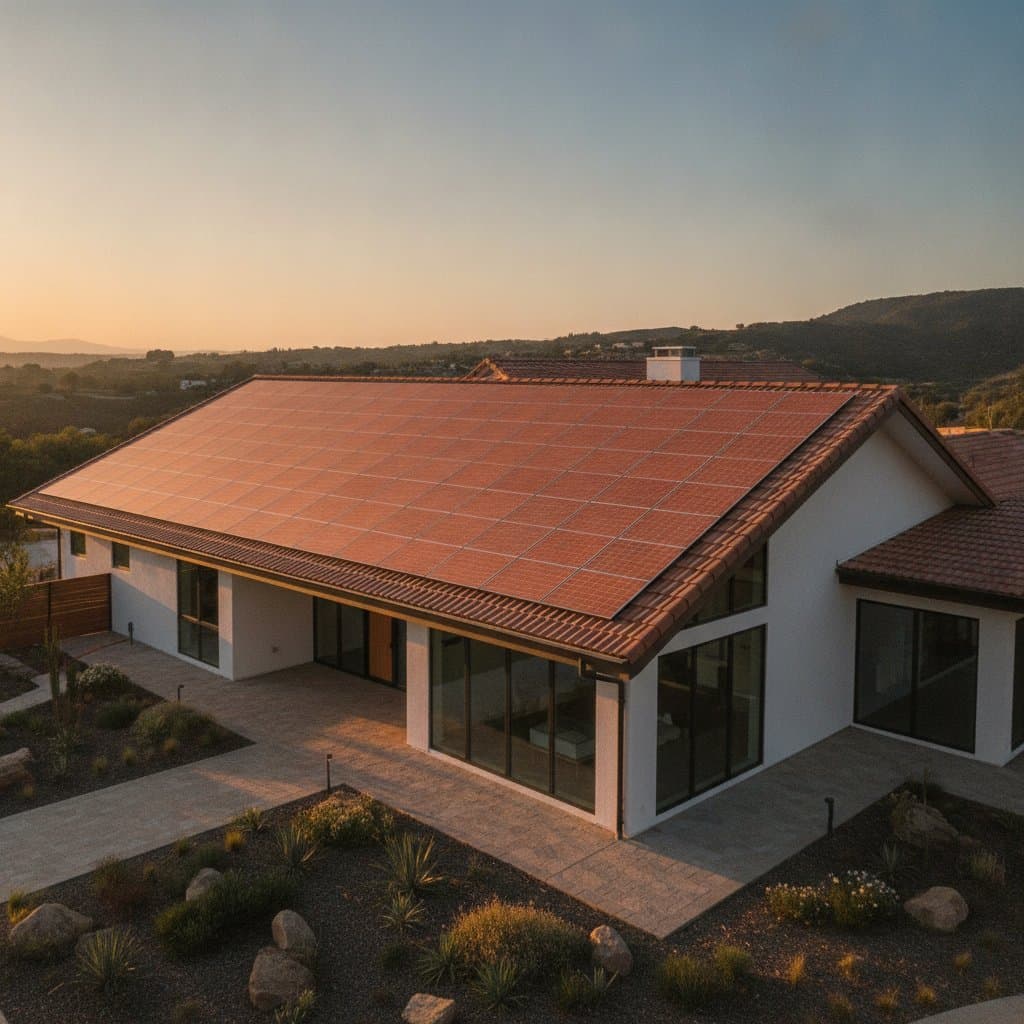
Solar Panels That Match Your Roof by 2026
- Refine language for conversational authority
- Enforce 2 to 4 sentence paragraphs with varied rhythm
- Replace generic claims with specific performance data
- Streamline headings for topic focus
- Verify total word count stays under 1800
- Preserve FAQ and action list structure
Custom solar skins let standard panels blend with roof materials while delivering nearly the same power output. Homeowners gain both lower utility bills and improved curb appeal without visible compromise. As production scales, these films reach wider availability by 2026.
Why Appearance Influences Solar Decisions
Appearance often decides whether a project moves forward. Many owners delay installation because glossy panels clash with existing architecture. Custom films address this concern directly by printing roof-matched textures onto durable overlays.
The change affects more than personal preference. Neighborhood reviews, resale value, and permitting speed all improve when systems remain visually consistent with surrounding homes.
How the Overlay Technology Functions
A solar skin consists of a thin, light-filtering film laminated onto photovoltaic glass. Microscopic apertures allow 90 to 95 percent of usable sunlight to reach the cells. The remaining light creates the printed pattern that mimics shingles, tiles, or metal.
Manufacturers apply the film during module production or as a retrofit layer on existing arrays. Both methods maintain the original mounting hardware and electrical layout.
Measured Impact on Energy Yield
Early prototypes reduced output by as much as 20 percent. Current versions limit losses to 5 to 10 percent. A typical 7-kilowatt array that produces 9100 kilowatt-hours annually therefore delivers roughly 8645 kilowatt-hours after the film is added.
At local rates near 24 cents per kilowatt-hour, annual savings remain above 2000 dollars. The modest reduction in production is offset for many owners by higher property appeal.
Added Expense and Long-Term Value
Skins increase installed cost by 30 to 60 cents per watt. On a 7-kilowatt system the premium totals between 2100 and 4200 dollars. Real estate data indicate that well-integrated solar can add 4 to 5 percent to resale price, often exceeding the extra outlay.
Federal tax credits apply to the full system cost, including the aesthetic layer. Confirm eligibility with a qualified installer before final purchase.
Retrofit and New-Construction Options
Retrofit films require clean glass surfaces and compatible frame dimensions. Factory-applied versions provide the most uniform appearance on new roofs. Digital previews and augmented-reality tools help owners compare pattern choices before installation begins.
Routine Care and Warranty Coverage
Clean the surface twice yearly with mild detergent and soft water. Avoid abrasive tools that could scratch the printed layer. Warranties typically cover both power output and visual quality for 20 to 25 years.
Practical First Steps
- Schedule a shade analysis to confirm adequate sunlight.
- Collect twelve months of utility statements for accurate savings estimates.
- Obtain three comparable proposals that specify skin options.
- Review on-site mockups under different lighting conditions.
- Verify all applicable incentives with a tax professional.
These actions reduce uncertainty and support confident project timing.
FAQ
1. Do solar skins reduce energy production?
Yes, slightly. Most designs transmit about 90 to 95 percent of light, resulting in a small drop in output compared to standard panels.
2. Can I apply solar skins to existing panels?
In many cases, yes. Retrofit films can be added if the panels have compatible dimensions and surface conditions.
3. How long do solar skins last?
They are engineered to match the life of the panels, often 20 to 25 years, without fading or peeling.