
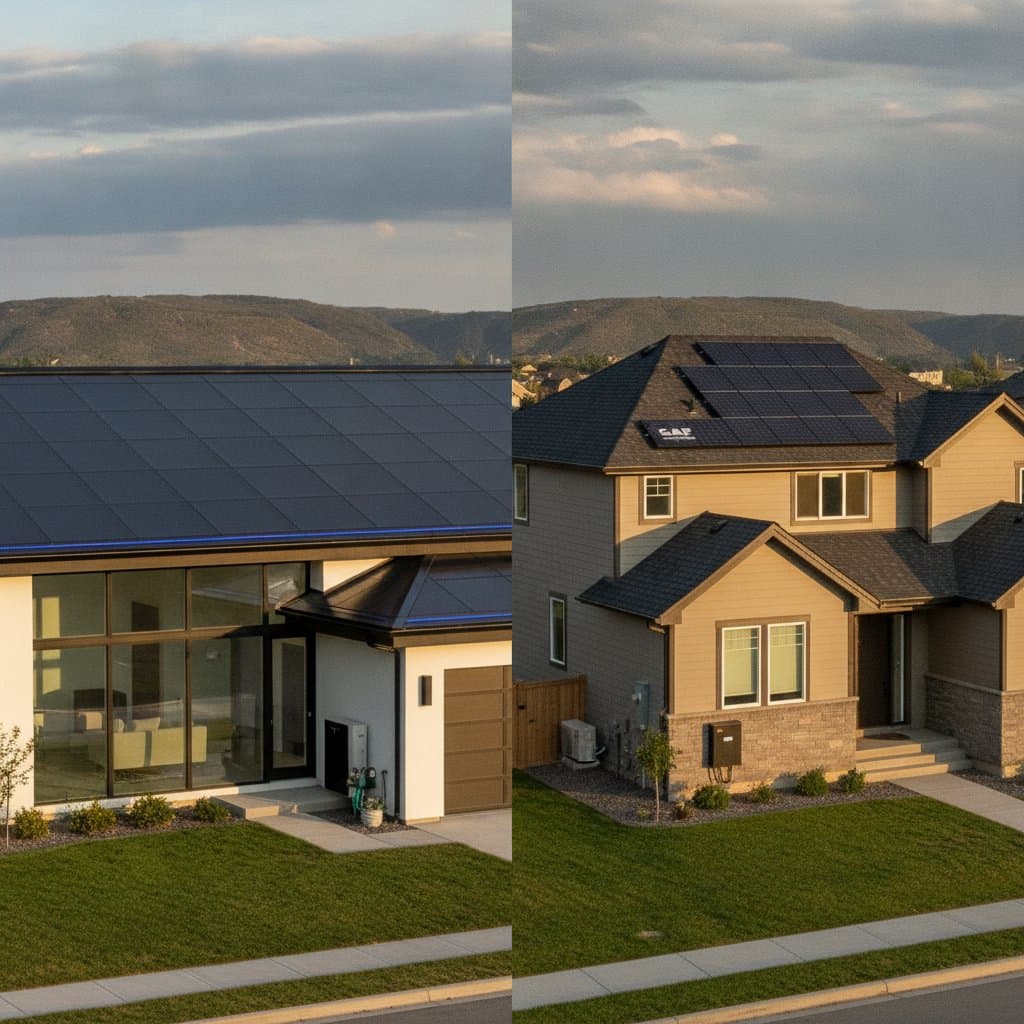
2026 Tesla Solar Roof vs GAF Timberline Cost Comparison
Homeowners seek roofing solutions that generate electricity while maintaining visual appeal. Integrated solar systems now combine these functions directly into the roof structure. Tesla Solar Roof and GAF Timberline Solar represent two leading approaches with distinct pricing, installation methods, and design outcomes.
Reasons for Direct Comparison
Tesla constructs every tile from tempered glass, with photovoltaic cells integrated into active sections and matching inactive tiles for uniformity. GAF embeds solar cells into asphalt shingles that install over a standard roof deck. These differences affect total project cost, labor requirements, and long-term appearance, particularly for homes in regions where roof replacements coincide with solar adoption.
System Operation Details
Tesla Solar Roof replaces the full roof surface. Active tiles produce power while inactive tiles maintain consistent aesthetics. The system pairs with Powerwall storage units for backup capability. GAF Timberline Solar shingles fasten with conventional nails and connect through integrated wiring channels. This approach allows partial coverage on complex roof layouts without visual disruption.
Both products convert sunlight to direct current before inversion to household alternating current. Tesla requires complete roof removal during installation. GAF permits installation on new decks while preserving existing structural elements where sound.
Pricing and Financial Recovery
Tesla Solar Roof projects for a typical 2,000 square foot home range from 40,000 to 70,000 dollars. GAF Timberline Solar installations for comparable coverage fall between 30,000 and 50,000 dollars. The cost gap stems from material volume and specialized labor demands.
A system sized for 9,000 kilowatt hours of annual production offsets roughly 2,160 dollars at 24 cents per kilowatt hour. After federal incentives reduce net cost to 31,500 dollars, payback occurs in approximately 14 years for the GAF option. Tesla installations extend recovery to about 17 years under identical conditions.
Efficiency and Output Factors
Tesla tiles operate at 18 to 20 percent efficiency. GAF shingles reach 17 to 18 percent. Real world results depend more on roof orientation, shading patterns, and ventilation than on these percentage differences. Both products experience 0.5 percent annual degradation.
Tesla provides production monitoring through its Powerwall application. GAF offers per string performance data in its monitoring platform. Each manufacturer backs power output for 25 years and includes roof integrity coverage aligned with conventional warranties.
Installation Process and Visual Results
Certified Tesla crews handle full roof replacement, which suits properties already scheduled for new roofing. GAF certified roofers complete work with standard tools, shortening project duration. Homeowners with partial shade can retain conventional shingles in unaffected areas without mismatched appearance.
Tesla delivers a continuous glass surface suited to contemporary architecture. GAF maintains the textured profile of traditional asphalt shingles, supporting neighborhood design continuity.
Selecting the Appropriate System
Properties requiring full roof replacement and prioritizing uniform modern aesthetics align with Tesla specifications. Budget conscious projects or those needing faster completion benefit from GAF Timberline Solar. Both systems support battery integration and electric vehicle charging.
Preparing for Installation
- Schedule a structural assessment to verify load capacity and deck condition.
- Compile 12 months of utility statements to calculate precise energy requirements.
- Obtain itemized proposals using matching system size and shading assumptions.
- Calculate available federal and state incentives that reduce effective cost.
- Compare warranty terms and local service response commitments.
Ongoing Performance Management
Monthly output reviews identify performance changes early. Routine gutter clearing and selective tree trimming prevent shading increases. Professional electrical inspections every three years confirm continued safety. These practices protect energy production and extend system lifespan.