
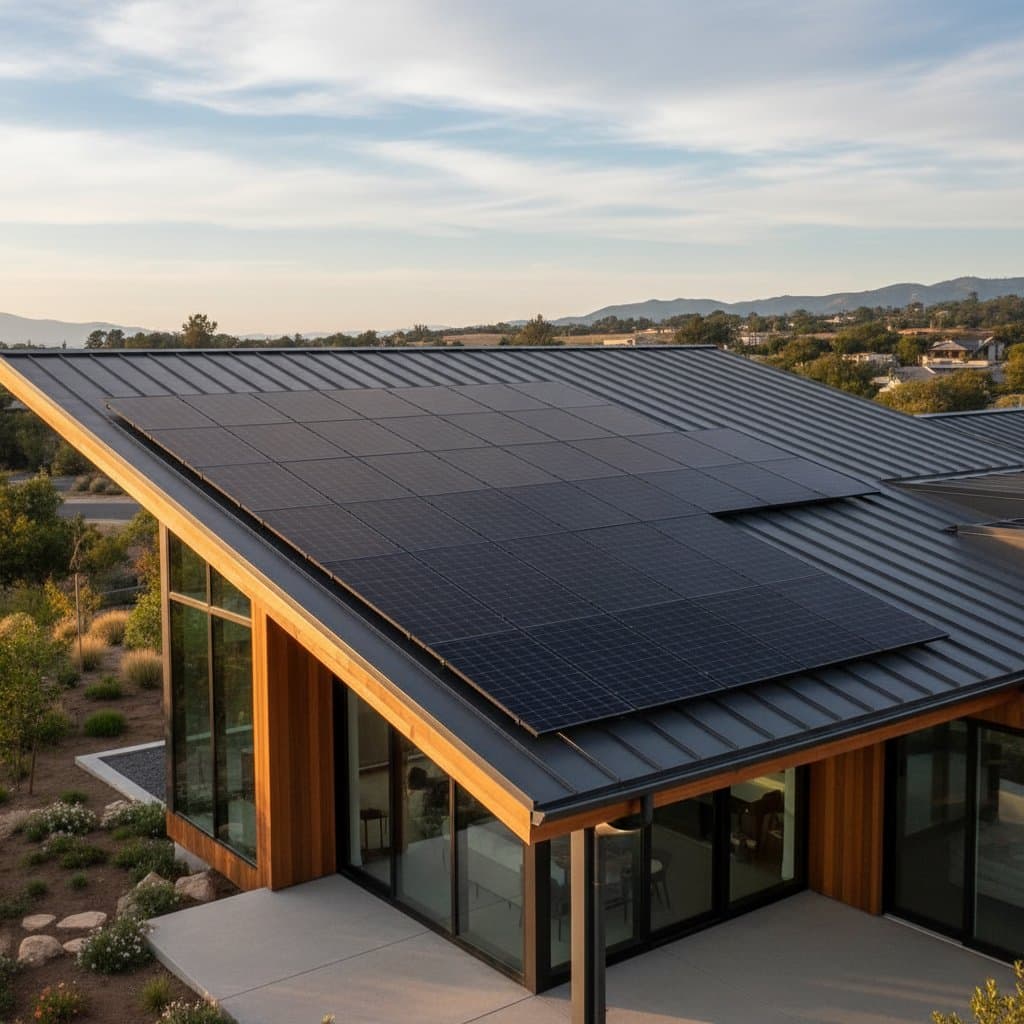
Solar and Metal Roofs: The 2025 Durability Alliance
Homeowners increasingly seek roofing solutions that extend beyond basic weather protection. Solar panels, integrated solar tiles, and metal roofing materials attract interest for their robustness, energy efficiency, and ecological advantages. The key decision involves selecting an optimal integration that ensures enduring performance and financial benefits.
The Importance of Roofing Durability
Replacing a roof ranks among the largest home improvement expenses. Therefore, integrating energy-generating systems with roofing requires meticulous consideration. Durability influences repair frequency, energy output longevity, and cumulative savings.
Metal roofs endure 40 to 70 years, contingent on material quality, protective coatings, and regional climate conditions. A properly installed solar system maintains energy production for at least 25 years, experiencing only gradual efficiency reductions. Together, these elements form a resilient partnership that safeguards the home while minimizing utility expenses over decades.
Integrating Solar Systems with Metal Roofs
Solar panels and tiles integrate seamlessly with metal roofs. Standing seam designs prove particularly suitable, as panels attach via clamps to the seams, avoiding penetration that could compromise waterproofing. This method shortens installation duration and eliminates common vulnerability points.
Consider a 7-kilowatt solar array on a south-facing metal roof in a high-sunlight area. Such a setup generates approximately 9,100 kilowatt-hours annually. With utility rates averaging 24 cents per kilowatt-hour, this translates to about 2,180 dollars in yearly savings, excluding fixed fees. Across 25 years, the total exceeds 54,000 dollars in energy cost reductions.
Homeowners in varied climates benefit similarly. For instance, in temperate zones with moderate sunlight, output might adjust to 7,500 kilowatt-hours per year, yet savings remain compelling due to rising energy prices. Professional assessments account for site-specific factors like roof pitch and orientation to optimize placement.
Financial Considerations and Return on Investment
Solar installation on metal roofs typically ranges from 2.50 to 3.25 dollars per watt post-incentives. A 7-kilowatt system thus costs 17,500 to 22,750 dollars. Metal roofing installation varies from 8 to 15 dollars per square foot, influenced by material type and complexity.
Combining projects during a roof replacement consolidates labor efforts and simplifies permitting processes, often reducing overall expenses by 10 to 20 percent. Payback periods generally span 7 to 11 years, varying with local electricity rates, shading levels, and incentive availability. Post-payback, the system provides free electricity for the roof's remaining lifespan, enhancing financial security.
Additional rebates, such as federal tax credits covering 30 percent of costs, accelerate returns. Homeowners should evaluate net metering policies, which allow excess energy sales back to the grid, further boosting profitability in sunny regions.
Ongoing Performance and Upkeep
Both solar and metal roof systems demand limited maintenance. Annual solar inspections check for debris accumulation, wiring integrity, and panel alignment. Metal roofs require periodic cleaning around fasteners and gutters to avert corrosion or debris buildup.
Metal's reflective properties lower attic temperatures by up to 50 degrees Fahrenheit on summer days, indirectly aiding solar efficiency by preventing overheating. Inverter replacements, needed every 10 to 15 years, represent the primary solar expense, yet warranties often cover these components.
Routine care extends system life. For example, gentle rinsing of panels biannually removes dust, preserving 95 percent efficiency. Metal roofs resist moss growth in humid areas when coated with algae-resistant finishes.
Additional Advantages of the Combination
This integration enhances living conditions, property appeal, and disaster resistance. Metal roofs withstand winds up to 140 miles per hour and exhibit Class A fire ratings, outperforming asphalt shingles. Solar installations provide shading that cools roof surfaces, potentially improving air conditioning performance by 5 to 10 percent.
Environmentally, the pair reduces carbon footprints significantly. A 7-kilowatt system offsets emissions equivalent to planting 100 trees annually. During resale, homes with this setup command premiums of 4 to 6 percent, as buyers prioritize energy independence and low upkeep.
In storm-prone areas, metal's durability pairs with solar's microinverter technology, which isolates panel failures and maintains partial output during events like hail or branch falls.
Incremental Improvement Strategies
Full replacements may exceed budgets for some. Begin with cost-effective enhancements like applying cool roof coatings, which reflect sunlight and cut cooling costs by 15 percent. Sealing attic air leaks prevents energy loss, while a programmable thermostat optimizes heating and cooling schedules.
These measures decrease baseline energy demands, amplifying solar returns upon later installation. For instance, reducing annual consumption by 20 percent shortens payback by one to two years. Consult energy audits to identify high-impact, low-cost fixes tailored to your home.
Practical Actions to Take
Schedule a professional roof evaluation to assess current condition, ideal solar orientation, and structural suitability. Review 12 months of utility statements to determine average consumption patterns. Solicit quotes from certified installers for solar alone versus combined solar and metal roof projects, emphasizing total ownership costs.
Verify extended warranties, end-of-life recycling options, and eligibility for state or local rebates. Engage with neighbors who have similar installations for real-world insights on performance and vendor reliability.
Frequently Asked Questions
Do solar panels pose risks to metal roofs?
Panels attach via non-penetrating clamps to seams, preserving roof integrity and preventing damage.
Are solar roof tiles compatible with metal roofs?
Solar tiles suit composite or shingle roofs primarily; conventional panels offer superior adaptability for metal surfaces.
Does a metal roof impact solar output?
Minimal effects occur; the roof's reflectivity aids cooling, potentially enhancing panel longevity and efficiency.
What is the typical installation timeline?
Projects complete in one to two weeks following permit approvals, with metal roof prep adding minimal time if integrated.