
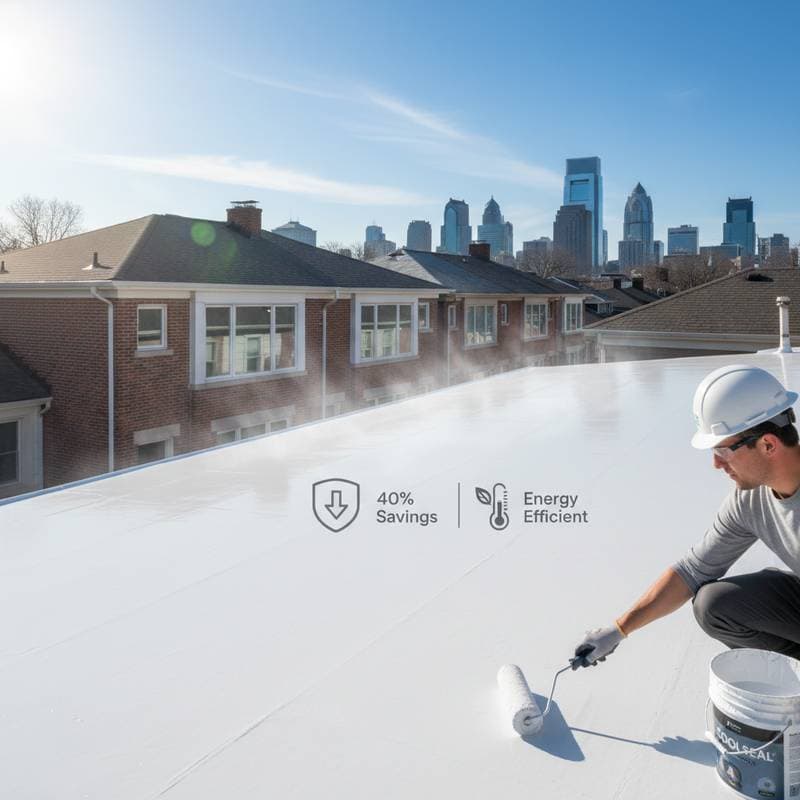
Reduce Air Conditioning Costs by Up to 40 Percent with Reflective Roof Coatings
Philadelphia summers bring intense heat that challenges homeowners to maintain comfortable indoor temperatures. Air conditioning units operate extended hours, leading to higher energy consumption and elevated utility bills. Attic spaces and roof surfaces absorb significant solar radiation, exacerbating these issues. Reflective roof coatings offer a proven strategy to mitigate heat gain, potentially lowering cooling expenses by as much as 40 percent when applied to appropriate roofing systems.
These coatings function by reflecting ultraviolet rays and infrared heat away from the building, unlike traditional dark roofs that absorb and retain warmth. In urban environments like Philadelphia, where heat islands amplify temperatures, this technology provides measurable benefits. The following sections detail the mechanics of reflective coatings, suitability assessments, application procedures, and ongoing maintenance practices. Professional involvement ensures compliance with local building codes and optimal performance outcomes.
Essential Safety and Structural Evaluations Prior to Application
A thorough inspection forms the foundation of any successful reflective coating project. Coatings applied to compromised surfaces may seal in moisture, promote material deterioration, or invalidate existing warranties. Homeowners must prioritize structural integrity to avoid costly repairs down the line.
Professionals recommend evaluating several key areas:
- Integrity of flashing around chimneys, vents, and skylights for cracks or detachment.
- Drainage patterns to identify low spots where water pools after rainfall.
- Condition of the roofing membrane for blistering, alligatoring, or granule loss.
- Fastener security and corrosion on metal components.
- Evidence of water intrusion, such as ceiling stains or mold growth indoors.
If deficiencies appear, engage a licensed roofing contractor immediately. Experts utilize tools like moisture meters and thermal imaging to detect subsurface issues invisible to the untrained eye. Roof types influence preparation needs; for instance, asphalt shingles may require acrylic-based coatings, while metal roofs benefit from elastomeric formulas. Selecting products certified by the Cool Roof Rating Council (CRRC) guarantees verified solar reflectance values, essential for energy savings claims and rebate eligibility.
Detailed Application Procedures for Optimal Results
While minor preparation tasks suit capable homeowners, comprehensive coating projects demand certified professionals equipped with harnesses, ladders, and protective gear. Roofs present inherent risks, including falls from heights and contact with live electrical lines near utility poles. Adhering to Occupational Safety and Health Administration (OSHA) guidelines minimizes these dangers.
Surface Preparation and Cleaning
Begin by clearing the roof of accumulated debris, algae, and oxidation. Use a pressure washer set to no more than 500 psi to avoid damaging underlying materials. For stubborn contaminants, apply a biodegradable cleaner and rinse thoroughly. Allow at least 48 hours of dry weather to ensure complete evaporation, as residual moisture compromises adhesion.
Repairs and Priming Applications
Address imperfections with durable sealants, such as polyurethane or silicone-based compounds, reinforced with polyester fabric for seams longer than six inches. Smooth patched areas to create a uniform substrate. Consult manufacturer specifications for primers, which enhance bonding on porous surfaces like concrete or weathered asphalt. Apply primers in thin layers using a nine-inch roller, allowing four to six hours of curing time between coats.
Coating Mixing and Installation
Prepare the coating material according to product instructions, typically involving mechanical stirring to achieve homogeneity. Opt for high-volume, low-pressure sprayers for large areas to ensure even distribution, or use lamb's wool rollers for precision on edges. Target a dry film thickness of 20 to 30 mils per coat, applying two layers with 24 hours of drying between them. Environmental factors matter; avoid application during high humidity or temperatures below 50 degrees Fahrenheit.
Post-Application Inspection and Curing
After full curing, which spans 72 hours under ideal conditions, conduct a visual and tactile assessment for pinholes, holidays, or delamination. Professionals employ pull-off adhesion tests or moisture probes to validate integrity. Document the process with dated photos, material safety data sheets, and contractor certifications to support insurance claims or incentive programs.
Record-Keeping for Warranties and Incentives
Maintain a dedicated file with purchase invoices, application logs, and performance metrics. Many coatings carry 10- to 20-year warranties against cracking or peeling, contingent on proper documentation. In Philadelphia, programs like those from PECO or the Philadelphia Energy Authority may offer rebates up to $0.50 per square foot for qualified installations.
Strategies for Maintenance and Performance Preservation
Reflective coatings endure environmental stresses but require vigilant care to sustain their thermal properties. Accumulated pollutants diminish solar reflectance over time, while unchecked water exposure leads to premature failure. Regular upkeep extends service life and maximizes energy efficiencies.
Key maintenance practices include:
- Biannual visual inspections, plus immediate checks following high winds or heavy precipitation.
- Gentle cleaning using pH-neutral solutions and non-abrasive tools to restore surface brightness.
- Scheduled recoating intervals, often every seven years for acrylics or 10 years for silicones, based on exposure to pollutants.
- Proactive management of drainage systems, including clearing debris from scuppers and downspouts quarterly.
Monitor for indicators of distress, such as chalking, fading, or adhesion loss. Prompt professional intervention prevents escalation, preserving the coating's ability to deflect up to 85 percent of solar energy. Integrating smart monitoring devices, like roof temperature sensors, provides data-driven insights into performance trends.
Advancing Your Home's Energy Efficiency
Reflective roof coatings represent an accessible investment that cools interiors, prolongs roofing materials, and trims operational costs. Begin the process with a comprehensive inspection from a vetted local specialist to determine compatibility and projected savings. Request details on CRRC ratings, expected reflectance indices, and compatibility with existing systems.
Explore synergies with complementary measures, such as radiant barrier installations in attics or high-efficiency HVAC tune-ups. Philadelphia residents qualify for various incentives through state and federal initiatives, amplifying financial returns. Implement these enhancements to foster a resilient, energy-smart residence that withstands seasonal demands while enhancing overall livability.