
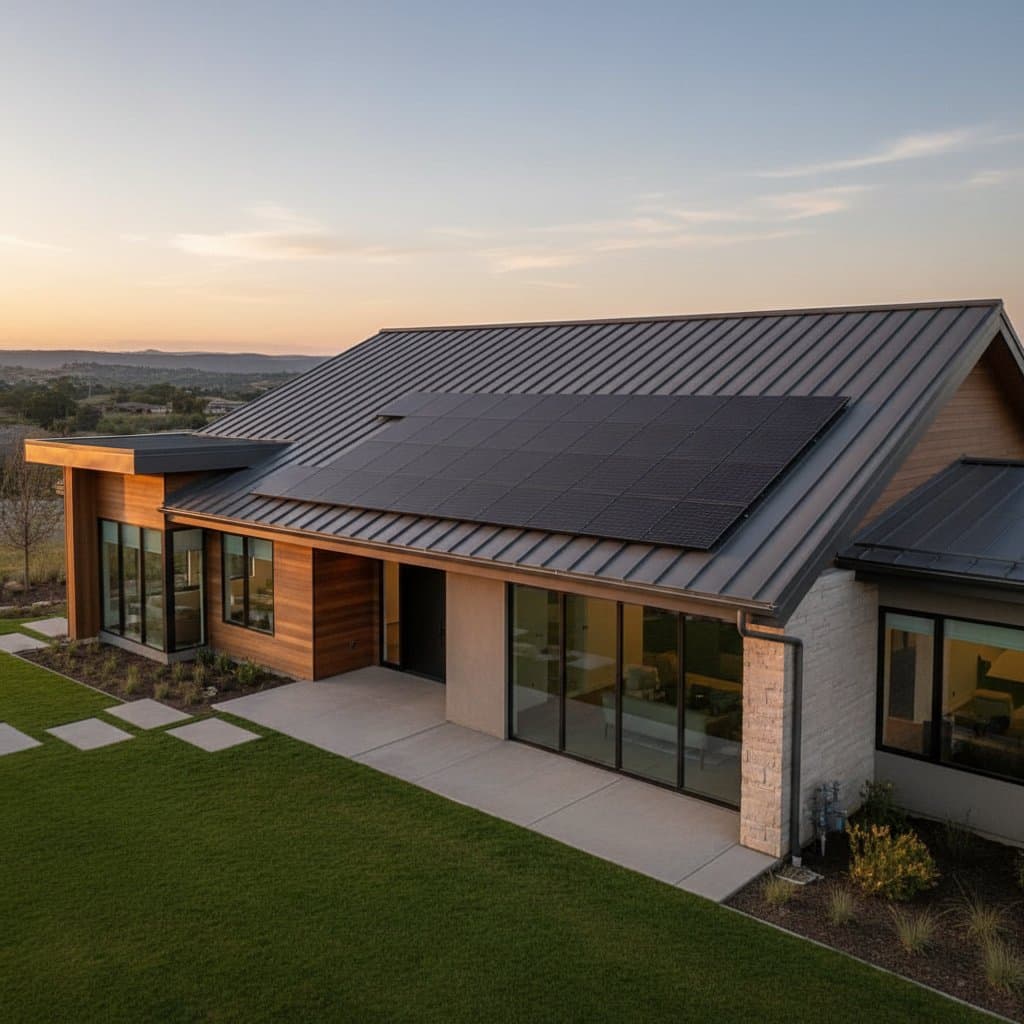
Why 50-Year Metal Solar Roofs Are Trending Now
Homeowners often associate metal roofs with industrial structures or rural barns rather than modern residences. However, metal roofing has advanced significantly, emerging as one of the most durable and solar-compatible options on the market. In numerous regions, an increasing number of property owners pair standing seam metal roofs with solar panels, creating a system that proves lasting, efficient, and economical over the long term.
Those who previously anticipated replacing asphalt shingles every ten years now opt for metal systems designed to endure for half a century or more. This shift gains momentum for compelling reasons. A 50-year metal solar roof safeguards the property, reduces energy expenses, and preserves value without the ongoing maintenance demands of conventional roofing.
The Shift Toward Longevity and Energy Integration
Contemporary homeowners approach roofing with a more holistic perspective. Rather than treating the roof as an isolated element separate from energy production, they envision it as a multifaceted component. An effective roof must shield against weather elements, facilitate solar energy generation, and sustain aesthetic appeal. Metal roofs fulfill these roles with minimal trade-offs.
Standard asphalt roofs typically endure for approximately 20 years prior to requiring replacement. Solar panels carry performance warranties of around 25 years. When panels surpass the lifespan of the underlying roof, owners encounter substantial reinstallation expenses. A metal roof boasting a 50-year durability resolves this discrepancy, allowing panels to stay mounted for extended periods without interruption.
How a Standing Seam Metal Roof Integrates with Solar Panels
Standing seam metal roofs feature elevated vertical ribs that extend uninterrupted from the ridge to the eaves. These panels interlock to establish a watertight barrier resistant to leaks and wind forces. For solar professionals, the seams provide an inherent benefit. Specialized clamps secure directly to the seams, offering a stable foundation for solar panels without the need to penetrate the roof surface.
This approach avoids the perforations that often lead to leaks in alternative materials. It also enables quicker setup and simpler adjustments to panel positioning. The non-invasive mounting upholds the roof warranty and maintains structural integrity. Consequently, the setup yields a robust, solar-optimized surface that functions effectively while presenting a sleek profile.
The Durability Equation
Metal roofs generally consist of steel, aluminum, or zinc-coated alloys. These substances withstand corrosion, cracking, and deformation effectively. Paired with premium coatings, metal roofs repel heat, facilitate snow shedding, and endure severe weather with limited degradation.
Temperature management plays a crucial role in solar output. Panels achieve higher efficiency on cooler surfaces. Light-hued or reflective metal roofs can decrease surface temperatures by as much as 40 degrees Fahrenheit relative to darker alternatives. This reduction enhances panel performance and diminishes interior cooling requirements.
Over decades of environmental exposure, metal roofs retain their form. Surface finishes may experience gradual fading, yet the core material stays robust. Such enduring dependability aligns seamlessly with the prolonged service life of solar panels.
Energy and Cost Calculations
Although a metal solar roof demands a greater initial investment than asphalt, the equation shifts favorably when factoring in durability and energy reductions. Consider this straightforward illustration.
For a 7 kW solar array on a metal roof, in an area yielding about 1,200 kWh per kW annually, the setup generates roughly 8,400 kWh each year. With an average electricity rate of 18 cents per kWh, this translates to $1,512 in yearly value.
Should the owner offset the majority of household consumption, these savings persist for at least 25 years of panel operation. Across that span, cumulative benefits approximate $37,800. The metal roof might incur an additional $18,000 compared to asphalt, yet it circumvents a complete replacement that would otherwise arise midway through the solar system's duration. In a full lifecycle analysis, the metal configuration frequently proves superior.
Available incentives enhance the financial outlook. Federal tax credits cover solar components, while certain states provide rebates. Numerous owners consolidate roof and solar expenses into a single financing arrangement, distributing costs over time while realizing prompt energy gains.
Aesthetic and Environmental Benefits
Current metal roofs offer diverse colors and finishes. Standing seam designs deliver a contemporary aesthetic suitable for both classic and modern architecture. Hidden fasteners ensure a seamless, polished exterior.
Sustainability considerations further propel adoption. Metal materials frequently incorporate recycled elements and prove entirely recyclable upon decommissioning. In contrast, asphalt shingles often contribute to landfill accumulation. Selecting a metal solar roof minimizes environmental waste and bolsters the residence's energy profile.
Maintenance and Warranty Advantages
Upkeep remains straightforward. Owners generally clear debris from low points and inspect fasteners biennially. Select manufacturers extend paint warranties to 40 years and material guarantees nearing 50 years. Solar warranties span 20 to 30 years, enabling synchronized aging of both elements.
The extended roof lifespan elevates resale potential. Prospective buyers regard the unified system as a low-effort energy enhancement. Documentation of a metal solar roof can substantially increase a property's market value.
Why Standing Seam Systems Lead the Trend
Standing seam metal roofs prevail in the solar-compatible sector due to their installation simplicity. Clamps engage the seams rather than the substructure, eliminating perforations and safeguarding waterproofing. This attribute streamlines subsequent servicing as well. Panel swaps occur via unclamping, sparing the roof from disturbance.
Installers value the efficiency and accuracy. Reduced time sealing entries or identifying supports lowers labor expenses. The efficient workflow accelerates timelines and mitigates risks for clients and professionals alike.
Weather Resistance in Real Conditions
Metal roofs excel in diverse climates. Substantial snow dislodges readily. Hail may cause indentations but seldom breaches. High winds that dislodge shingles typically bypass anchored metal installations unscathed. For solar users, this resilience safeguards panels and underlying wiring.
In warm regions, reflective layers mitigate attic heat, easing air conditioning demands. In frigid zones, the glossy finish accelerates snow thaw, averting ice formation near panels. These traits render metal roofs versatile across environments.
The Lifetime Value Perspective
Evaluations of roofing often focus narrowly on initial square-foot pricing. True worth emerges from durability, energy efficacy, and upkeep savings. A 50-year metal solar roof merges these advantages into a cohesive investment.
Suppose an owner allocates $45,000 to a combined metal roof and solar setup. With $1,500 in annual savings, the return period spans about 15 years. Thereafter, generated power arrives at no cost, and the roof persists far beyond asphalt norms. Benefits encompass financial and practical dimensions.
Extended operation insulates against escalating utility prices. Each additional year amplifies overall savings. Residents remaining through the system's full term may recoup double the outlay.
Installation and Planning Steps
Prospective owners of a 50-year metal solar roof begin with an expert evaluation. Professionals assess pitch, direction, shade, and load-bearing capacity. Standing seam installation demands exact alignment for sealed joints and ideal solar alignment.
Subsequent design tailors the solar capacity to usage patterns. For a household averaging 9,000 kWh yearly, a 7.5 kW array at 1,200 kWh per kW aligns output with needs. Roof configuration dictates panel arrangement for optimal visuals and yield.
Permits and grid connection ensue. Trusted contractors oversee these, liaising with officials and providers. Post-installation, monitoring via applications or online dashboards tracks generation and usage in real time.
Long-Term Care and Inspection
Despite low demands, routine checks sustain efficacy. Following intense weather, inspect for accumulation or unsecured fittings. Maintain gutters for unobstructed flow. Proximity to foliage warrants pruning to prevent shading or debris.
Warranties hold provided adherence to protocols. Repainting, if required, employs matching products to sustain reflection and protection. Clean solar surfaces per guidelines, employing water and gentle tools.
The Future of Solar-Ready Roofing
Rising demand for 50-year metal solar roofs indicates a move to enduring, unified solutions. As individuals pursue autonomy and cost efficiency, this integration will standardize in constructions and overhauls.
Advancements in coatings, fade resistance, and embedded solar elements promise roofs that generate power invisibly. Such progress ensures protective and productive surfaces without aesthetic compromise.
Taking the Next Step
Homeowners assessing choices initiate with informed comparison. Solicit bids encompassing roof and solar elements. Inquire on mounting techniques, warranty portability, and projected yields. Examine prior projects for style and quality.
A 50-year metal solar roof represents more than an acquisition. It embodies dedication to sustained reliability and reduced expenses. Through meticulous preparation and superior components, it supplies enduring shelter and renewable energy.
FAQ
How long does a standing seam metal roof last with solar panels attached?
A properly installed standing seam metal roof endures 50 years or longer.
What makes standing seam roofs ideal for solar integration?
The raised seams allow secure, non-penetrating clamps, preserving integrity and simplifying setup.
Are metal solar roofs more expensive upfront?
Initial costs exceed asphalt, but longevity and savings yield superior long-term value.
How do metal roofs affect solar panel efficiency?
Reflective surfaces keep panels cooler, boosting output by up to 10-15 percent in hot conditions.
What maintenance do these systems require?
Minimal: periodic debris removal and inspections every few years suffice.